
Understanding the Causes
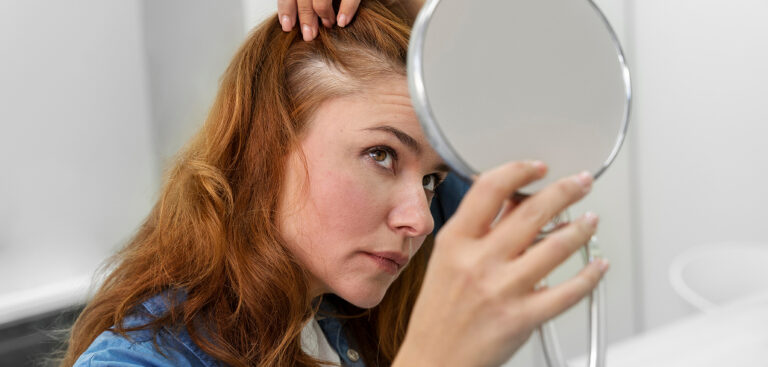
A patient once told me, “I don’t even recognize my hair anymore — and no one seems to take it seriously.”
She was in her early 40s. Her labs had been called “normal.” She was sleeping, exercising, and eating well. And yet her hair was thinning rapidly. What troubled her most wasn’t just the shedding — it was the feeling that something was changing in her body, and she couldn’t get clear answers as to why.
I’ve now heard versions of this story countless times.
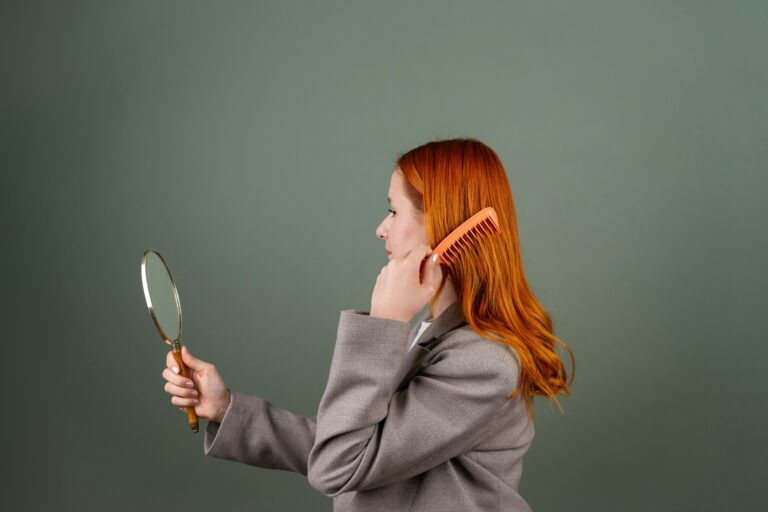
Hair loss and hair thinning are among the most distressing symptoms women experience in their 40s and 50s. For many, it feels sudden, personal, and deeply unsettling — not because it’s cosmetic, but because it often signals deeper physiologic shifts.
In clinical practice, the pattern is strikingly consistent. Many women do exactly what they’re supposed to do: they check labs. Sometimes thyroid dysfunction is identified and treated, and while energy, mood, or sleep may improve, the hair loss often persists.
What follows is a familiar sequence: fluctuating cycles, joint aches, brain fog, hot flashes, fatigue, and accelerating hair thinning. By the time many women reach their early-to-mid 40s, perimenopause has quietly arrived — and while lifestyle changes or hormone therapy may help some symptoms, hair loss often lingers.
This is not uncommon. Up to 50% of women experience noticeable hair loss during the menopausal transition.
This overlap of symptoms — hormonal, metabolic, inflammatory — is one of the reasons we built Thrive, our women’s health program designed specifically for the perimenopausal and menopausal transition. Hair loss is rarely an isolated issue, and treating it effectively requires understanding the full physiologic context.
1. Why Hair Loss Happens During Hormonal Transitions
Hair follicles are not passive structures. They contain receptors for estrogen, progesterone, testosterone, and other androgens. As hormone levels fluctuate — particularly estrogen — these receptors respond.
While research is still evolving, evidence suggests estrogen may:
- Prolong the anagen (growth) phase of the hair cycle
- Help maintain hair shaft diameter
- Support follicular health
As estrogen levels decline or fluctuate unpredictably, hair growth may slow, hair shafts may thin, and shedding may increase.