
Your cells are working right now, converting food into energy, repairing damage, and responding to stress. All of that requires NAD+, a molecule that naturally declines as you age. By your 50s, research suggests you may be producing roughly half the NAD+ you did in your 20s. This age-dependent decrease has been observed across species and in multiple human tissues, including liver, skin, brain, plasma, and skeletal muscle. That’s why workouts might feel harder, memory can slip, and recovery may take longer.
IV therapy with NAD+ is a direct way to potentially restore what time has taken from your cells, though individual results vary.
What Is NAD+ and Why Your Body Needs It
NAD+ stands for nicotinamide adenine dinucleotide. It’s a coenzyme, meaning a helper molecule that makes enzymes work properly. Over 400 enzymes require NAD+ to function, predominantly to accept or donate electrons for essential cellular reactions. Every cell depends on it for:
- Energy production: Converting food into usable cellular fuel (ATP). NAD+ participates in redox reactions throughout glycolysis, the citric acid cycle, and oxidative phosphorylation.
- DNA repair: Fixing damage from stress and aging. Key repair enzymes including PARP1 and sirtuins (SIRT1, SIRT6) are critically dependent on NAD+ availability
- Gene regulation: NAD+-dependent sirtuins provide a link between the metabolic state of the cell and which genes are expressed, coordinating many beneficial effects of exercise and fasting.
Think of NAD+ as the spark that keeps your cellular engine running.
Why NAD+ Declines With Age
The biology behind NAD+ decline is more complex than simple depletion. On the consumption side, aging cells use NAD+ faster. PARP1 becomes increasingly activated by accumulating DNA damage, depleting cellular NAD+ pools in the process. The enzyme CD38 also becomes overexpressed due to chronic low-level “inflammaging,” consuming large quantities of NAD+.
On the production side, NAMPT, the rate-limiting enzyme in the NAD+ salvage recycling pathway, declines with age across multiple tissues (Csiszar et al., 2019; Goody & Henry, 2018). Since the salvage pathway is how cells replenish NAD+ after consumption, this creates a compounding deficit where consumption outpaces production.
Why Oral Supplements Don’t Work as Well as IV Therapy
NAD+ supplements are significantly less effective than IV therapy. Your digestive system breaks them down before they reach your bloodstream. Research confirms a significant first-pass effect: orally administered NMN and NR are readily metabolized to nicotinamide in the liver before reaching other tissues. While oral NR can raise blood NAD+ up to 2.7-fold, precursors alone do not address the root causes of decline, such as increased CD38 activity and reduced NAMPT expression.
IV therapy bypasses all that. The NAD+ solution goes directly into your vein. Nothing is lost in digestion. Your cells receive a full dose to your bloodstream immediately. This is why IV therapy is the gold standard for NAD+ replenishment, though the specific clinical benefits in humans remain an active area of research.
How NAD+ IV Infusions Work
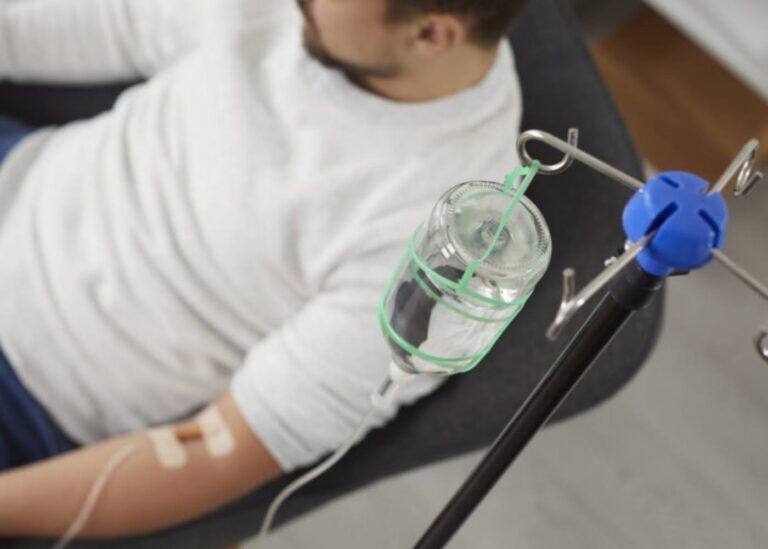
You sit in a comfortable chair. A nurse places a small IV in your arm. The NAD+ solution drips slowly into your vein over 1.5 to 3 hours. Within the cell, NAD+ distributes across distinct compartments, including mitochondria, nucleus, and cytosol, each serving different functions. Mitochondria contain the highest concentration, reflecting the prioritization of energy-producing reactions. Some people feel temporary warmth or heaviness during the infusion. Your medical team can adjust the drip rate as needed.
The Top Benefits of NAD+ IV Therapy
Energy and Mental Clarity
When cells lack NAD+, energy production can struggle. Preclinical research shows NAD+ restoration in aged mice increased mitochondrial function and ATP production, the cellular foundations of energy and vitality. Some people report feeling more alert within days, though fatigue is multifactorial.
Athletic Recovery and Performance
NAD+ supports repair systems in muscle tissue. In aged mice, NMN treatment reversed age-related capillary loss and increased muscle blood flow, while NAMPT overexpression improved exercise capacity to levels comparable to young controls. Human clinical trials measuring specific athletic benefits are currently limited.
Cellular Anti-Aging Support
NAD+ activates sirtuins, proteins associated with longevity and cellular repair pathways. NAD+ has been identified as a central metabolic intermediate linked to many of the nine recognized “hallmarks of aging,” including genomic instability, mitochondrial dysfunction, cellular senescence, and stem cell exhaustion. In skin, NAD+ restoration reduces the senescent cell burden in dermal fibroblasts and activates autophagy to clear damaged proteins that cause dermal stiffness.
Vascular Health
Age-related endothelial dysfunction depends on adequate NAD+ availability. When NAD+ declines, endothelial cells produce less nitric oxide, impairing blood flow. In preclinical studies, NAD+ boosters improved endothelial function in aged mice. A small randomized clinical trial of NR in older adults found trends toward reduced blood pressure and aortic stiffness.
Brain Health and Neurological Support
Your brain uses roughly 20% of your body’s oxygen and calories. An age-related NAD+ decline has been observed in the human brain, and Alzheimer’s disease models show improved cognition and nerve regeneration after NAD+ restoration (Conlon, 2022). Human clinical data on cognitive effects remain limited.
Metabolic Support
NAD+ acts as a metabolic messenger linking cellular energy status with downstream signaling. It is required for both aerobic and anaerobic glucose metabolism in muscle, and disruptions in NAD+ balance are associated with metabolic dysfunction
Pairing NAD+ With Other Regenerative Treatments
NAD+ works theoretically well alongside other therapies, since it supports cellular energy and repair capacity. This creates a potentially more favorable environment for other treatments, though clinical evidence for specific combinations is limited.
NAD+ and stem cell therapy: NAD+ restoration rejuvenated muscle stem cells, increasing their number and function in aged mice and quickening regeneration after injury.
NAD+ and peptide therapy: Peptides signal your body to repair and rebuild. They theoretically work better when your cells have the energy to respond. NAD+ provides that foundation.
NAD+ and hyperbaric oxygen therapy: Since NAD+ restoration specifically rescues mitochondrial function and reduces oxidative stress, combining it with oxygen-supporting therapies may address complementary pathways.
Safety and Side Effects
NAD+ IV therapy has a favorable safety profile. NAD+ is a molecule your body naturally produces every day, so introducing more through IV therapy is generally well-tolerated when administered by qualified professionals.
During the infusion, some people experience temporary sensations like warmth in the stomach, heaviness in the legs, or mild nausea. These pass quickly as your body adjusts. Your medical team can slow the drip rate if needed.
After the infusion, side effects are rare. Some people feel slightly tired and sleep deeply that night as their cells invest energy in repair processes.
Important safety requirements:
- Your provider must be a licensed medical professional
- Pharmaceutical-grade NAD+ sourced from reputable suppliers
- Sterile IV technique and proper infection control
- Medical supervision throughout the infusion
How Often Should You Get NAD+ IV Therapy?
Most clinics recommend a loading phase of 5 to 10 infusions over 1 to 3 weeks, followed by maintenance every four to six weeks. Optimal frequency has not been established in clinical trials. Between sessions, exercise can help maintain NAD+ levels, as research shows exercise training increases NAMPT expression and NAD+ availability in skeletal muscle. A comprehensive approach addressing both NAD+ supply and the root causes of its decline may offer more sustained benefits than any single intervention.
How RMRM Supports Your NAD+ Therapy Journey
At Rocky Mountain Regenerative Medicine, we start with a detailed consultation to understand your health, energy levels, and longevity goals. We design a personalized loading protocol and maintenance schedule using pharmaceutical-grade NAD+ administered under direct medical supervision.
Some patients pair NAD+ with other therapies like stem cell therapy for joint regeneration, peptide therapy, or hyperbaric oxygen therapy. We coordinate all care so each therapy complements the others within a comprehensive wellness strategy.
Your cellular health is a foundation of overall wellness. We’re here to help you explore and support it.
Conclusion
NAD+ is a fundamental molecule that powers your cells. As NAD+ declines with age, restoring it may support cellular function and energy production. IV therapy delivers NAD+ directly to your bloodstream, avoiding digestive breakdown and achieving higher blood levels than oral supplements.
However, it’s important to note that while the basic science of NAD+ is well-established, clinical trials specifically measuring the benefits of NAD+ IV therapy in humans are still emerging. Benefits reported are often based on patient experience and early research rather than large-scale controlled studies.
If you’re interested in exploring whether NAD+ IV therapy aligns with your health goals, contact RMRM today for a personalized consultation. We’ll assess your individual situation and help you understand what to realistically expect.
Ready to learn more about supporting your cellular energy? Book an appointment and let’s discuss whether this therapy is right for you.