Shockwave Therapy

Conditions Commonly Treated with Shockwave Therapy
- Neck pain
- Back pain
- Shoulder pain
- Tennis elbow
- Golfer’s elbow
- Hip pain
- Hamstring pain
- IT Band inflammation
- Knee pain
- Achille’s tendon pain
- Bursitis
- Ankle pain
- Plantar fasciitis
- Erectile dysfunction
- Fine lines and wrinkles
- Scar tissue
- Cellulite
- Stretch marks
- Calcific tendonitis
- Patellar tendonitis
- Stress fractures
- Non-healing fractures
- Muscle trigger points
- Chronic tendinopathy
- Peyronie’s disease
What is Shockwave Therapy?
At Rocky Mountain Regenerative Medicine in Boulder, CO, we offer two advanced shockwave modalities: Extracorporeal Pulse Activation Technology (EPAT) and Extracorporeal Shockwave Therapy (ESWT).
These two technologies serve different clinical roles. Understanding the difference matters because not all shockwave is the same, the right modality depends on your condition, the depth of the tissue involved, and your treatment goals.
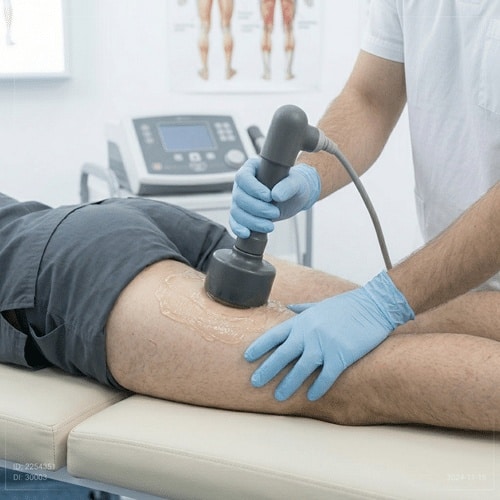
Focused ESWT (Extracorporeal Shockwave Therapy)
Focused ESWT delivers concentrated acoustic energy to a precise focal point deep within tissue. This modality is supported by the strongest published evidence for conditions involving deep structures such as calcific tendonitis of the shoulder, mid-portion Achilles tendinopathy, proximal hamstring tendinopathy, and bone stress injuries. Focused shockwave can reach tissue depths that radial devices cannot, making it the appropriate choice when the pathology sits below the superficial layers.
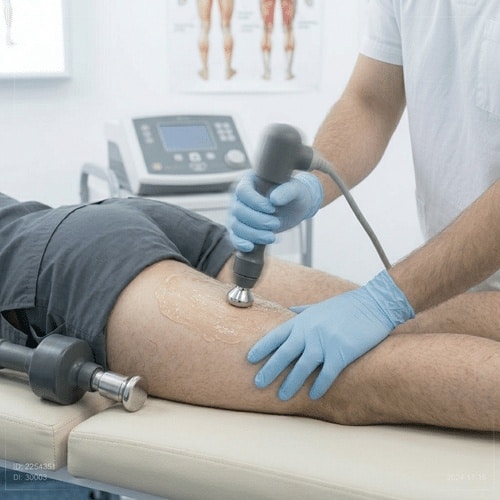
Radial EPAT (Extracorporeal Pulse Activation Technology)
EPAT delivers radial pressure waves that spread outward from the applicator tip, making it effective for superficial structures such as fascia, tendons close to the surface, and muscle trigger points. EPAT is commonly used for plantar fasciitis, lateral epicondylitis (tennis elbow), and myofascial pain. It is also used for aesthetic applications including cellulite reduction and skin tightening.
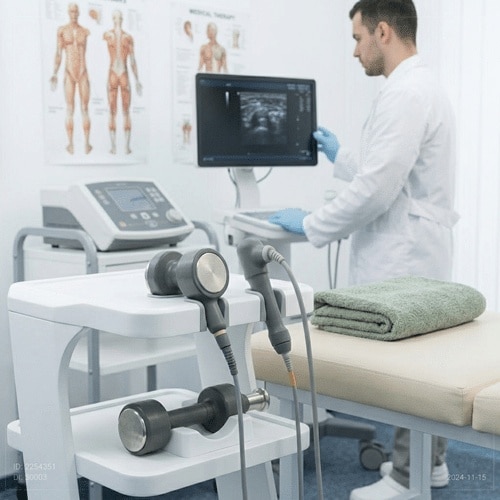
Combined Protocol
At RMRM, our providers determine the most appropriate approach, focused ESWT, radial EPAT, or a combination based on your condition, imaging, and treatment goals. For many patients, combining both modalities in a single session provides the most comprehensive treatment.
Shockwave for Orthopedic Conditions
Shockwave therapy is one of the most effective non-invasive treatments for chronic musculoskeletal conditions that have not responded to rest, physical therapy, or anti-inflammatory medication. By promoting tissue regeneration and reducing pain, shockwave offers a non-invasive solution for orthopedic issues without injections or surgery.
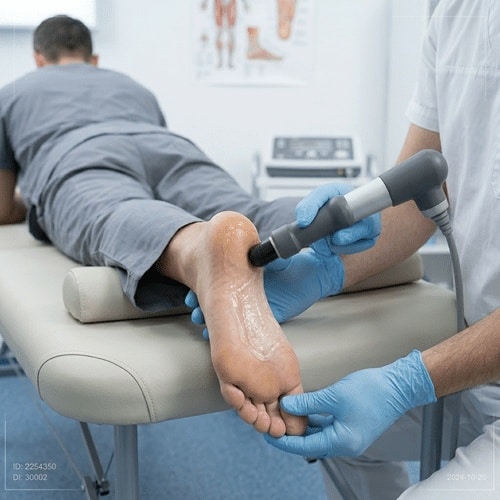
Plantar Fasciitis
Shockwave therapy for plantar fasciitis targets the inflamed plantar fascia with acoustic energy to stimulate blood flow, break down chronic scar tissue, and promote tissue remodeling. It is one of the most well-studied indications for ESWT, with FDA clearance for chronic plantar fasciitis that has not responded to conservative care. Patients at our Boulder clinic who have exhausted stretching, orthotics, night splinting, and cortisone injections are often strong candidates for shockwave.
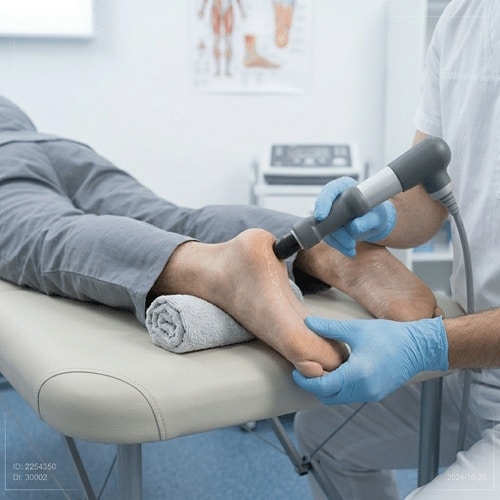
Achilles Tendonitis
Both insertional and mid-portion Achilles tendinopathy respond to focused ESWT. Shockwave can stimulate the repair cascade in chronic tendon tissue where the body’s natural healing response has stalled. For active patients in Boulder and the surrounding area, shockwave offers a treatment option that does not require immobilization or time off from activity.
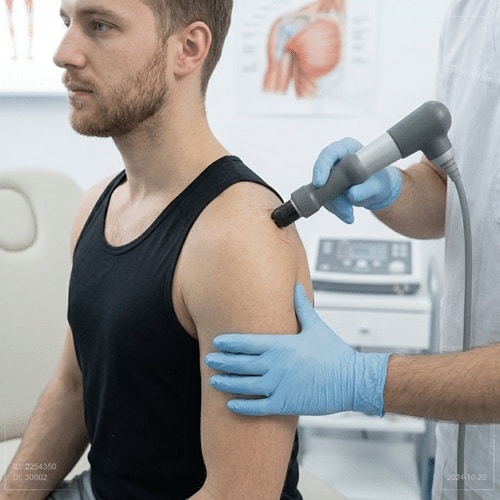
Shoulder Pain and Calcific Tendonitis
Calcific tendonitis of the shoulder is one of the strongest evidence-based indications for focused ESWT. The shockwaves can help break down calcium deposits in the rotator cuff tendons while stimulating the body’s reabsorption process. Chronic shoulder tendinopathy without calcification may also benefit from shockwave therapy.
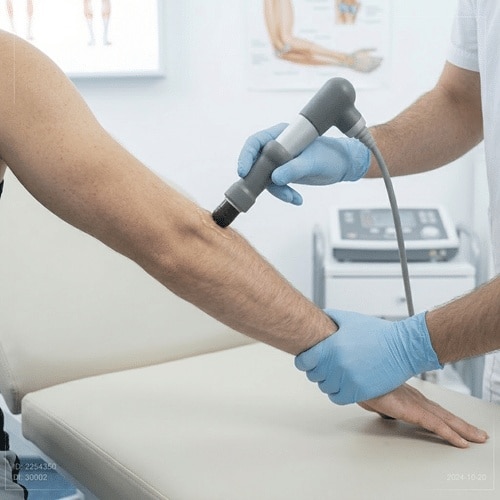
Tennis Elbow and Golfer’s Elbow
Lateral epicondylitis (tennis elbow) is FDA-cleared for ESWT treatment with certain devices. Shockwave therapy for tennis and golfer’s elbow delivers acoustic energy to the tendon attachment at the elbow, stimulating repair in tissue that has become chronically inflamed or degenerated. Published studies suggest sustained improvement compared to corticosteroid injection for these conditions.
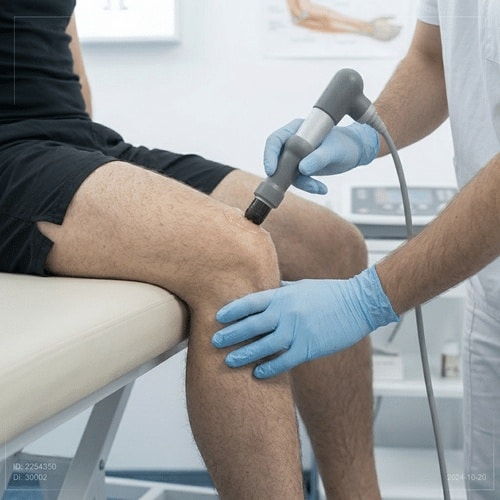
Knee Pain and Patellar Tendonitis
Patellar tendinopathy, chronic knee tendon pain, and conditions involving the iliotibial band can be addressed with shockwave therapy. The acoustic energy promotes blood flow and cellular repair in tissue that has not responded to physical therapy alone.

Your Healing Journey Today
Contact our team today to discuss your goals and explore your personalized options.
Shockwave for Aesthetic Concerns
In addition to orthopedic applications, shockwave therapy is also used for aesthetic purposes.
Acoustic wave therapy effectively targets cellulite, fine lines and wrinkles, scars, and stretch marks, promoting collagen production and skin rejuvenation.
For cellulite, shockwave therapy works by disrupting fibrous connective tissue bands beneath the skin while stimulating collagen production and improving lymphatic drainage. Multiple sessions are typically recommended for visible improvement. For fine lines, wrinkles, and scar tissue, the acoustic waves promote tissue remodeling and increased blood flow to support the skin’s natural repair processes.
Shockwave aesthetic treatments at RMRM in Boulder are non-invasive and require no downtime. Sessions typically last 15–20 minutes, and most patients require a series of treatments spaced over several weeks to achieve optimal results.
How Shockwave Therapy Works
Shockwave therapy works by delivering controlled acoustic energy into targeted tissues. These high-energy sound waves create micro-stimulation within damaged tissue, increasing blood flow and triggering a biological healing response. This process encourages the release of growth factors, stimulates cell regeneration, and helps break down calcified tissue deposits that may contribute to chronic pain.
The mechanism of action involves several biological pathways: mechanotransduction (the conversion of mechanical stimulation into cellular signals), neovascularization (formation of new blood vessels in the treatment area), pain modulation through nerve desensitization, and the release of growth factors that support tissue repair. These effects unfold over several weeks after treatment, which is why improvement is gradual rather than immediate.
What to Expect During a Shockwave Session
- Before Your Session
Your provider will review your condition, imaging, and treatment history to confirm that shockwave therapy is appropriate. You will be asked to avoid anti-inflammatory medications (NSAIDs such as ibuprofen, naproxen, or aspirin) before treatment, as these medications can interfere with the healing response that shockwave therapy is designed to stimulate. - During the Session
Most shockwave therapy sessions at our Boulder clinic last about 10–20 minutes and are performed in-clinic without anesthesia. The provider applies a coupling gel to the treatment area and delivers acoustic energy using a handheld device. The intensity is adjusted throughout the session based on your comfort level and the target tissue. Some patients experience mild discomfort during treatment, particularly over areas of active pathology, but the sessions are generally well-tolerated. - After Your Session
There is no downtime after shockwave therapy. Most patients return to normal activity immediately. You should continue to avoid NSAIDs after treatment to allow the inflammatory healing response to proceed. Your provider will advise on specific activity modifications if applicable to your condition.
Number of Sessions and Recovery Timeline
Most patients require 3 to 6 shockwave therapy sessions, depending on the severity and duration of the condition being treated. Sessions are typically spaced 1 to 2 weeks apart to allow the biological response to each treatment to develop before the next session.
Improvement typically begins within 2 to 4 weeks of the first session, with progressive gains continuing over the full course of treatment. Some patients experience significant relief after 2 to 3 sessions, while chronic or long-standing conditions may require the full course. Your provider will reassess your response and adjust the treatment plan as needed.
Who Is a Good Candidate for Shockwave Therapy?
Shockwave therapy is most effective for patients who have a diagnosed musculoskeletal or soft tissue condition that has not resolved with conservative treatment such as rest, physical therapy, stretching, or anti-inflammatory medication. You may be a good candidate if you have chronic tendon pain (lasting 6 weeks or more), a condition confirmed by imaging or clinical examination, willingness to avoid NSAIDs before and after treatment, and realistic expectations about the gradual nature of improvement.
Shockwave therapy may not be appropriate if you are pregnant, have a blood clotting disorder, have a pacemaker or other implanted electronic device, or have an active infection or tumor at the treatment site. A consultation at RMRM in Boulder allows our team to evaluate your specific situation and provide an honest recommendation.
Why Choose RMRM for Shockwave Therapy in Boulder?
Rocky Mountain Regenerative Medicine offers both focused ESWT and radial EPAT shockwave modalities at our clinic located at 720 Pearl St, Suite 1B, in Boulder, Colorado. Our shockwave program is distinguished by:
Dual-Modality Capability: We offer both focused ESWT for deep tissue conditions and radial EPAT for superficial structures and aesthetic concerns. Your provider selects the appropriate technology or combination based on your specific condition.
Integrated Regenerative Approach: Shockwave therapy can be combined with PRP injections, stem cell therapy, peptide therapy, and other regenerative treatments for a layered approach to healing. Shockwave may be used to prepare tissue before a PRP injection to improve how the tissue receives the biologic.
Comprehensive Evaluation: Every shockwave protocol begins with a thorough diagnostic evaluation to confirm the condition, assess severity, and determine whether shockwave is the right first step or whether another intervention may be more appropriate.
Serving Boulder and Surrounding Communities: Our practice serves patients from Boulder, Longmont, Louisville, Lafayette, Broomfield, and the wider Denver-Boulder corridor.
Frequently Asked Questions
What is shockwave therapy used for?
How much does shockwave therapy cost?
Is shockwave therapy painful?
How long does it take to see results from shockwave therapy?
Where can I find shockwave therapy near me in Boulder?

Take the First Step Towards a Better You
Connect with us today to start your journey to living, looking, and performing better, longer.