
You took a hard fall cycling the Dakota Ridge trails. Or maybe your daughter headed a soccer ball wrong during a tournament in Cherry Creek. Perhaps you’ve been grinding through brain fog since a fender-bender on Highway 36, or you’re preparing for ACL reconstruction and want every edge. You’ve heard whispers about hyperbaric oxygen therapy (HBOT) as a biohacker’s secret for accelerating healing, clearing post-concussion syndrome, and optimizing recovery.
When you look into hospital-based programs, you hit a wall: insurance pre-authorization that takes months, scheduling backlogs, and rigid protocols that only accommodate FDA-approved indications. If you’re seeking HBOT for concussion recovery, athletic optimization, or to maximize your stem cell investment, the traditional healthcare system isn’t built for you.
What Is Hyperbaric Oxygen Therapy?
Hyperbaric oxygen therapy, or HBOT, is a medical therapy in which you breathe 100% pure oxygen inside a pressurized chamber. The chamber is pressurized to levels between 1.3 and 2.0 atmospheres absolute (ATA). Under pressure, oxygen dissolves directly into plasma, cerebrospinal fluid, and lymph, not just attaching to red blood cells. This increased pressure allows your lungs to absorb significantly more oxygen than normal atmospheric conditions would permit. The oxygen then travels through your bloodstream to tissues throughout your body.
Standard HBOT sessions last between 60-90 minutes. A healthcare provider monitors you throughout the session. Most therapy schedules involve multiple sessions spread over weeks, depending on your condition.
FDA-Approved Uses of HBOT
The FDA has officially approved hyperbaric oxygen therapy for the following medical conditions:
- Carbon monoxide poisoning
- Chronic wounds that have not healed with standard therapies, including diabetic foot ulcers
- Bone infections (osteomyelitis) that have not responded to other therapies
- Air or gas bubbles trapped in blood vessels
- Gangrene caused by gas-forming bacteria or tissue death from blood flow loss
- Severe burns
- Crush injuries and traumatic injuries to tissue
- Sudden sensorineural hearing loss
- Sudden vision loss from blocked blood flow (central retinal artery occlusion)
- Skin grafts
- Radiation-induced tissue injury
Insurance coverage is generally available for these FDA-approved conditions when therapy is prescribed by a healthcare provider.
Why RMRM Over Hospital-Based Programs?
While the FDA hasn’t cleared HBOT for concussion, TBI, athletic recovery, or optimization, the evidence base is substantial. Recent systematic reviews indicate HBOT of at least 1.5 ATA or above demonstrates statistically significant improvements in both symptoms and cognitive function for chronic post-concussion syndrome. The therapeutic mechanism involves:
- Angiogenesis: New blood vessel formation in damaged brain tissue
- Stem cell mobilization: Upregulation of circulating regenerative cells.
- Mitochondrial repair: Enhanced cellular energy production in oxygen-starved neurons
- Neuroinflammation reduction: Addressing the cascade that drives persistent symptoms

RMRM’s Approach to HBOT: What Sets Us Apart
Rocky Mountain Regenerative Medicine operates differently from traditional hospital-based hyperbaric programs. Here’s why:
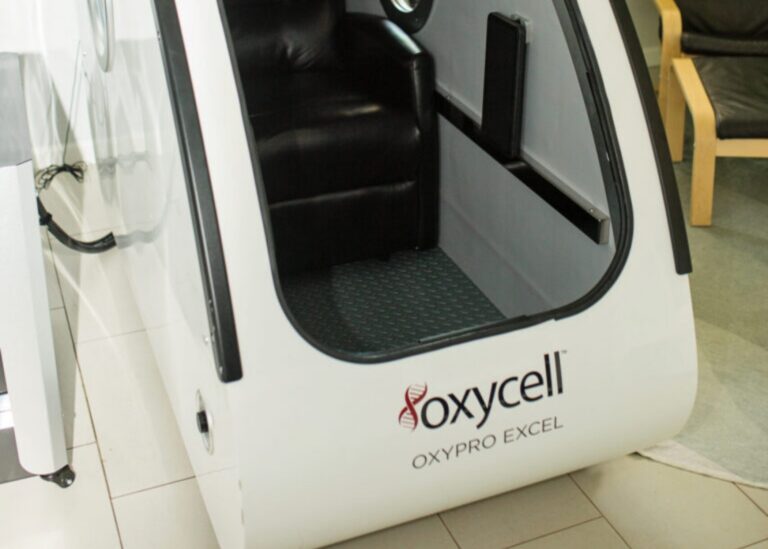
- Advanced Technology and Safety: We utilize a monoplace chamber pressurized to 2.0 ATA, significantly higher than standard 1.3-1.5 ATA systems. Critically, oxygen is delivered via mask rather than flooding the entire chamber with 100% oxygen. This approach offers major advantages: you can bring electronics (laptops, phones, tablets) into the chamber, significantly lower fire risk than whole-chamber oxygen systems, and higher pressure capability for enhanced oxygen dissolution in plasma.
- Fast, Flexible Access: Unlike hospital-based centers requiring insurance pre-authorization and facing months-long scheduling backlogs, HBOT at RMRM is available immediately. We operate outside the insurance framework, accepting self-pay patients and annual members. Members receive priority booking, meaning when you experience acute concussion symptoms or need pre-surgical optimization, you’re not waiting months. You can start therapy within days.
- Integration with Your Optimization Protocol: HBOT functions as a force multiplier for other regenerative modalities. Stem cell synergy: HBOT creates optimal conditions for stem cell integration, supporting angiogenesis and reducing inflammatory cytokines.
- Peptide and hormone optimization: HBOT enhances cellular responsiveness to peptide protocols (such as BPC-157, MOTS-c, or TB-500) and hormone optimization by improving mitochondrial efficiency and tissue perfusion.
- Pre- and post-surgical enhancement: HBOT optimizes tissue oxygenation and vascularity before surgery, creating a robust vascular bed pre-operatively. Post-operatively, it reduces swelling, minimizes scar tissue formation, and supports graft viability for surgeries like ACL reconstruction and joint replacement.
WHO THIS IS FOR: REAL APPLICATIONS AT RMRM
The Concussed Athlete
You took a hard impact to the head during sports or an accident. Weeks later, persistent headaches, brain fog, mood changes, and cognitive difficulty derail your season and your life. Standard rehabilitation hasn’t resolved your symptoms. Post-concussion syndrome can persist for months or years without intervention. HBOT addresses the root neurological injury: increasing blood flow to damaged brain tissue, stimulating mitochondrial repair, and reducing neuroinflammation that perpetuates symptoms. The sooner HBOT begins after injury, the better the potential outcome. Unlike hospital programs with month-long waits, we can begin therapy within days.
The Athletic Optimizer
You track your HRV, manage metabolic health, and optimize recovery between training blocks. HBOT represents another lever in your biological optimization stack; supporting mitochondrial function, reducing systemic inflammation, and accelerating recovery from soft tissue injuries, ligament damage, and intense training. For athletes at altitude or preparing for peak performance, HBOT enhances oxygen delivery to tissues under stress, potentially improving recovery trajectories and competitive outcomes.
The Surgical Patient
Preparing for ACL reconstruction, joint replacement, or orthopedic surgery? Pre-surgical HBOT optimizes tissue oxygenation and vascularity, creating a robust vascular bed that improves surgical outcomes. Post-operatively, physician-guided hyperbaric oxygen therapy reduces swelling, minimizes scar tissue formation, and supports graft viability, minimizes scar tissue formation, and supports graft viability, accelerating your return to activity. We use HBOT to enhance both pre-operative tissue preparation and post-operative recovery, making surgery outcomes more predictable.
The Post-Radiation Patient
You’ve completed radiation therapy for cancer and now face delayed radiation injuries, including osteoradionecrosis of the jaw, radiation cystitis, or soft tissue radionecrosis. HBOT is FDA-approved for these conditions and can be essential for recovery. Note: HBOT is not a cancer therapy and is contraindicated in active malignancy.
What to Expect During Therapy
- Preparation: Wear comfortable, cotton clothing, and remove any unnecessary jewelry. One of our highly skilled Registered Nurses will take your vital signs, review contraindications, explain the buttons and gauges, and answer any questions.
- During therapy: You will get comfortable in the chamber’s recliner chair and fit the oxygen mask over your nose and mouth. As the chamber pressurizes to 2.0 ATA, you may feel pressure in your ears similar to airplane descent (relieved by yawning or swallowing). Throughout the 60-90 minute session, you can read, work on your laptop, listen to music, watch television, or rest. Electronic devices are permitted.
Side Effects and Safety Information
HBOT is considered safe when administered by trained providers in accredited medical facilities. However, patients may experience temporary side effects:
Common Temporary Side Effects:
- Ear and sinus discomfort: Pressure changes may cause ear pain or sinus congestion, typically resolving after therapy.
- Temporary vision changes: Approximately 60-75% of patients receiving prolonged HBOT courses may experience temporary myopic shift (nearsightedness). These vision changes are temporary and typically resolve within days to weeks after therapy completion, with most resolution occurring within 10-12 weeks. Permanent vision changes are rare and typically occur only after very prolonged therapy exceeding 100 sessions.
- Claustrophobia: Some patients may experience anxiety in monoplace chambers.
Serious Complications (Rare):
- Oxygen toxicity seizures: Research analyzing 62,614 HBOT sessions found approximately 1 seizure per 10,000 therapy (0.01%) when standard air break protocols are followed. Seizures typically resolve quickly when oxygen delivery is reduced.
- Ear barotrauma and collapsed lung: These are rare and typically occur only in patients with certain pre-existing conditions.
Who Should Not Receive HBOT:
- Patients with an untreated pneumothorax (collapsed lung)
- Patients with recent ear surgery or ear injury
- Patients with active fever or upper respiratory infection
- Patients with certain lung diseases (COPD, cystic fibrosis, emphysema)
Pregnancy: HBOT is recommended for acute carbon monoxide poisoning in pregnant women, as untreated CO poisoning carries a 36-67% risk of fetal death. Recent research demonstrates that HBOT for CO poisoning is safe across all pregnancy trimesters with good maternal and fetal outcomes.
How RMRM Evaluates Your Candidacy for HBOT
At Rocky Mountain Regenerative Medicine, we take a comprehensive approach to determining whether HBOT is appropriate for you. This is fundamentally different from conventional appointments, which often make therapy decisions quickly without full evaluation.
Your Initial Consultation (15-30 Minutes)
During your first visit, we conduct a thorough evaluation to understand your complete health picture:
- Detailed history: We discuss when your condition began, what therapy you’ve tried, how your symptoms affect daily life, and your complete medical history, not just your presenting problem.
- Imaging review: If you have brought relevant medical imaging (MRI, X-ray, CT scan), we will review it together and explain what it shows and how it relates to your condition and therapy options.
- Lifestyle assessment: We evaluate factors that influence healing, including diet, exercise, sleep quality, stress levels, and environmental exposures. These factors significantly impact whether HBOT and other therapy will be effective.
- Physical examination: We perform a physical exam relevant to your condition.
- Goal setting: We discuss what success looks like for you, your timeline, and your priorities (pain relief, function improvement, avoiding surgery, etc.).
Before Your Visit:
Please complete our comprehensive new patient paperwork thoroughly and gather relevant medical records. This allows us to review your information in advance and make the most of our time together. Bring or send:
- Previous imaging studies (MRI, X-ray, CT, ultrasound reports and images)
- Recent laboratory results and previous testing
- Records from previous healthcare providers
- Complete list of current medications and supplements
- Your written questions about HBOT and your condition
After Your Evaluation:
We provide a written summary including:
- Our assessment of whether HBOT is appropriate for you
- Therapy options discussed
- Expected outcomes and timeline
- Cost estimates
- Next steps
You will have time to review this information, ask follow-up questions, and make an informed decision without pressure.
If HBOT Is Appropriate:
If we recommend HBOT, we coordinate your care in our Boulder, CO clinic, and may recommend pre-therapy optimization, including biomarker testing, hormone assessment, nutritional evaluation, and lifestyle modifications to create the best possible environment for healing.
How We Support Your Recovery
At Rocky Mountain Regenerative Medicine in Boulder, we view HBOT as one potential component of comprehensive, personalized care. We don’t rush decisions or therapy. Our approach is whole-person medicine, seeking to understand the complete picture of your health and identify root causes.
If you’re dealing with a chronic wound, recovering from an injury, or exploring options to optimize tissue healing, we can help determine whether HBOT is appropriate for your specific situation.
Ready to explore whether HBOT might support your health goals? Contact us today or book an appointment to schedule your comprehensive initial consultation.
Our clinic is located in Boulder, Colorado, serving patients throughout the Front Range, including Denver, Fort Collins, and Colorado Springs.
Learn more about our therapies and personalized care approach.
Source: Cleveland Clinic, Johns Hopkins Medicine, FDA guidelines
Source: FDA official statements, UHMS (Undersea & Hyperbaric Medical Society)
Source: FDA consumer alert (2013); Cleveland Clinic; Harvard Health
Source: Cleveland Clinic, Johns Hopkins Medicine
Source: Cleveland Clinic, Johns Hopkins Medicine, Mayo Clinic
Sources: Cleveland Clinic, Johns Hopkins Medicine, FDA guidelines, UHMS, StatPearls (NCBI), American Journal of Emergency Medicine (2021)