
One of the most consistent patterns I see in patients who age well is that they never stopped moving. Not because they were immune to injury or joint degeneration, but because they adapted. They found ways to stay physically active through every obstacle, every setback, and every decade.
The patients who struggle most, the ones whose quality of life declines sharply in their 60s and 70s, are often the ones who got injured in their 40s or 50s, stopped exercising because it hurt, and never replaced that activity with something they could do. The gap between those two trajectories is enormous. And much of it is preventable.
As a performance and optimization specialist, I want to share what the orthopedic science actually tells us about protecting our joints, understanding our treatment options, and building the physical resilience that keeps us capable and independent for as long as possible.
1. The Joint That Determines Your Healthspan: The Knee
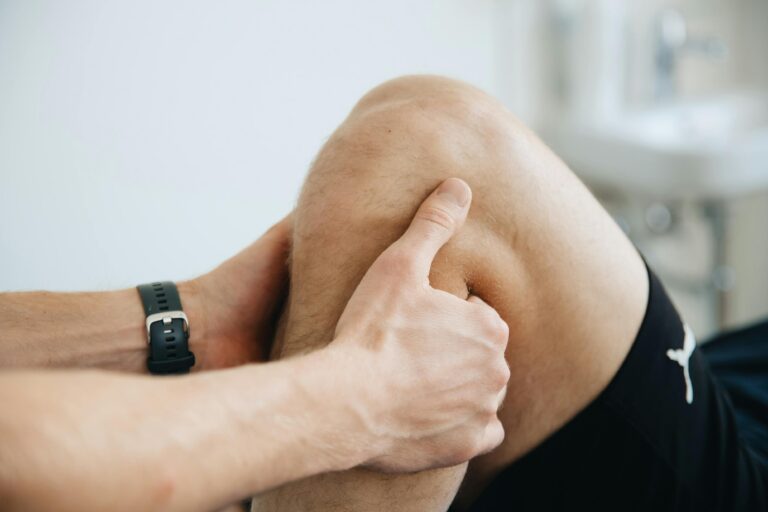
The knee is one of the most elegant and most vulnerable structures in the human body. It is extraordinarily good at bearing weight. It is not particularly well-designed for the rotational stresses and impact forces that modern athletic activity places on it. Understanding its structure and its vulnerabilities is the foundation of protecting it.
The knee has four main ligaments: the ACL and PCL, which cross in the center and control rotational stability; and the MCL and LCL on the inner and outer sides, which prevent the knee from swaying side to side. Of these, the ACL is the most commonly injured, typically through rotational forces, and its tear initiates a cascade of problems if not properly addressed. An unfixed ACL leads to instability, which over time produces accelerated wear on the cartilage.
But if there is one structure in the knee that determines your long-term joint health more than any other, it is the cartilage. Specifically the hard articular cartilage and the meniscus, the wedge-shaped soft cartilage that distributes forces across the joint. Every person will eventually lose hard cartilage. The question is when and how fast. The factors that accelerate that loss are largely well understood: genetics, past injuries, body weight, and exercise form. All of these except genetics are modifiable.
The meniscus deserves particular attention. It contours the flat tibial plateau to match the rounded femoral condyles, distributing contact pressure across a much wider surface area than the joint could achieve without it. Losing the meniscus is, in the words of orthopedic medicine, the beginning of the end for most people’s knees. Once the meniscus is significantly damaged and hard cartilage begins to go, the symptoms of knee arthritis, pain, swelling, stiffness, and limitation of movement, begin to define how active a person can be. This is precisely where healthspan and lifespan begin to diverge.