
Chronic pain from tendon injuries, heel pain, or shoulder problems can linger for months, sometimes years, even with rest and traditional care. I see this constantly in my practice. For many of my patients dealing with these conditions, extracorporeal shockwave therapy (ESWT) has gained attention as a non-invasive option that may help restart the body’s healing process. So what do the shockwave therapy benefits actually look like when you dig into the evidence?
Key Takeaways
- Shockwave therapy benefits include non-invasive treatment using acoustic waves, not electrical currents, to target injured tissue.
- Plantar fasciitis has the strongest evidence, with success rates of 34% to 88% across clinical studies.
- Calcific shoulder tendinitis also shows favorable outcomes in clinical research.
- A typical course involves 3 to 6 sessions, with full results developing 8 to 12 weeks after the final session.
- Side effects are generally minor and temporary.
What Is Shockwave Therapy?
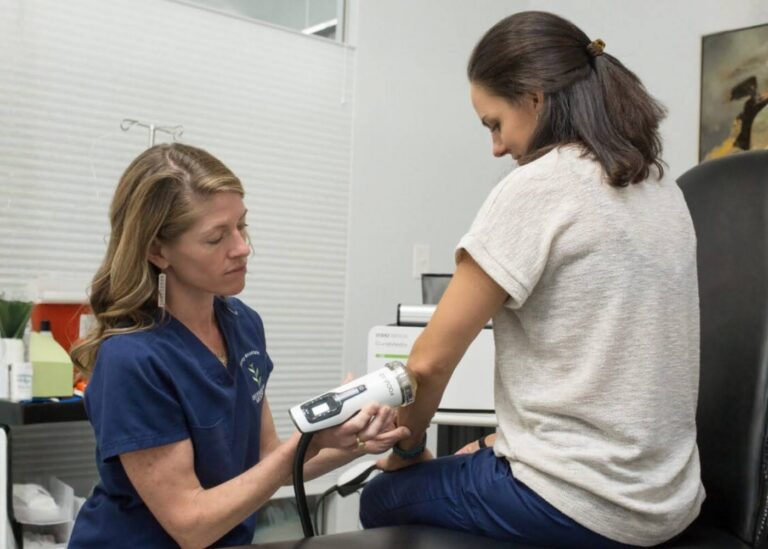
Shockwave therapy is a non-invasive treatment that uses high-energy sound waves, or acoustic waves, to target injured tissue. A handheld device sends these waves through the skin to a specific area where healing has stalled. Depending on the device, those pressure waves can penetrate 6 centimeters or more, reaching deep muscle, tendon, and bone tissue that surface-level treatments cannot.
One misconception I hear from patients often is that the “shock” in shockwave refers to electricity. That’s not the case. The waves are purely mechanical, similar to sound pulses, not electrical currents. Sessions typically take about 10 to 30 minutes, depending on the size of the area being treated.
Two Types of Shockwave Therapy
I generally use one of two types based on the condition being treated:
- Radial shockwave therapy (RSWT): Sends pressure waves outward across a broad, shallow area. Most commonly used in outpatient settings for soft tissue conditions.
- Focused shockwave therapy (FSWT): Delivers energy to a deeper, more precise point. Often used for bone-related conditions or dense calcium deposits.
How Does Shockwave Therapy Work?
Shockwave therapy works through a process called mechanotransduction, where mechanical energy is converted into biological signals at the cellular level. The sound waves create a controlled micro-stress in tissues where healing has stalled, prompting the body to restart its natural repair cycle. This is really the foundation of the shockwave therapy benefits I explain to patients before we ever get started.
What Happens in the Body During Treatment
Here is what I believe, based on the research, may occur when shockwaves reach injured tissue:
- New blood vessel growth (neovascularization): The waves may stimulate new blood vessel formation, potentially improving oxygen and nutrient delivery to the affected area.
- Growth factor release: Mechanical stress could trigger the release of proteins that support tissue repair in tendons, including factors that activate fibroblasts, the cells that heal connective tissue.
- Breakdown of calcium deposits: For conditions like calcific tendinitis, the acoustic energy may help break apart calcium buildup in tendons.
- Pain signal modulation: Shockwaves could overwhelm local nerve endings and may reduce levels of Substance P, a chemical linked to chronic pain signaling.
- Inflammation modulation: For conditions where the body is stuck in a prolonged inflammatory state, the therapy may help reduce chronic inflammation, creating conditions more favorable for tissue repair.
Which Conditions Benefit Most from Shockwave Therapy?
Growing evidence for shockwave therapy suggests potential benefit across several chronic musculoskeletal conditions, particularly those that have resisted other treatments. Here’s where I see the clearest shockwave therapy benefits in my own practice.
Plantar Fasciitis (Heel Pain)
Calcific Shoulder Tendinitis
Achilles Tendinopathy
Tennis Elbow (Lateral Epicondylitis)
Patellar Tendinopathy (Jumper’s Knee)
Bursitis and Myofascial Pain
What Does a Typical Treatment Session Look Like?
A standard course of shockwave therapy usually involves 3 to 6 sessions, spaced one to two weeks apart. Sessions generally take 10 to 30 minutes and follow the same steps I use with every patient:
- Locating the area: I identify the exact point of maximum tenderness.
- Applying gel: A water-based gel goes on the skin to help transmit the sound waves.
- Delivering the treatment: The handheld device presses against the skin and delivers a series of rapid pulses. Most patients describe a strong tapping or pulsating sensation.
- Adjusting intensity: I can increase or decrease the energy level based on your comfort.
Most people can return to normal activities right after treatment, with no downtime required, which is one of the shockwave therapy benefits patients appreciate most. I recommend avoiding high-impact exercise for about 48 hours. I also ask patients to hold off on anti-inflammatory medications like ibuprofen before and after treatment, since NSAIDs could interfere with the therapy’s controlled inflammatory response.
Safety and Side Effects
Shockwave therapy is generally considered safe when performed by a qualified provider, with a strong safety profile confirmed across clinical studies. Safety is one of the shockwave therapy benefits I emphasize most with new patients.
Common side effects that may occur include:
- Temporary redness or swelling at the treatment site
- Mild soreness or bruising
- Short-term numbness in the area
Serious complications are rare. That said, I don’t recommend shockwave therapy for individuals with blood-clotting disorders, active infections in the treatment area, or during pregnancy.
Who May Not Be a Good Fit
Shockwave therapy works best for chronic soft tissue injuries that have been diagnosed and have not responded to conservative treatment. Certain situations call for a different approach:
- Acute injuries. If you were injured recently, rest and physical therapy may be more appropriate first.
- Severe or complete tears. Fully ruptured tendons or ligaments may need surgical repair before considering shockwave.
- Very early-stage conditions. If conservative treatment hasn’t been tried yet, shockwave may not be the right first step.
Results vary from person to person. Some patients see dramatic improvement, others see modest change, and a smaller number see little benefit. I’d rather tell you that upfront than oversell it.
When Can You Expect Results?
Patience matters with shockwave therapy. Many of my patients notice improvement after 2 to 4 sessions, but the full healing response can take 8 to 12 weeks to develop after the final session. The shockwave therapy benefits build gradually. The waves trigger the healing cascade, but actual tissue remodeling takes time.
Is Shockwave Therapy Right for You?
The growing body of evidence around shockwave therapy benefits points to a non-invasive option that may support healing for certain chronic musculoskeletal conditions. Unlike treatments that only manage pain temporarily, shockwave therapy aims to address the underlying tissue damage, encouraging your body to rebuild rather than just mask discomfort.
Getting the right diagnosis before starting treatment matters to me. A comprehensive evaluation, including imaging to confirm the injury and rule out conditions that shockwave cannot treat, is the foundation of effective treatment.
At Rocky Mountain Regenerative Medicine here in Boulder, I combine shockwave therapy with advanced diagnostics and personalized care planning. My team and I assess your specific injury and develop a customized treatment plan. Combined with options like stem cell therapy, peptide therapy, exosome therapy, and hyperbaric oxygen therapy, the goal is to help your body heal from within. Through our Annual Membership Program, you’ll receive personalized, ongoing care tailored to your needs.