
You’ve heard about stem cell therapy. Maybe you’ve read stories about people experiencing pain relief from joint injuries. But when you try to understand what actually happens and what the science really shows, separations emerge between marketing claims and clinical evidence.
Here’s what current research tells us about how stem cell therapy actually works.
What Are Stem Cells and How Do They Work?
Stem cells are early-stage cells your body naturally produces. They’re unique because they haven’t yet become specialized. A stem cell could potentially become a cartilage cell, a bone cell, a muscle cell, or other tissue types. This flexibility makes them interesting for medical applications.
When injected into damaged tissue, stem cells release substances that reduce inflammation. Research shows they also secrete growth factors and signaling molecules that may help create a healing environment. Whether the cells themselves transform into replacement cartilage is less certain based on current clinical evidence.
The most studied stem cells for joint treatment are mesenchymal stem cells, or MSCs. At RMRM, we specifically use autologous stem cells from your own adipose (fat) tissue.
Why Adipose Over Bone Marrow?
Adipose tissue provides significant advantages:
- Cell yield: 500-1,000 times more stem cells per gram than bone marrow (which contains ~0.01% stem cells)
- Harvest procedure: Local anesthesia, 30-45 minutes, mild 2-3 day soreness vs. bone marrow’s deep sedation and 1-2 weeks restricted activity
- Age advantage: Bone marrow stem cells decline 90% by age 70; adipose maintains stable populations throughout life
- Safety: Autologous cells eliminate rejection risks and foreign material complications
How Stem Cells May Help Joint Pain
Research identifies two main mechanisms through which injected stem cells may work:
Paracrine Signaling (Primary Mechanism) When stem cells reach damaged tissue, they release anti-inflammatory compounds, including growth factors and signaling proteins. These molecular signals appear to be the primary source of therapeutic benefit. Studies show this effect is temporary, typically active for 3 to 6 months after injection.
Potential Cell Differentiation (Secondary/Uncertain) Laboratory studies show that stem cells can transform into cartilage cells under specific conditions. However, whether this occurs meaningfully in actual human joints after injection remains uncertain. Clinical studies have not confirmed that cartilage regeneration occurs in patients.
Why We Chose Adipose-Derived Stem Cells Over Bone Marrow
Clinical Evidence Favoring Adipose Tissue:
- Knee osteoarthritis: 2021 systematic review (Journal of Orthopaedic Surgery and Research) shows adipose cells deliver superior pain reduction and functional improvement
- Cartilage repair: Adipose-derived cells produce a more robust cartilage matrix with better tissue integration
- Neurological applications: Superior neuroprotective properties and blood-brain barrier crossing ability for post-concussion syndrome treatment
- Wound healing: Accelerated closure and reduced scarring due to higher growth factor secretion
Autologous (Your Own Cells) vs. Allogeneic (Donor Cells):
We exclusively use autologous therapies, processed and returned the same day. This eliminates:
- Immune rejection risks
- Autoimmune complications
- Viability loss (donor cell therapies lose viable stem cells during commercial processing and freezing)
- FDA regulatory concerns (FDA has issued multiple warnings about donor cell products)
RMRM’s Systems-Based Approach: Beyond the Injection
Here’s where we diverge from standard orthopedic practice. Your body is an integrated system. Chronic inflammation, hormonal imbalances, and metabolic dysfunction create an environment where joints degrade. At RMRM, we don’t simply introduce regenerative cells into damaged tissue. We create the biological conditions where those cells can actually survive, integrate, and function.
We maintain a robust toolkit of adjunctive therapies that work synergistically with your stem cells:
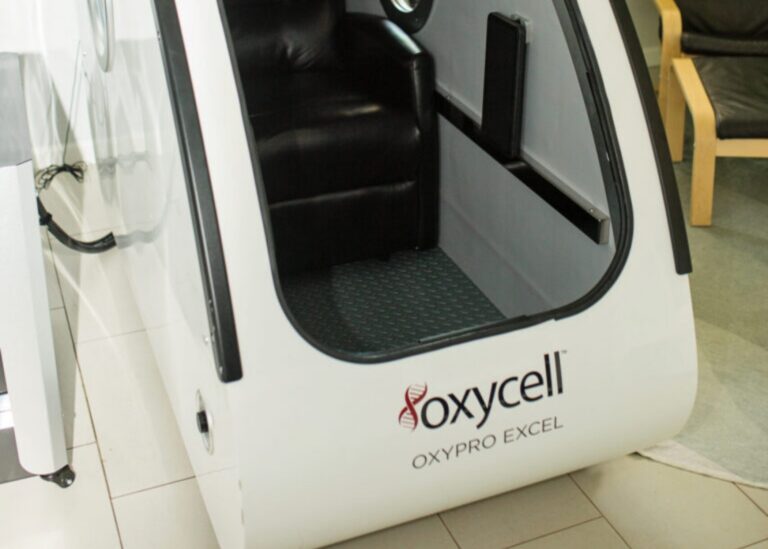
Hyperbaric Oxygen Therapy (HBOT): Delivers concentrated oxygen under pressure, creating an oxygen-rich environment that supports the survival and function of newly introduced cells. Benefits extend to cognitive function, immune regulation, and systemic healing.
Shockwave Therapy: Helps localize cellular attention to specific areas of damage during the preparation phase, effectively targeting your regenerative cells while providing immediate symptomatic relief.
Hormonal Optimization: Addresses underlying hormonal deficiencies that impair tissue repair. If your endocrine system isn’t supporting regeneration, even the best cells struggle to function.
Peptide Therapy: Augments your biology by supporting healing, reducing inflammation, and optimizing metabolic function. These work powerfully when coordinated with your regenerative timeline.
Advanced Diagnostic Imaging: We utilize MRI and advanced imaging to ensure we’re seeing the full picture of your joint health before making recommendations.
Collaborative Rehabilitation Network: We maintain relationships with select physical therapists in Boulder who understand our approach, ensuring seamless continuity of care before and after your procedure.
This isn’t an assembly line. Adjuncts are personalized to your specific biology, goals, and preferences.
The Stem Cell Injection Procedure
The Harvest Procedure
If you are receiving adipose-derived stem cell therapy, the first step is harvesting the adipose tissue.
We use local anesthesia to numb the harvest area, typically the flanks. You will be awake but comfortable. The anesthesia works quickly, and you should feel only pressure, not pain.
Using a small cannula (a thin tube similar to those used in liposuction), we extract a small amount of adipose tissue, typically 20-30 milliliters, about the volume of a shot glass. The procedure takes about 30-45 minutes.
Comfort: Most patients report feeling pressure and movement but not pain. If you experience any discomfort, we can adjust the anesthesia.
After harvest, the small incision is left open to allow for drainage over the ensuing couple of days, but otherwise covered with a bandage. You will have some soreness in the harvest area, similar to a bruise, but this is typically mild and resolves within a few days.
Processing
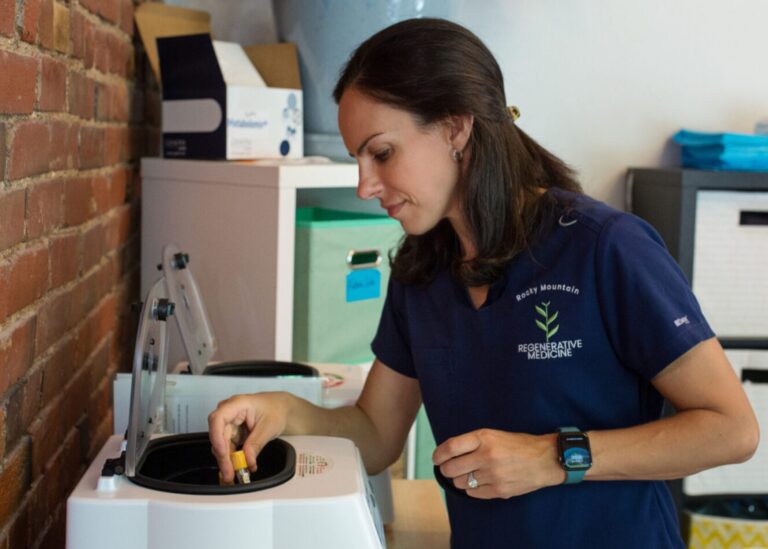
If yours is a same-day procedure, while you rest comfortably, your adipose tissue is processed on-site to isolate the stem cells. This takes 1-2 hours. During this time, you can relax, read, use your phone, or even nap.
If your cells are being banked, the collected fat is transported to the lab where the stem cells are isolated and replicated over the subsequent 6 weeks. Those cells are then cryopreserved for future deployment.
The Injection Procedure
Once the stem cells are ready, we proceed with the injection.
Preparation: The treatment area is cleaned and prepped. For joint injections, we use ultrasound guidance to ensure precise placement. For spinal injections, fluoroscopy x-ray imaging is used. For intravenous administration, we establish an IV line.
Anesthesia: Local anesthesia is used to minimize discomfort during injection. For some procedures, we may also offer mild sedation if you prefer.
The injection: The stem cells, which can be combined with PRP and other supportive factors, are injected into the target area. For joint conditions, this means directly into the joint space. For neurological or systemic applications, this may be intravenous. For aesthetic procedures, precise placement in facial tissues or the scalp.
Duration: The injection itself typically takes about 30 minutes, depending on the complexity and number of treatment areas.
Comfort: You may feel pressure, mild discomfort, or a sensation of fullness during injection. Most patients tolerate this well. If you experience significant discomfort, we can adjust our approach.
After injection, stem cells begin releasing anti-inflammatory compounds. Most patients notice some pain improvement within 1 to 3 months. Full effects typically develop over 3 to 6 months
Post-Deployment Support: The Critical Phase
Following stem cell deployment, we recommend hyperbaric oxygen therapy to deliver high concentrations of oxygen to newly introduced cells, supporting their integration and function. This coordinated approach is where many clinics fall short.
Safety and Side Effects
Autologous stem cell therapy (using your own cells) is generally safe. Your immune system recognizes your cells, making rejection uncommon.
Common side effects include mild soreness at the injection or harvest site, usually resolving within days. The MILES Study found no study-related serious adverse events across treatment groups during one year of follow-up. However, all joint injection procedures carry a small risk of infection. Discuss specific risks with your provider.
Regulatory Status: No FDA-approved stem cell products exist specifically for treating knee or hip osteoarthritis. Only autologous, minimally-manipulated stem cells may be used.
Real-World Patient Transformation
Consider a patient who arrived with severe knee pain. A standard clinic might have immediately deployed stem cells. But we recognized that biology is more complex than the knee MRI alone.
During consultation, we discovered he was pre-diabetic, with weight creating mechanical stress that would eventually compromise any biological repair. We explained full optimization and left the decision to him:
We provided shockwave therapy 1-2 times weekly, offering significant pain relief without steroids. We addressed his metabolic issues through peptide therapy and insulin resistance management. He worked with a Boulder-based physical therapist on movement re-education. Only after he lost 30 pounds over six months, reducing mechanical load and optimizing his metabolic terrain, did we harvest and deploy his autologous stem cells. Following deployment, Hyperbaric oxygen therapy supported cell integration and function.
One year post-deployment, he was not merely better. He was metabolically healthier, physically stronger, and had preserved his native knee joint, avoiding irreversible surgery.
Conditions Stem Cell Therapy May Help
Stem cell therapy is being investigated for various joint and tissue conditions:
- Knee pain from cartilage damage or arthritis
- Hip pain and labral tears
- Shoulder injuries and rotator cuff problems
- Ankle sprains and chronic instability
- Lower back pain from disc degeneration
- Tendon and ligament injuries
Important Note: Research is most extensive for knee osteoarthritis. Evidence for other conditions is more limited. Not all conditions show equal benefit. Discuss your specific condition with a specialist.
Who Benefits From This Approach?
The Systems Thinker: You understand that shoulder pain reflects sleep quality, stress levels, and metabolic health, not just the joint itself.
The Preservation-Minded: You value your native anatomy and want to exhaust biological options before considering irreversible surgical intervention.
The Optimization-Oriented: You view this as an infrastructure investment. You’re willing to step outside the insurance model to preserve mobility and function for decades.
Conclusion
Stem cell therapy is an active area of medical research. Current evidence shows that stem cell injections may provide pain relief. Not all patients benefit equally, and effects may be temporary.
At Rocky Mountain Regenerative Medicine in Boulder, we approach regenerative medicine differently. We don’t simply introduce cells into damaged tissue. We optimize your whole system: addressing metabolic health, hormonal balance, inflammatory status, and movement patterns. We provide a comprehensive evaluation to determine whether stem cell therapy may be appropriate for your specific condition and discuss realistic expectations based on current clinical evidence.
Schedule a consultation to discuss whether stem cell therapy might be right for your situation, or contact our team with any questions about regenerative medicine options.
Disclaimer: This information is for educational purposes only and is not a substitute for professional medical advice. The evidence for stem cell therapy is still developing. Clinical benefits remain uncertain and may be temporary. Discuss your specific situation with a qualified healthcare provider before pursuing any treatment.
FAQs
What does current research show about success rates?
The MILES Study found stem cell therapy and corticosteroid injections provided similar pain improvement (approximately 40-50% pain reduction at one year). Not all patients experience improvement. Results vary based on disease severity, age, and other factors.
How long do benefits last?
Most clinical studies follow patients for one year. Benefits appear to plateau around 6 months. Whether benefits extend beyond one year is unknown, as longer-term studies are limited.
Is stem cell therapy covered by insurance?
Most insurance does not cover stem cell procedures for joint pain because they’re considered experimental or investigational. Patients typically pay out-of-pocket, ranging from $8,000-$10,000 depending on the procedure.
How is stem cell therapy different from PRP therapy?
PRP (platelet-rich plasma) uses growth factors from your own blood. Stem cell therapy uses actual cells that may release different signaling molecules. Some clinics, like Rocky Mountain Regenerative Medicine, offer both treatments. Evidence for both approaches is still developing.
Can I return to exercise after stem cell therapy?
Yes, with caution. Light activity can resume within days. Gradually return to more demanding exercise over several weeks to allow the injection site to settle. Your provider will give specific guidelines based on your condition and injection site.
Why choose RMRM for stem cell therapy?
RMRM offers expertise in cell therapies, advanced imaging for precise placement, proper laboratory processing, whole-system optimization, and adjunctive therapies like HBOT and shockwave therapy to support lasting results.