
Living with chronic joint pain or a body that just does not recover the way it used to can be exhausting. When every morning starts stiff, and every activity comes with a cost, you start looking for something different. You want answers, not just another prescription.
For many people across Colorado, stem cell therapy has become that next step. As a branch of regenerative medicine, stem cell therapy uses the body’s own cells to support healing in damaged joints and soft tissue. With clinics across Denver, Boulder, Fort Collins, and Vail, the options are growing, but not every provider works the same way. Knowing what to look for puts you in control of that decision.
Table of Contents
- What You Need to Know
- What to Look for in a Colorado Stem Cell Therapy Provider
- Physician-Led vs. Franchise Models
- Adipose-Derived vs. Bone Marrow-Derived Stem Cells: Does the Source Matter?
- Why RMRM Serves Boulder, Denver, and the Front Range
- Questions to Ask Any Colorado Stem Cell Clinic
- Frequently Asked Questions
What You Need to Know
- Stem cell therapy uses the body’s own cells to support tissue repair as part of Colorado regenerative medicine.
- Provider credentials, cell sourcing, imaging guidance, and follow-up protocols are the most important evaluation factors.
- Physician-led, physician-owned clinics differ from franchise or multi-location models in meaningful ways.
- Adipose-derived stem cells and bone-marrow-derived stem cells work through different mechanisms, and the source can influence outcomes.
What to Look for in a Colorado Stem Cell Therapy Provider
Not all stem cell clinics offer the same level of care. Several factors can help you tell the difference between a quality provider and one that may not meet safety standards.
Are the Physicians Board-Certified?
A provider’s medical credentials are the first thing to check. Look for board-certified physicians in specialties such as orthopedics, sports medicine, pain management, or emergency medicine, and verify credentials through your state medical board.
The International Society for Stem Cell Research (ISSCR) recommends that patients confirm their provider has formal training in the specific procedure being offered, not just a general medical license.
What Cell Source Does the Clinic Use?
Quality clinics use autologous cells harvested from your own bone marrow or adipose tissue during the same procedure. The FDA has cautioned consumers about clinics selling donor-derived products for uses that have not been reviewed for safety and effectiveness.
Does the Clinic Use Image-Guided Injections?
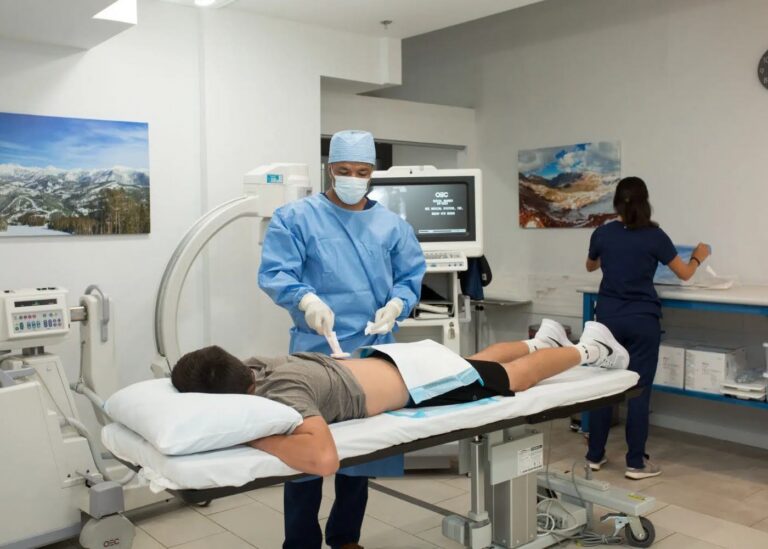
Precision matters when placing cells into a joint, disc, or tendon. Top stem cell therapy providers in Colorado use ultrasound or fluoroscopy (live X-ray) to guide injections to the exact site of damage, which may reduce the risk of misplacement.
Does the Provider Offer Comprehensive Protocols?
A single injection without follow-up or complementary support is a limited approach. Stronger providers build multi-session protocols and may combine stem cell therapy with PRP (platelet-rich plasma), peptide therapy, hormone optimization, or hyperbaric oxygen therapy to support healing over time. Some clinics also conduct pre-treatment optimization, using comprehensive biomarker testing, nutritional evaluation, and hormone assessment to prepare the body for the best possible response before the procedure even begins. Ask how many follow-up visits are included and what happens if you do not see improvement.
Physician-Led vs. Franchise Models
One of the most overlooked differences between stem cell clinics in Colorado is the ownership and leadership structure.
How Does a Physician-Led Clinic Differ?
A physician-led, physician-owned clinic is one where the founding doctors are directly involved in patient care, protocol development, and treatment decisions. Protocols are typically built on the clinic’s own clinical experience and published research, and the physicians carry personal accountability for outcomes. With a physician-led model, you are more likely to see the same doctor across consultations, procedures, and follow-ups, and protocols can be adjusted based on your individual response.
What Characterizes a Franchise or Multi-Location Model?
Franchise or multi-location models operate under a shared brand name across several cities or states. The treating physician at one location may not have developed the protocol being used and may rotate between sites. While these models can offer convenience, the level of direct physician involvement can vary.
What Should You Ask?
Before committing, ask whether the physician performing your procedure is also the one who designed your protocol. Clinics whose leadership has published peer-reviewed work on stem cell outcomes tend to demonstrate a deeper commitment to the field.
Adipose-Derived vs. Bone Marrow-Derived Stem Cells: Does the Source Matter?
Most stem cell procedures in Colorado use adult mesenchymal stem cells from one of two autologous sources, and the source can influence cell count, collection method, and the overall procedure experience.
What Are Adipose-Derived Stem Cells?
Adipose-derived stem cells (ADSCs) come from your own fat tissue, collected through a small liposuction procedure. Fat tissue contains a high concentration of mesenchymal stem cells per volume. A study published via the National Library of Medicine confirmed that adipose-derived stem cells share similar biological properties with bone marrow-derived cells and can differentiate into multiple cell types.
Adipose collection may yield a larger number of stem cells per procedure and tends to involve a less invasive harvest, though the comparison depends on how cell counts are measured and the protocol used.
What Are Bone Marrow-Derived Stem Cells?
Bone marrow-derived stem cells (BMSCs) are drawn from the hip bone and provide mesenchymal stem cells along with a rich supply of growth factors. According to published research in the National Library of Medicine, bone marrow-derived mesenchymal stem cells are among the most widely studied stem cell populations in regenerative medicine. However, the aspiration process can be more uncomfortable than adipose collection, and the stem cell yield per volume tends to be lower.
Which Source Is Better?
Neither source is universally superior, and the right choice depends on the condition being addressed, the volume of cells needed, and the provider’s expertise. Some clinics use a combination of both. Providers who partner with an established cell processing lab, such as a registered tissue bank, can help ensure cells are handled under strict quality standards.
Why RMRM Serves Boulder, Denver, and the Front Range
For Colorado residents comparing providers, Rocky Mountain Regenerative Medicine (RMRM) in Boulder offers a physician-founded, physician-owned model built around personalized, longevity-focused care.
RMRM uses adipose-derived stem cells processed in coordination with American Cell Technology, an FDA-registered tissue bank. Injections are performed using ultrasound and X-ray guidance in the clinic’s procedure suite in Boulder.
While located in Boulder, RMRM regularly serves patients from Denver, Broomfield, and across the Front Range. The clinic is approximately 30 minutes from Denver and about 45 minutes from Fort Collins, making it accessible for most Front Range residents.
Questions to Ask Any Colorado Stem Cell Clinic
Before choosing a provider, bring these questions to any consultation. A quality clinic will answer all of them clearly.
- What are the treating physician’s board certifications and training background?
- Are the stem cells autologous (from my own body), and are they adipose-derived, bone-marrow-derived, or both?
- Does the clinic use ultrasound or fluoroscopy to guide injections?
- How many stem cell procedures has the clinic performed?
- Has the clinic published any outcome data or peer-reviewed research?
- What does the full protocol include beyond the initial injection (follow-ups, booster sessions, complementary therapies)?
- What realistic outcomes can I expect based on my specific condition?
- How does the clinic handle cases where the patient does not see improvement?
The ISSCR and the FDA’s consumer alert on regenerative medicine are both valuable resources for understanding what to look for and what to avoid.
Conclusion
Choosing the best stem cell therapy in Colorado comes down to credentials, cell sourcing, imaging guidance, protocol depth, and the honesty of the consultation. A physician-led clinic with published outcomes and a transparent process can give you a strong foundation for a good experience.
Book an Appointment with Rocky Mountain Regenerative Medicine, or call 720-739-1616 to discuss your options with a qualified regenerative medicine team. RMRM’s annual membership programs also provide ongoing access to stem cell therapy, exosome therapy, shockwave therapy, and other regenerative services.
Disclaimer: The information in this article is for educational purposes only and is not a substitute for professional medical advice. Consult with a qualified healthcare provider before pursuing any medical procedure. Individual results may vary.