
Stem cell therapy for back pain is gaining interest as a possible alternative to surgery and long-term medication. Early clinical trials suggest it may help reduce pain and improve function. Results can take months, but many people prefer this option to surgery, and improvement is slower than many people expect. Here is what the research says, who might benefit, and what realistic outcomes look like.
Back pain affects roughly 39% of American adults in any given three-month period, according to CDC data. For many, standard treatments fall short. Medications mask symptoms, steroid injections wear off in weeks, and surgery does not always lead to lasting improvement. A growing number of patients and physicians are turning to regenerative approaches that aim to address the underlying tissue damage rather than just managing pain. Stem cell treatment for back pain falls into that category, with growing interest in Boulder, Colorado, and across the country.
Key Takeaways
- Stem cell therapy for back pain is a minimally invasive procedure still under active clinical study
- Early trials show some patients may experience meaningful pain relief, but outcomes vary widely
- Results develop gradually over months, not days or weeks
- Not everyone is a good candidate, and the treatment is not a guaranteed fix with a single treatment
- Combining stem cell therapy with other approaches may enhance results for some patients
What Is Stem Cell Therapy for Back Pain?
Stem cells are the body’s building blocks, with the ability to develop into different cell types. That characteristic is what makes them useful in medicine.
How Does the Procedure Work?
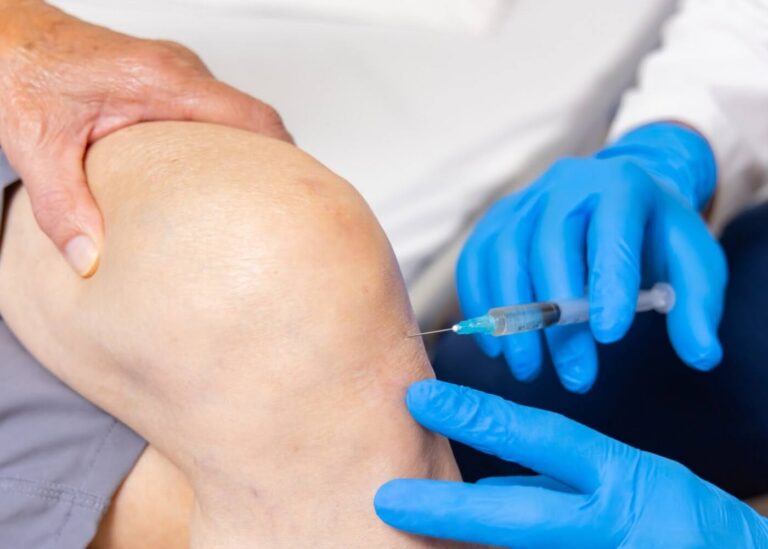
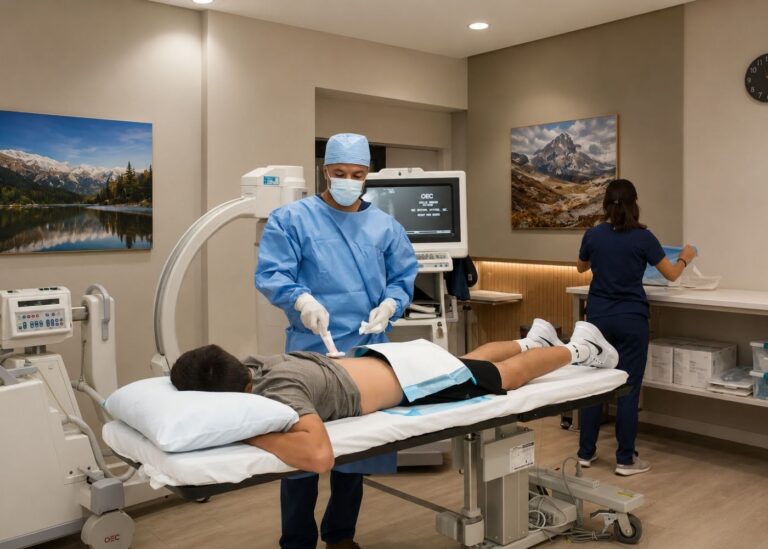
A physician collects stem cells from the patient’s own body, usually from bone marrow or fat tissue, and injects them into the affected spinal structure using imaging guidance (fluoroscopy or ultrasound) for precise placement. The procedure takes one to two hours, is performed under local anesthesia in an outpatient setting, and most people go home the same day (NIH PMC, “Stem Cell Therapy in Discogenic Back Pain”). The goal is to support the body’s natural repair process rather than just masking pain.
What Back Conditions May Be Targeted?
Back pain rarely comes from a single source. The spine is complex, and multiple areas can contribute to pain at the same time. Stem cell injections for back pain may target several structures:
- Degenerated discs: Spinal discs lose hydration and height over time. Intradiscal stem cell injections aim to support disc cell activity and help restore function.
- Facet joints: Small joints at the back of each vertebra can develop arthritis. Regenerative injections may reduce inflammation and support cartilage repair.
- Sacroiliac (SI) joints: The joints connecting the spine to the pelvis can cause lower back and buttock pain. Regenerative approaches may address inflammation in these joints.
- Supporting muscles and ligaments: Chronic strain in stabilizing muscles, particularly the multifidus, can contribute to ongoing pain and instability.
Effective treatment often requires identifying all contributing factors, not just the most obvious one.
What Types of Stem Cells Are Used?
Most clinical studies have focused on mesenchymal stem cells (MSCs). Common sources include:
- Bone marrow: Collected from the hip bone through needle aspiration
- Adipose (fat) tissue: Harvested through a small liposuction procedure
- Umbilical cord tissue: Donor-derived cells from umbilical cord sources
The best option may depend on the specific condition and the treating physician’s approach (NIH PMC, “Potential Role for Stem Cell Regenerative Therapy”).
Common Expectations About Stem Cell Therapy for Back
People considering stem cell treatment for back pain often arrive with expectations that do not fully match the current evidence.
Expectation #1: Stem Cells Will Completely Cure My Back Pain
The reality: No single treatment can guarantee complete pain elimination for chronic back pain. A 2025 systematic review analyzing 283 patients across eight studies found statistically significant improvements in pain and disability scores (International Journal of Spine Surgery, 2025). However, the review noted high variability, with results depending on the patient, the stem cell type, and the severity of disc degeneration.
Expectation #2: Results Will Be Immediate
The reality: Stem cell therapy is not a quick fix. Unlike a cortisone shot that may numb pain within days, stem cell injections for back pain work gradually over months. A phase II trial from Emory University reported an average pain reduction greater than 50% at 12 months post-injection. The timeline for potential benefit is measured in months, not days.
Expectation #3: One Injection Fixes Everything
The reality: Some patients may benefit from a single injection, but others need additional treatments. Many protocols involve follow-up injections spaced weeks apart, and results can vary based on whether treatment is combined with physical therapy, lifestyle changes, or other regenerative approaches.
What Does the Research Actually Show?
Clinical research on stem cell therapy for back pain is still evolving, but existing evidence offers a useful picture.
Pain and Function Improvements
Several studies have reported encouraging findings, though most involved small sample sizes and should be interpreted with caution:
- A phase II trial with 100 patients found stem cell injections led to greater than 50% pain reduction at 12 months, with less need for pain medication and fewer surgical interventions
- A 2020 review on NIH’s PubMed Central reported preliminary data showing 69% of patients treated with intradiscal mesenchymal stem cells reported at least 50% pain reduction at 12 months
- A 2022 feasibility study of nine patients using adipose-derived stem cells showed 78% reported pain reductions at 12 months, with 56% reporting increased work capacity
The Bigger Picture
A 2025 PRISMA-compliant systematic review of 13 clinical studies (including 5 randomized controlled trials) with 1,299 total patients found modest but statistically significant improvements in pain and disability scores. The researchers noted that overall evidence quality was low to moderate, and larger, longer-term studies are still needed.
Who May Be a Good Candidate?
Not everyone with back pain is a good fit for stem cell therapy. Based on published trials, patients who respond best share certain characteristics.
Factors That May Support Candidacy
- Chronic low back pain lasting six months or longer that has not responded to standard treatments
- Mild to moderate disc degeneration (often classified as Pfirrmann grade III to V on MRI)
- No severe structural damage like advanced spinal instability or nerve compression
- Good overall metabolic and nutritional health, which supports the body’s ability to heal
- A willingness to follow post-treatment rehabilitation and lifestyle recommendations
Factors That May Limit Results
- Severe or end-stage disc degeneration where little functional tissue remains
- Conditions requiring surgical correction, such as significant spinal stenosis
- Unrealistic expectations about the timeline or the degree of improvement
- Poor sleep, high stress levels, or nutritional deficiencies may slow healing
A thorough evaluation with imaging and a detailed health history is essential for determining whether stem cell therapy for the back could be appropriate.
What Does Recovery Look Like?
One advantage of stem cell treatment for back pain over traditional surgery is the shorter recovery window.
What to Expect After the Procedure
- Mild soreness or bruising at the injection site is common for 48 to 72 hours
- Modified activity is typically recommended for four to six weeks
- Gradual return to normal activities usually happens over six to twelve weeks
- Full benefits, if they occur, may take three to six months
Physical therapy is often recommended alongside treatment to optimize results. Since the procedure uses the patient’s own cells in most cases, the risk of immune rejection is very low. Side effects in clinical trials have generally been mild and short-lived.
Stem Cell Therapy vs. Other Back Pain Treatments
The right approach depends on the cause, severity, and duration of your pain.
| Feature Stem Cell Therapy Physical Therapy Epidural Injections Spinal Surgery | ||||
| Approach | Targets tissue repair at the cellular level | Strengthens muscles, improves mobility | Reduces inflammation temporarily | Structural correction |
| Invasiveness | Minimally invasive (injection) | Non-invasive | Minimally invasive (injection) | Invasive (surgical) |
| Recovery time | 4 to 6 weeks of modified activity | Ongoing sessions | Days | Weeks to months |
| Results timeline | 3 to 6 months | Gradually over weeks | Days to weeks | Varies widely |
| Repeat treatments | Possibly needed | Ongoing | Often repeated | Usually one-time |
Each option has a role. Some people benefit from combining approaches for a more comprehensive plan.
Conclusion
Stem cell therapy for back pain is a developing area of regenerative medicine with real clinical data behind it. Some patients may experience meaningful pain relief. Gradual improvement over months, not overnight cures, is what the research supports.
At Rocky Mountain Regenerative Medicine in Boulder, Colorado, back pain care starts with a comprehensive evaluation: detailed history, MRI and X-ray review, diagnostic injections when needed to pinpoint pain sources, and assessment of metabolic, hormonal, and nutritional health, because all of these factors affect healing.
RMRM often combines regenerative therapies for complex cases. Stem cell therapy may be paired with PRP for facet or sacroiliac joint inflammation, peptide therapy for cellular-level tissue repair, shockwave therapy for myofascial pain, or hyperbaric oxygen therapy to enhance blood flow to healing tissues. Exosome therapy is also available as an emerging option, and the Annual Membership Program supports long-term monitoring and maintenance.
Ready to explore what regenerative medicine could mean for your back pain? Contact RMRM or book an appointment to start the conversation.
Medical Disclaimer: The information in this article is for educational purposes only and is not a substitute for professional medical advice, diagnosis, or treatment. Consult a qualified healthcare provider before making any decisions about your care.