You’ve been dealing with back pain for months, maybe years. You’ve tried physical therapy, adjusted your workstation, and taken anti-inflammatory medication. Nothing seems to stick. Your doctor says your spine shows wear and tear, mentions degeneration, and suggests you might need fusion surgery someday. The prospect of spinal surgery looms. You wonder if there’s another option.
Degenerative disc disease affects millions of people. Your spine’s cushioning discs lose hydration and structural integrity over time. As they flatten, nearby nerves get irritated. Pain radiates down your leg, up into your neck, or settles as a constant ache in your lower back. Conventional treatments manage symptoms but don’t address what’s actually happening to the disc itself.
This is where regenerative approaches like stem cell therapy enter the picture.
What Degenerative Disc Disease Actually Is
Your spine contains 23 discs. Each disc acts like a shock absorber, with a tough outer layer and a gel-like center. Over decades, these discs gradually lose water content and develop small tears. The outer layer may crack or bulge outward. Vertebrae can develop bone spurs as they try to compensate. Nerves that run alongside the disc get compressed.
Degenerative disc disease rarely develops overnight. It usually builds slowly from:
- Poor posture over the years at a desk
- High-impact sports or jobs
- Repetitive spine strain from work
- Previous injuries that never fully healed
- Genetic predisposition to disc degeneration
- Sitting for long stretches without movement
The pain feels different for each person. Some experience sharp, shooting pain. Others describe burning or numbness in their legs. Many notice their pain worsens at the end of the day or after certain movements.
Why Standard Treatments Fall Short
Most doctors reach for the same playbook. Physical therapy helps some patients but requires months of consistent effort. Pain medications mask discomfort but don’t reverse degeneration. Corticosteroid injections provide temporary relief, typically for three to six months. Spinal fusion surgery works for some cases but comes with recovery time, potential complications, and long-term complications at adjacent disc levels.
None of these options actually regenerates the disc. They either manage pain or eliminate the problem through fusion. What if there was a middle path?
How Stem Cell Therapy Works for Degenerative Discs
Stem cell therapy takes a completely different approach. Rather than suppressing inflammation or fusing vertebrae, stem cells may help your body repair damaged disc tissue.
Here’s the process in straightforward terms.
Your body contains adult stem cells in bone marrow and fat tissue. These cells have special abilities. They can transform into different cell types, reduce inflammation, and release growth factors that promote healing. When injected directly into a damaged disc, they may help restore the disc’s structure and function.
Stem cells work through multiple mechanisms:
- They may differentiate into cells that replace damaged disc material
- They release substances that reduce inflammatory chemicals
- They may stimulate your body’s own healing response
- They potentially restore disc hydration and height
Research studies show encouraging signals. In animal models, stem cell injection has increased disc height, improved hydration, and reduced inflammation markers. Human clinical trials remain limited but show modest improvements in pain and function scores.
Beyond Stem Cells: RMRM’s Multi-Therapy Approach
Stem cell therapy isn’t your only regenerative option. At Rocky Mountain Regenerative Medicine, we combine stem cell therapy with complementary treatments tailored to your specific condition:
Platelet-Rich Plasma (PRP): For degenerated discs, PRP is injected directly into the disc under imaging guidance. The growth factors in PRP can stimulate disc cell activity, increase disc hydration, and reduce pain. PRP can also treat arthritic facet joints and sacroiliac joint dysfunction.
Peptide Therapy: Peptides like BPC-157 support tissue repair and reduce inflammation in spinal structures, potentially enhancing the effects of stem cell and PRP therapy.
Shockwave Therapy: This treatment stimulates blood flow and cellular repair in spinal muscles and connective tissues, preparing tissues for regenerative injections and treating myofascial pain.
Most patients benefit from a combined approach addressing all contributing factors to their pain, not just the primary source.
What the Procedure Actually Involves
RMRM’s stem cell and regenerative procedures follow a comprehensive, precision-guided approach:
Step 1: Comprehensive Evaluation
Before any procedure, you’ll undergo a detailed evaluation, including history and physical examination, review of imaging studies (MRI, X-rays, CT scans), and diagnostic injections if needed to pinpoint the exact source of your pain. We also assess your overall health, nutrition, hormones, and metabolic status because these factors affect healing.
Step 2: Harvesting
Your cells are harvested. Under sterile conditions and using local anesthetic, your doctor takes a small amount of fat tissue (other clinics may harvest from bone marrow) via a brief liposuction technique. Most patients describe feeling pressure, not sharp pain. This procedure is completed on an outpatient basis right in our clinic in Boulder, CO. Procedure recovery is typically 2-3 days and does not interfere with normal daily activities.
Step 3: Processing
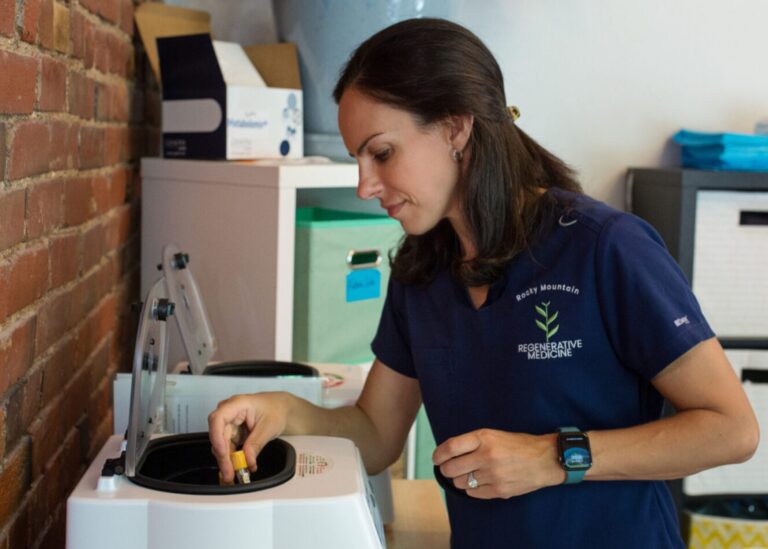
Your harvested material goes to an FDA approved processing lab. Stem cells are separated and concentrated from the bone marrow or fat. The entire sample is processed while maintaining cell viability. This careful process takes several weeks to prepare the best quality stem cells.
Step 4: Imaging-Guided Injection
Once your concentrated stem cells are ready, you return for injection. Your doctor uses imaging guidance (fluoroscopy or ultrasound) to place the cells directly into your damaged disc. The procedure takes 1-2 hours in our office under local anesthesia. You’ll go home the same day.
Step 5: Recovery and Rehabilitation
Recovery varies by therapy type. PRP typically requires 2-3 weeks of modified activity. Stem cell therapy requires 2-4 weeks of modified activity. Most patients gradually return to normal activities over 6-12 weeks. Physical therapy is often recommended to optimize results.
Book Your Appointment today. We help patients throughout the Boulder and Denver area live better with less back pain.
What Results Look Like and When to Expect Them
Stem cell therapy works slowly. Your body needs time to respond.
Many patients notice improvements around four to six weeks. Pain levels may decrease. Movement becomes easier. More significant changes often emerge over three to six months as cells differentiate and reduce inflammation.
Some patients experience continuing improvements up to one year after injection. Results vary considerably between individuals. Factors affecting outcomes include:
- The degree of disc degeneration
- Your age and overall health
- Compliance with post-procedure guidelines
- Whether you engage in physical therapy
- Your lifestyle and activity patterns
Does this mean you’ll have complete pain resolution? Not necessarily. The goal is meaningful improvement in pain and function, allowing you to return to activities that matter to you.
Is This Treatment Safe?
Safety data from clinical studies appear encouraging. Short and medium-term follow-up shows minimal serious adverse effects. The most common side effects are mild, including temporary soreness at harvest or injection sites.
Because you’re receiving your own cells, rejection risk is very low. There’s virtually no concern about developing an autoimmune reaction to your own cells.
That said, stem cell therapy for degenerative disc disease remains investigational. The FDA has not approved a stem cell product specifically for this condition, though multiple therapies are in advanced trials. This means insurance typically doesn’t cover the cost.
Some risks do exist, though uncommon: infection at harvest or injection sites, temporary increase in pain, injection site swelling or bruising, and vascular injury (very rare with proper technique). Choosing an experienced provider familiar with this procedure significantly reduces risk.
Who Benefits Most from Stem Cell Therapy
Ideal candidates typically have:
- Confirmed degenerative disc disease on imaging
- Pain that significantly impacts daily function
- Failed conservative treatment (physical therapy, medication, injections)
- No active infection or serious systemic illness
- Realistic expectations about outcomes
You probably won’t benefit if:
- Your pain is primarily neurological from a different spine condition
- You have a severe vertebral collapse
- You’re experiencing progressive neurological deficits
- You’re unable to commit to post-procedure physical therapy
Your specific situation matters. Discuss it with a provider who specializes in regenerative treatment.
Regenerative Medicine in Boulder: Your Next Steps
At Rocky Mountain Regenerative Medicine, we combine stem cell therapy with complementary regenerative treatments, comprehensive diagnostics, and individualized care plans. What sets our approach apart:
Comprehensive Evaluation: We identify the specific source of your pain through detailed assessment, imaging review, and diagnostic testing.
Imaging-Guided Precision: All injections use fluoroscopy or ultrasound to ensure accurate placement.
Integrated Approach: We combine regenerative therapies with optimization of your metabolic, hormonal, and nutritional status.
Surgery-Sparing Focus: Our goal is to help you avoid surgery when possible.
We don’t treat disc degeneration in isolation. We evaluate your overall spine health, your movement patterns, your inflammation markers, and your healing potential. We use advanced imaging to locate the exact site of damage. We test your biomarkers to understand what’s driving degeneration in your specific case. We coordinate post-treatment physical therapy to maximize your results.
Stem cell therapy often works best as part of a broader regenerative plan. Many patients benefit from combining stem cell injection with targeted physical therapy, postural correction, peptide therapy to support tissue healing, or shockwave therapy for adjacent structures.
A Different Path Forward
Degenerative disc disease doesn’t have to mean accepting chronic pain or facing surgery. Regenerative therapies represent a genuine middle ground, addressing the underlying degeneration rather than just managing symptoms.
Stem cell therapy won’t work for everyone. Results vary. But for appropriate candidates, it offers a chance to slow or reverse degeneration with an outpatient procedure and minimal downtime.
If you’ve been dealing with disc degeneration and conventional treatments haven’t delivered, a consultation with a regenerative medicine specialist could clarify whether you’re a good candidate. The goal isn’t unrealistic recovery but meaningful improvement in pain and function, allowing you to return to the activities and lifestyle you value.
Next Steps: Let’s Find Your Answer
At Rocky Mountain Regenerative Medicine in Boulder, we specialize in evaluating and treating degenerative disc disease using advanced regenerative approaches. We’ll review your imaging, test your biomarkers, and determine if stem cell therapy or another regenerative treatment fits your specific situation.
Ready to explore whether regenerative therapy might work for you? Schedule Your Consultation
FAQs
How Long Until I Feel Different?
Most patients notice improvement around 4-6 weeks, with more substantial changes over 3-6 months. Some continue improving up to one year post-injection. Results depend on your condition severity, commitment to physical therapy, and additional demands you place on the injected area.
Will Insurance Cover Stem Cell Therapy?
Probably not. The FDA hasn’t approved stem cell products for degenerative disc disease, so insurance treats it as experimental and doesn’t cover costs.
How Often Do I Need Treatment?
A single injection may be sufficient, though some patients benefit from a second injection 6-12 months later if initial results were partial.
Can I Go Back to Exercise?
Light activity resumes in 1-2 weeks. Return to full training depends on your sport or activity level, but typically takes 4-6 weeks. Your doctor will provide specific guidelines.
What If Stem Cell Therapy Doesn’t Work for Me?
About 40-60% of patients experience meaningful improvement. If you don’t respond, you’re not worse off. Other options remain available, including exosome therapy, additional physical therapy, or eventual surgical options if needed.
Is This Better Than Spinal Fusion?
They’re different approaches. Fusion eliminates motion at the affected level and transfers stress to adjacent discs. Stem cell therapy preserves motion while attempting to regenerate the disc. Neither is universally better; the right choice depends on your specific condition and goals.