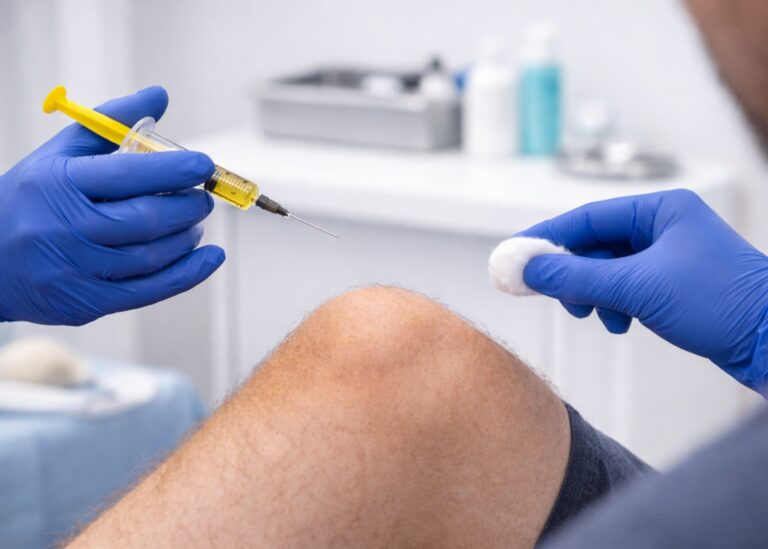

If you’re dealing with knee arthritis, you know how frustrating the cycle can be. Pain medications that wear off, injections that help for a while, and the looming question of whether surgery is inevitable. It’s no wonder so many people are exploring regenerative options like stem cell therapy.
The good news is that the research behind stem cell therapy for knee osteoarthritis has grown significantly in recent years, and the results are encouraging, especially when stem cells are part of a comprehensive, personalized treatment plan.
In this guide, you’ll learn what current research shows about stem cell therapy for knee pain, how RMRM’s integrative approach differs from a standard single-injection protocol, realistic expectations, and how to make the best decision for your situation
What is Stem Cell Therapy?
Stem cells are blank-slate cells in your body that can create a healing and repair cascade, and potentially transform into different tissue types. For knee pain, doctors typically inject these cells directly into the knee joint.
The idea is straightforward: stem cells might reduce inflammation, slow cartilage breakdown, or even help repair damaged tissue. In theory, this sounds perfect for arthritis.
But not all stem cell protocols are the same. The source of stem cells, the dose, and what complementary therapies are used alongside them can all significantly impact outcomes. Let’s look at what the research tells us.
What Recent Research Actually Says
The body of evidence supporting stem cell therapy for knee osteoarthritis has expanded significantly, with multiple studies showing meaningful patient benefits.
Large-Scale Clinical Data: A prospective study by Berman, Lander, and colleagues (2019) evaluated 2,586 patients with knee osteoarthritis who received adipose-derived stromal vascular fraction (SVF) therapy. The study demonstrated that autologous SVF is safe and showed significant pain reduction, particularly for patients with initial pain scores of 4 or greater on a 10-point Visual Analog Scale.
RMRM’s Own Published Research: In a peer-reviewed study by RMRM physician Dr. Khoshal Latifzai alongside the Cell Surgical Network (Latifzai et al., 2022), 549 patients with degenerative spinal conditions were treated with the same adipose-derived SVF protocol used at RMRM. 79% of respondents reported significant pain improvement at 24 months with a single intervention. Adverse events were minimal, and no patients required follow-up surgery. Compare this to published data showing 48.7% of patients receiving epidural steroids ultimately needed surgical intervention. While this study focused on lumbar spine conditions, it validates the safety, efficacy, and durability of the SVF protocol RMRM uses across its regenerative treatments.
Broader Research Landscape: Multiple meta-analyses from 2024 and 2025 show positive effects on pain and function compared to placebo. A Cochrane review concluded that stem cell injections may improve pain and function in people with knee osteoarthritis. Randomized controlled trials using adipose-derived stem cells have shown statistically significant improvements at 12 months, with MRI evidence suggesting modification of disease progression.
What You Should Actually Know About Safety
As with any medical procedure, it’s important to understand the safety profile. The published evidence on stem cell therapy for orthopedic conditions is reassuring.
In the Latifzai et al. (2022) study using an adipose-derived SVF protocol, adverse events were minimal among 549 patients. The surgical site infection rate was 0.91%, actually lower than nationally accepted norms for surgical procedures (1–3%). No serious adverse events such as hospitalization, neurologic deficits, or thromboembolic events were reported. Additionally, cancer rates in the treatment group were lower than age-matched population rates, providing reassurance about long-term safety.
The Berman and Lander (2019) knee osteoarthritis study of 2,586 patients similarly documented a very low incidence of reported adverse events.
Standard procedural risks apply to any injection-based treatment, including the possibility of temporary soreness, swelling, or rare infection. At RMRM, all injections are performed under ultrasound or fluoroscopic guidance for precision and safety.
Cost Is a Real Consideration
Stem cell therapy for knees typically costs $8,000 to $10,000 or more per injection. At RMRM, the investment covers a comprehensive protocol, not just a single injection. This includes the stem cell harvest and processing, ultrasound-guided deployment, and often complementary therapies like PRP, HBOT, or peptide therapy designed to optimize outcomes.
Consider the long-term picture: the Latifzai et al. study showed 79% of patients achieving meaningful pain relief at 2 years with a single intervention and none requiring surgery. Traditional epidural steroid injections, while less expensive individually, showed 76.8% pain recurrence, and 48.7% of patients ultimately required surgery, which carries substantially higher cost and risk.
How Stem Cells Fit Within Your Treatment Options
Stem cell therapy works best when it’s part of a thoughtful treatment strategy. Here’s how other options compare:
- Physical therapy remains foundational for knee arthritis management, with significant benefits typically requiring at least 12 weeks. At RMRM, we often coordinate physical therapy alongside regenerative treatments for optimal results.
- Corticosteroid injections provide temporary relief but don’t address the underlying degeneration. Long-term data shows 76.8% pain recurrence, and they can only be repeated a limited number of times.
- Platelet-rich plasma (PRP) has growing evidence for knee conditions. At RMRM, PRP is frequently used alongside stem cell therapy to enhance outcomes.
- Weight management and activity modification can reduce mechanical stress and improve pain without additional intervention.
- Total knee replacement is well-established for severe, end-stage arthritis. However, up to 15-30% of patients report dissatisfaction, and for mild to moderate arthritis, regenerative approaches may help delay or avoid surgery entirely.
How RMRM Approaches Stem Cell Therapy for Knee Pain
At Rocky Mountain Regenerative Medicine, we specialize in a personalized, evidence-based approach to knee osteoarthritis that goes beyond single-injection protocols.
Why We Use Adipose-Derived Stem Cells
We harvest stem cells from adipose (fat) tissue rather than bone marrow. Adipose tissue provides significantly more stem cells per gram, the harvest is minimally invasive (small liposuction under local anesthesia), and adipose cells maintain better stem cell counts with age, making this approach well-suited for patients over 50.
This is the same protocol validated in the Latifzai et al. (2022) peer-reviewed study and the Berman, Lander et al. (2019) study of over 2,500 knee OA patients, both of which demonstrated safety and meaningful clinical improvement.
The Procedure and Timeline
We harvest a small amount of adipose tissue, process it to isolate stem cells, and inject them directly into your knee under ultrasound guidance. The entire procedure takes about 2 to 3 hours in our office. You go home the same day with mild soreness at the harvest site for a few days, return to normal activities within a week, and avoid high-impact activities for 4 to 6 weeks.
Results and Timeline
The majority of appropriately selected patients experience significant pain relief and functional improvement. Some notice benefits within weeks, others require 3 to 6 months as stem cells support tissue repair. Results can last several years, consistent with the 2-year durability
Our Integrative Protocol
Stem cells work best when the joint environment is optimized. That’s why we often combine stem cell therapy with:
Platelet-rich plasma (PRP): We concentrate growth factors from your own blood to stimulate your body’s repair mechanisms, reduce inflammation, and enhance stem cell effectiveness.
Hyperbaric oxygen therapy (HBOT): Beginning the day of or after stem cell injection, HBOT increases oxygen delivery to tissues, reducing inflammation and oxidative stress while enhancing stem cell survival and function. This supports cellular repair and stimulates new blood vessel formation for long-term healing.
Peptide therapy: Peptides like BPC-157 and TB-500 promote tissue repair, reduce inflammation, and prepare the joint environment for optimal stem cell function.
Shockwave therapy: When appropriate, we use acoustic waves to stimulate healing, break down scar tissue, improve blood flow, and activate cellular repair mechanisms before stem cell injection.
Comprehensive testing and optimization: We analyze your metabolic health, inflammation markers, and individual biology to ensure your body is primed for healing.
This integrated approach addresses knee osteoarthritis from multiple angles rather than relying on stem cells alone.
Who Might Consider Stem Cell Therapy
Stem cell therapy works best for patients who typically have mild to moderate osteoarthritis, want to explore regenerative options before surgery, and have realistic expectations. Stem cell therapy may not be the best fit for severe bone-on-bone disease without careful evaluation. During your consultation at RMRM, we evaluate your specific condition, review imaging, and determine whether regenerative therapy aligns with your goals. If a different path would serve you better, we’ll tell you honestly.
Our providers are not only experienced practitioners; they’re published researchers. Dr. Khoshal Latifzai is a co-author on peer-reviewed studies evaluating adipose-derived cellular therapy, giving RMRM patients confidence that their treatment plan is grounded in clinical evidence.
How RMRM Helps You Navigate This Decision
At Rocky Mountain Regenerative Medicine, we believe in evidence-based care and clarity. If stem cell therapy for knee pain might fit your situation, we will discuss realistic expectations, honest data on benefits and risks, and what you’re actually paying for.
We also offer other regenerative approaches. PRP therapy has better short-term evidence in some cases. Hyperbaric oxygen therapy may reduce inflammation. Physical therapy coordination matters more than most people realize.
We order the testing needed to understand your specific knee issue, not just treat a generic “knee pain” label. We retest after treatment to verify whether something is actually working for you.
And we’re honest if a treatment isn’t the right fit for your situation.
Ready to explore what might work for your knee? We’re here to help you make an informed choice.
Contact us for a consultation or book an appointment with RMRM to discuss your options.
Disclaimer: This information is educational and not a substitute for professional medical advice. Always consult with a qualified healthcare provider before making treatment decisions. Stem cell therapies for orthopedic conditions remain largely experimental, and FDA approval has not been granted for knee arthritis treatment.
FAQs
Can stem cell therapy reverse knee arthritis?
Stem cells may slow disease progression, reduce pain, and improve function. Some MRI studies show cartilage stabilization. While complete reversal hasn’t been demonstrated, many patients experience meaningful and lasting symptom relief, especially as part of a comprehensive protocol.
How long do stem cell therapy results last?
The Latifzai et al. (2022) study documented significant pain improvement maintained at 24 months with a single intervention. Clinical experience at RMRM shows results lasting several years, with some patients opting for periodic maintenance treatments.
Does insurance cover stem cell therapy?
Most insurance plans do not cover it, as it hasn’t received specific FDA approval for orthopedic use. RMRM’s team can discuss the full cost breakdown during your consultation.
What’s the difference between stem cells and PRP injections?
PRP uses your own platelets and growth factors with lower cost and more established evidence for some conditions. Stem cells offer regenerative potential but are less studied. RMRM often combines both for enhanced results.
Should I get stem cell therapy before trying physical therapy?
At RMRM, we coordinate stem cell therapy alongside physical therapy rather than viewing them as sequential alternatives. The combination often produces better outcomes than either approach alone.
What questions should I ask a clinic before considering stem cell therapy?
Ask for peer-reviewed published evidence on the exact product and dose they use. Ask about their success rates and measurement methods. Ask about long-term follow-up data. Request details about their comprehensive protocol, not just stem cell injection alone.
What happens during the stem cell harvest procedure?
A small liposuction procedure under local anesthesia harvests adipose tissue. It’s minimally invasive with a quick recovery. The entire stem cell therapy procedure takes 1 to 3 hours and is performed in our office with same-day discharge.
What is hyperbaric oxygen therapy, and why does RMRM use it?
HBOT involves breathing pure oxygen in a pressurized chamber. When used with stem cell therapy, it enhances cell survival, reduces inflammation, improves oxygen delivery to tissues, and stimulates new blood vessel formation to support long-term healing.