
Hyperbaric oxygen therapy harnesses the power of pressurized oxygen to promote healing and recovery. Whether you’re recovering from a sports concussion on the Front Range, optimizing healing after stem cell therapy, or preparing for surgery, understanding HBOT’s applications and mechanisms becomes increasingly valuable for anyone committed to living better longer.
What Is Hyperbaric Oxygen Therapy?
Hyperbaric oxygen therapy is a medical treatment involving breathing pure oxygen inside a pressurized chamber at 1.4 to 3.0 times normal atmospheric pressure.
The Undersea and Hyperbaric Medical Society (UHMS) establishes standards for therapeutic HBOT as treatment at a minimum of 2.0 atmospheres absolute (ATA) while breathing medical-grade oxygen, typically for 60-120 minutes per session. This combination of pressure and pure oxygen creates unique physiological conditions impossible with standard oxygen therapy.
Originally developed for decompression sickness in divers, HBOT’s applications have expanded as research reveals its diverse therapeutic mechanisms for conditions ranging from wound care to neurological recovery.
How Does Hyperbaric Oxygen Therapy Work?
HBOT operates through Henry’s Law, which describes gas dissolution in liquids under pressure. Under increased atmospheric pressure, significantly more oxygen dissolves directly into blood plasma, creating oxygen levels far beyond what hemoglobin alone can carry.
This enhanced oxygen delivery occurs independently of red blood cells, reaching tissues with compromised circulation. The intermittent exposure creates a “hyperoxic-hypoxic paradox,” triggering protective responses without harmful effects.
What Is Hyperbaric Oxygen Therapy Used For?
The UHMS currently recognizes 15 approved medical indications for hyperbaric oxygen therapy in Boulder CO:
- Emergency Conditions: Carbon monoxide poisoning, decompression sickness, air/gas embolism, gas gangrene, severe anemia
- Wound Healing: Selected problem wounds (diabetic ulcers), compromised grafts/flaps, delayed radiation injuries, necrotizing infections, refractory osteomyelitis
- Acute Trauma: Crush injuries, central retinal artery occlusion, thermal burns
- Neurological: Intracranial abscess, sudden sensorineural hearing loss
- Newest Addition: Avascular necrosis (2024)
Beyond FDA-approved indications, substantial research supports HBOT’s potential for applications increasingly relevant to Boulder’s active and optimization-focused communities. These are legal, evidence-supported uses, but not formally FDA-cleared:
Post-Concussion Syndrome & Traumatic Brain Injury (TBI): Recent systematic reviews indicate that HBOT at 1.5 ATA or above demonstrates statistically significant improvements in both cognitive function and persistent symptoms. The mechanisms include enhanced angiogenesis in damaged brain tissue, stem cell mobilization that promotes neurological repair, mitochondrial optimization in oxygen-starved neurons, and reduced neuroinflammation that drives chronic post-concussion symptoms such as brain fog, headaches, and mood changes.
Athletic Recovery & Optimization: HBOT supports accelerated recovery from delayed-onset muscle soreness (DOMS), soft tissue injuries, ligament damage, and the physiological stress of intense training blocks. For athletes optimizing recovery timelines, HBOT functions as a biological force multiplier.
Pre- & Post-Surgical Enhancement: HBOT is increasingly used by individuals preparing for orthopedic surgery (to create robust vascular beds pre-operatively for better surgical outcomes) and to accelerate recovery post-operatively by reducing swelling, minimizing scar tissue formation, and improving graft viability.
Synergistic Support for Regenerative Therapies: When combined with stem cell therapy, peptide protocols, or hormone optimization, HBOT creates optimal conditions for cellular integration and systemic healing.
Benefits of Hyperbaric Oxygen Therapy
The benefits of hyperbaric oxygen therapy stem from multiple physiological mechanisms addressing acute emergencies and chronic healing challenges.
- Enhanced Tissue Oxygenation: Delivers therapeutic oxygen levels to tissues with hypoxia or poor circulation, supporting cellular metabolism and repair processes.
- Angiogenesis: Clinical studies show HBOT stimulates new blood vessel formation through growth factors like VEGF, providing long-term circulation improvements.
- Anti-inflammatory Effects: Modulates inflammatory responses by reducing pro-inflammatory cytokines while promoting inflammation resolution.
- Stem Cell Mobilization: Increases stem cell activity, particularly for tissue repair and regeneration, contributing to improved wound healing.
- Neuroplasticity Enhancement: Promotes brain plasticity through increased BDNF and enhanced synaptic function, supporting neurological recovery.
- Antimicrobial Activity: The hyperoxic environment inhibits anaerobic bacterial growth and enhances antibiotic effectiveness for serious infections.
Who Typically Uses Hyperbaric Oxygen Therapy?
HBOT serves diverse populations, and at Rocky Mountain Regenerative Medicine in Boulder, we work with specific audiences who benefit most:
The Concussed Athlete: Whether you’re a high school soccer player in Boulder County, a CU Buffs rugby athlete, or a master’s cyclist who went down on Flagstaff Road, post-concussion syndrome can derail your season and your cognition. If you’re experiencing persistent headaches, brain fog, mood changes, or difficulty concentrating weeks after impact, HBOT may support neurological recovery beyond what rest and standard rehabilitation offer alone.
The Optimization-Minded Biohacker: You track your HRV, optimize your sleep architecture, and monitor your metabolic health. HBOT represents another evidence-backed lever in your biological optimization stack, supporting mitochondrial function, reducing systemic inflammation, and potentially enhancing the longevity dividend of your other interventions.
The Surgical Candidate: Preparing for ACL reconstruction, meniscal repair, or joint replacement? Pre-surgical HBOT optimizes tissue oxygenation and vascular density, potentially improving surgical outcomes and reducing recovery timelines. Post-operative HBOT accelerates rehabilitation and tissue healing.
The Post-Radiation Patient: While we avoid treating active malignancies, we do treat FDA-approved delayed radiation injuries (osteoradionecrosis of the jaw, radiation cystitis, soft tissue radionecrosis). For these patients, HBOT is evidence-based and clinically essential.
Emergency & Acute Patients: Those with carbon monoxide poisoning, decompression sickness, crush injuries, or severe acute wounds require immediate HBOT as a life-saving intervention.
What Happens During a Hyperbaric Oxygen Therapy Session?
HBOT occurs in specialized chambers: monoplace chambers for single patients or multiplace chambers for multiple patients with medical staff monitoring.
The RMRM Difference: Technology & Experience
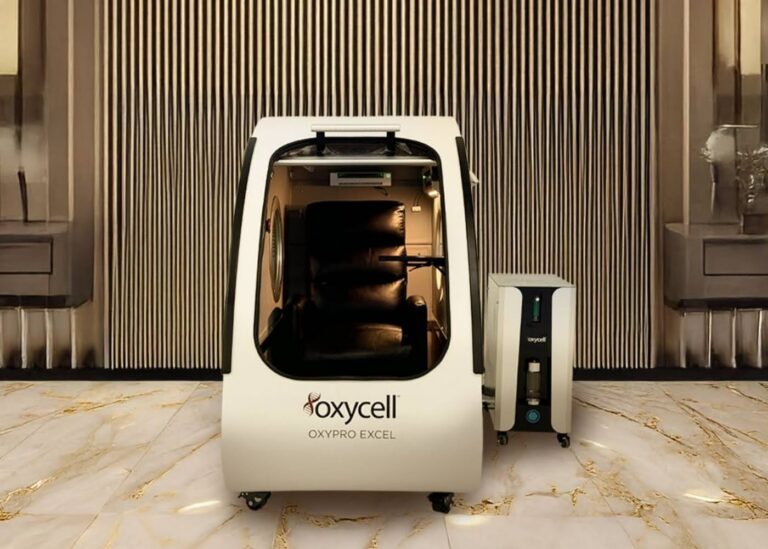
HBOT occurs in specialized chambers, and the technology matters significantly for both safety and patient experience. At Rocky Mountain Regenerative Medicine, we utilize a monoplace hard chamber pressurized to 2.0 ATA, higher than standard 1.3-1.5 ATA soft-shell chambers. Critically, oxygen is delivered via mask rather than ambient chamber flooding. This design approach offers distinct advantages:
Safety: Unlike monoplace units, where the entire chamber floods with 100% oxygen (creating pyrogenic risk and fire hazards), our mask-delivery system significantly reduces fire risk while maintaining superior oxygen dissolution.
Practicality: You can bring electronics into the chamber, such as laptops, phones, and tablets. For professionals and busy individuals who can’t fully disconnect for 60-90 minutes, this is transformative. You can work, respond to messages, or handle time-sensitive tasks during treatment.
Efficacy: The 2.0 ATA pressure capability ensures superior oxygen dissolution in plasma, cerebrospinal fluid, and lymph, maximizing therapeutic benefits.
The Treatment Experience
Patients receive comprehensive safety briefings and medical evaluations before treatment. Items posing fire risks are identified and removed based on your chamber type.
You’ll sit comfortably in our chamber while pressure gradually increases to 2.0 ATA over 10-15 minutes. You’ll breathe pure oxygen via a comfortable mask for 60-90 minutes. Most patients read, work on laptops, handle administrative tasks, or simply rest and relax. Medical staff monitor vital signs throughout.
The experience feels similar to airplane pressure changes during descent. You may experience mild ear pressure changes requiring occasional ear clearing, the most common temporary side effect. The pressurization and depressurization occur gradually to minimize any discomfort.
As the session concludes, chamber pressure slowly decreases over 10-15 minutes, returning gradually to normal atmospheric pressure.
How Long and How Often Is Hyperbaric Oxygen Therapy Used?
Treatment protocols vary significantly by condition and therapeutic goal.
- Acute conditions may require only 1-3 sessions to address immediate physiological needs.
- Chronic wound healing typically requires 20-40 treatments over several weeks.
- Off-label applications (concussion recovery, athletic optimization, surgical preparation) follow individualized protocols determined through clinical assessment.
Most standard protocols follow daily schedules, five days weekly, with 60-120 minute sessions. Progress is monitored through clinical assessments and patient outcomes, with treatment duration adjusted based on response.
At RMRM, your treatment plan is personalized. We determine the optimal protocol based on your specific condition, health status, and therapeutic goals, rather than applying a one-size-fits-all approach.
What to Know Before Considering Hyperbaric Oxygen Therapy
Before pursuing HBOT, a thorough medical evaluation determines treatment appropriateness. HBOT typically serves as adjunctive therapy alongside other treatments.
Choose qualified providers with UHMS accreditation and medical oversight. Consider treatment integration with exosome therapy, hormone therapy, stem cell therapy, and shockwave therapy.
Ready to explore how hyperbaric oxygen therapy might support your health goals? Contact our team or schedule a consultation to learn more about our comprehensive regenerative medicine approach.
Disclaimer: Hyperbaric oxygen therapy is FDA-approved for 15 specific conditions, including decompression sickness, carbon monoxide poisoning, diabetic foot ulcers, radiation injuries, and crush injuries. Applications for concussion, traumatic brain injury, athletic recovery, and optimization are considered off-label and investigational. Individual results vary. We conduct a thorough medical evaluation to ensure treatment appropriateness. This information is educational and not a substitute for professional medical care.
FAQs
Q. What conditions can hyperbaric oxygen therapy treat effectively?
HBOT treats 15 UHMS-approved conditions, including carbon monoxide poisoning, diabetic wounds, and decompression sickness. Emerging research explores neurological recovery and tissue regeneration applications. Additional conditions such as concussion, athletic recovery, orthopedic issues, and more are considered off-label, but common, uses.
Q. How many sessions do I typically need?
Requirements vary by condition. Emergencies need 1-3 sessions, while chronic wounds require 20-40 treatments. Your physician determines the appropriate protocol based on your condition.
Q. What makes RMRM’s HBOT program different from hospital-based centers?
RMRM operates outside the insurance system, offering immediate access without pre-authorization delays. Our 2.0 ATA monoplace chamber with mask-delivery oxygen is more advanced than many traditional multiplace units. Crucially, you can bring electronics into the chamber, essential if you need to work or stay connected. Members receive priority booking for time-sensitive needs like acute concussion recovery. We integrate HBOT seamlessly with stem cell therapy, peptide protocols, and other regenerative services, optimizing outcomes across your entire wellness plan.
Q. Does HBOT have side effects or risks?
HBOT is generally safe with proper medical supervision. The most common side effect is mild ear discomfort, affecting 2% to over 40% of patients depending on various factors, though most cases are minor. Serious risks are extremely rare with qualified medical oversight.
Q. Can I combine HBOT with other treatments?
HBOT works best as part of comprehensive treatment plans and safely combines with most therapies. Your medical team can coordinate HBOT with other regenerative treatments for optimal outcomes.
Q. Is HBOT covered by insurance?
Insurance covers HBOT for the 15 UHMS-approved conditions when medically necessary. Off-label applications typically require self-pay. Check with your insurance provider about specific coverage details.
Q. How quickly can I start treatment?
At RMRM, members can often begin treatment within days of initial evaluation, making HBOT accessible for time-sensitive needs like acute concussion recovery. Traditional hospital-based programs may require months of pre-authorization and scheduling delays. For acute neurological injuries where timing matters, our rapid-access model offers a significant advantage.
Q. What should I avoid before and during HBOT?
Before treatment, avoid heavy meals 2-3 hours prior, petroleum-based products on skin, and certain medications per your provider’s guidance. During treatment, maintain good hydration. Avoid bringing non-approved electronics or items with fire risk (per safety guidelines). Your medical team will provide comprehensive pre-treatment instructions tailored to your specific protocol.