
When you finish a tough workout, your muscles feel the burn, and your energy crashes. Your body just went through real stress, breaking down muscle fibers and burning through fluids and nutrients. Normal recovery takes days. But what if there was a faster way?
That’s where IV therapy comes in. Unlike drinking water or eating a protein bar, IV therapy puts fluids, electrolytes, and nutrients directly into your bloodstream. Your body absorbs everything right away, not gradually through your stomach. This means faster hydration, quicker nutrient delivery, and potentially less muscle soreness the next day.
Let’s break down exactly how this works and whether it makes sense for your fitness goals.
How IV Therapy Speeds Up Muscle Recovery
When you train hard, three main things happen to your body. Your muscles lose water through sweat. You burn through electrolytes like sodium and potassium that your muscles need to function. And your body creates free radicals, tiny molecules that can damage cells and trigger inflammation.
The problem with normal recovery methods:
- Normal hydration relies on your digestive system, you drink water, it goes to your stomach, gets absorbed, and eventually reaches your muscles and bloodstream
- This takes time, sometimes 30 minutes or more
- Your stomach also has limits on how much fluid it can process at once, which is why you can only drink so much water before feeling sick
- Oral supplements face the same issue, a protein shake or amino acid supplement gets broken down by your digestive system, losing some potency in the process
- Much of what you consume never reaches your muscles at full strength
How IV therapy works differently:
- IV therapy skips the digestive process entirely
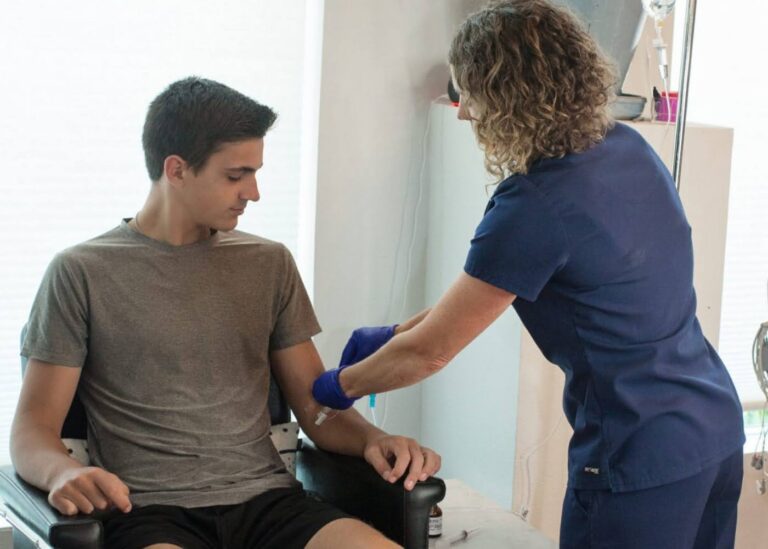
- A trained medical professional places a small catheter in your arm vein
- The fluids, electrolytes, and nutrients go directly into your bloodstream and reach your muscles within minutes, not hours
- This mechanism is similar to how advanced regenerative therapies work to accelerate tissue repair and recovery at the cellular level

The Main Benefits for Athletes and Active People
Rehydration Happens Faster
Sweating during intense exercise drains your body of water and essential minerals. Your muscles need these fluids to function properly and repair themselves. IV hydration solutions contain electrolytes like sodium and potassium that your body loses during the workout.
Because these go straight into your veins, rehydration works faster than drinking water alone. Studies suggest IV hydration can restore electrolyte balance two to three times faster than drinking, which means your muscles get what they need sooner.
Muscle Soreness May Decrease
The muscle soreness you feel 24 to 72 hours after a hard workout comes from inflammation and lactic acid buildup. IV therapy delivers magnesium, amino acids, and antioxidants that may help your body clear lactic acid and reduce that heavy, achy feeling.
Amino acids like branched-chain amino acids (BCAAs) and glutamine are the building blocks your muscles need to repair micro-tears from exercise. When these reach your muscles quickly through IV, your body can start rebuilding faster. Less downtime means you can train again sooner.
For soreness that feels more intense, lasts longer than expected, or interferes with movement, targeted muscle pain therapy can help address the specific muscles and soft tissues contributing to the discomfort.
You Get Antioxidant Support
Intense exercise produces free radicals that damage cells and increase inflammation in muscles and joints. Antioxidants like vitamin C and glutathione neutralize these harmful molecules, reducing cellular damage and inflammation.
When you take antioxidants orally, your digestive system processes them, and some is lost. IV delivery ensures your bloodstream gets the full dose, with none lost in digestion.
For athletes seeking additional inflammation management, peptide therapy offers complementary support by modulating inflammatory responses at the cellular level and enhancing recovery signaling pathways.
Energy Levels Bounce Back Faster
The B vitamins and other nutrients in recovery IV drips help your body produce energy and repair tissue. B12 and B complex vitamins are especially important because they help convert food into usable energy at the cellular level.
Because IV therapy bypasses digestion, these nutrients are available to your cells immediately. This is why many athletes report feeling more energized within 30 to 60 minutes after an IV session.
Better Long-Term Training Consistency
Faster recovery means you can train harder and more frequently without getting stuck in a constant state of fatigue. When your muscles recover properly, your body adapts to stress more efficiently, building strength and endurance more effectively over time.
For serious athletes, combining IV therapy with other recovery modalities like hyperbaric oxygen therapy can further enhance cellular repair and oxygen delivery, creating a comprehensive recovery ecosystem that supports peak performance.
What’s Actually in a Muscle Recovery IV?
Recovery IV formulas vary, but most include similar core components tailored to what your body lost during exercise:
Electrolytes and fluids: Saline solution that rehydrates your body and restores sodium and potassium.
Amino acids: Building blocks like BCAAs, glutamine, and taurine that help repair muscle fibers and reduce soreness.
Vitamins B: Essential for energy production and muscle recovery.
Magnesium: Helps muscles relax, reduces cramping, and supports energy creation.
Antioxidants: Vitamin C and glutathione fight inflammation and free radical damage.
Other additions: Some clinics add zinc for hormone balance, vitamin D for immune support, or NAD+ to support cellular energy production.
A trained medical professional can customize the exact formula based on your training style, intensity, and individual needs. For athletes interested in next-generation recovery technologies, exosome therapy represents an emerging option that works alongside traditional IV recovery protocols to enhance cellular regeneration.
Who Benefits Most from Recovery IV Therapy?
Recovery IV therapy makes the most sense if you:
- Train intensely several times per week
- Compete in endurance sports or high-level athletics
- Struggle with chronic muscle soreness that interferes with training
- Want to recover faster between workouts
- Have trouble staying hydrated through normal drinking methods
Talk with a healthcare provider about whether it fits your training goals and budget.
How Often Should You Get IV Therapy?
The frequency depends on your training intensity and schedule.
Light to moderate training: Once every one to two weeks, mainly for hydration and general wellness.
Intense or competitive training: Once per week or after major events or particularly grueling workouts.
Recovery from injury: More frequent sessions early on, then taper as healing progresses.
A medical provider can assess your specific situation and recommend the right schedule for you.
How RMRM Can Help Optimize Your Recovery
If you’re serious about optimizing your athletic performance and recovery, personalized care matters. At Rocky Mountain Regenerative Medicine in Boulder, we don’t believe in one-size-fits-all recovery protocols.
Our team provides customized IV therapy protocols designed around your specific training demands, body composition, and metabolic needs. We combine IV therapy with advanced diagnostics and personalized health optimization strategies to support not just faster recovery, but sustainable athletic performance.
Whether you’re training for competition or maintaining long-term fitness, we can help you recover smarter. Our annual memberships provide ongoing access to recovery protocols, IV therapies, and personalized care coordination that keeps you performing at your best year-round.
Ready to explore how IV therapy and personalized recovery protocols might fit your training goals?
Contact us to schedule your recovery consultation or book an appointment with our team today.