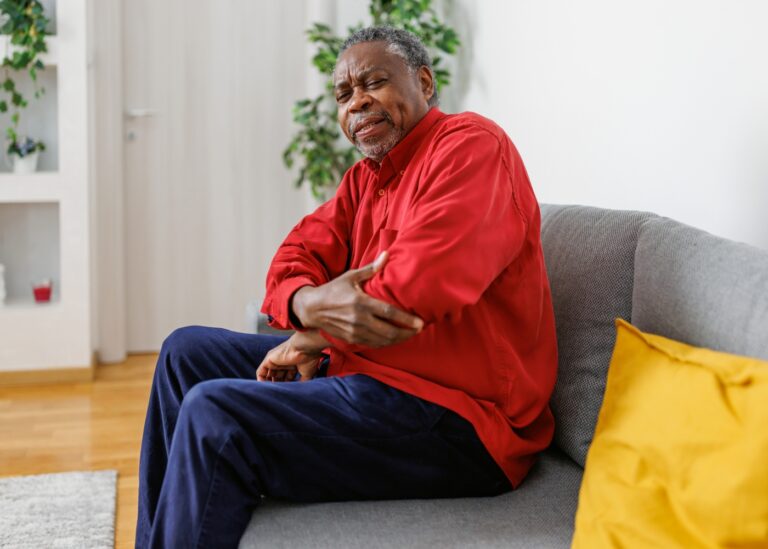

If your elbow hurts every time you bend or straighten your arm, you already know how much it can take away from your day. Pouring a cup of coffee, reaching for something on a shelf, even just resting your arm on a table, all of it can feel like a chore when your elbow will not cooperate. You are not imagining the pain, and you are not alone in dealing with it.
Elbow pain when bending and straightening is most often caused by overuse injuries, inflammation, or nerve compression rather than a single traumatic event. That repetitive stress can quietly add up over weeks and months, but most causes are manageable. Getting clear on what might be behind the discomfort is a strong first step toward feeling better.
Key Takeaways
- Elbow pain during bending or straightening usually develops from overuse, not from a single injury.
- Common causes include tennis elbow, golfer’s elbow, bursitis, nerve compression, arthritis, and dislocation.
- Many cases respond well to rest, ice, physical therapy, and activity changes.
- Pain that lasts more than two weeks, or comes with swelling, numbness, fever, or weakness, may need professional evaluation.
What Makes the Elbow So Vulnerable to Pain?
The elbow connects three bones, the humerus, radius, and ulna, through a network of tendons, ligaments, muscles, and a fluid-filled sac called the bursa. Because the joint handles so many repetitive motions every day, any of those structures can become irritated over time, which is one reason overuse injuries are more common here than sudden traumatic ones.
7 Common Causes of Elbow Pain When Bending and Straightening
Several conditions can trigger pain while bending the elbow or straightening it. Here are the ones most people encounter.
Reason 1: Tennis Elbow (Lateral Epicondylitis)
Tennis elbow is one of the most frequent causes of outer elbow pain. According to NCBI StatPearls, the condition results from repetitive strain involving gripping and wrist extension. You do not need to play tennis to develop it. Painters, plumbers, cooks, and office workers who spend hours gripping tools or using a mouse can all be affected. According to AAOS OrthoInfo, the condition is most common in adults between the ages of 30 and 50.
Symptoms may include:
- Pain and tenderness on the outside of the elbow
- Weak grip strength
- Discomfort that gets worse when lifting objects or extending the wrist
Shockwave therapy is one non-invasive approach that may help stimulate tissue repair in conditions like tennis elbow.
Reason 2: Golfer’s Elbow (Medial Epicondylitis)
Golfer’s elbow is the counterpart to tennis elbow, but the pain shows up on the inner side of the elbow. Repeated wrist flexion, gripping, or forearm rotation from activities like typing, gardening, or using hand tools can all contribute.
Symptoms may include:
- Pain on the inside of the elbow
- Discomfort that may radiate down the forearm
- Stiffness and weakness when gripping
Reason 3: Elbow Bursitis (Olecranon Bursitis)
A fluid-filled sac called the bursa sits at the tip of the elbow and cushions the bone beneath the skin. According to the American Academy of Orthopaedic Surgeons (AAOS), the bursa can become inflamed from a direct hit, prolonged pressure, or infection. Plumbers, technicians, and anyone who regularly leans on hard surfaces may be more susceptible. You may notice elbow pain when leaning on it, visible swelling at the back of the elbow, or warmth around the joint.
Reason 4: Ulnar Nerve Entrapment (Cubital Tunnel Syndrome)
The ulnar nerve runs along the inside of the elbow with very little soft tissue protecting it. When the nerve gets compressed or irritated, it can cause pain, tingling, and numbness that radiates down to the ring and pinky fingers. According to AAOS OrthoInfo, symptoms tend to get worse when the elbow stays bent for long periods, such as while sleeping, holding a phone, or driving.
Signs may include:
- Numbness and tingling in the ring and little fingers
- Pain on the inside of the elbow
- Weakness in the hand or difficulty with fine motor tasks
Reason 5: Arthritis of the Elbow
Osteoarthritis can affect the elbow when the cartilage that cushions the bones wears down over time. According to AAOS OrthoInfo, the elbow is one of the least affected joints because of its strong stabilizing ligaments, but when osteoarthritis does develop, it can cause stiffness, aching, and a grinding sensation during movement.
Symptoms often develop gradually and may include:
- Pain and stiffness when bending or fully straightening the arm
- A feeling of catching or locking in the joint
- Reduced range of motion, especially in the morning or after inactivity
Rheumatoid arthritis, an autoimmune condition, can also affect the elbow and may show up in both arms at the same time.
Reason 6: Biceps Tendinitis
The distal biceps tendon connects the biceps muscle to the forearm bone (radius) near the elbow. When the tendon becomes inflamed from overuse, bending and straightening the arm can become painful. According to AAOS OrthoInfo, a partial or complete tear of the distal biceps tendon may cause sudden, intense pain and is most commonly triggered by a forceful injury.
Reason 7: Elbow Dislocation
Unlike the gradual conditions listed above, elbow pain can also follow a sudden traumatic event like a fall.
An elbow dislocation happens when the bones of the joint are forced out of alignment, usually after landing on an outstretched arm. According to AAOS OrthoInfo, a dislocated elbow typically causes severe pain, swelling, bruising, and an inability to move the arm normally. A dislocation requires prompt medical attention.
Quick Reference: Matching Symptoms to Possible Causes
| Symptom | Possible Cause |
|---|---|
| Pain on outer elbow, worse with gripping | Tennis elbow |
| Pain on inner elbow, radiating down forearm | Golfer’s elbow |
| Swelling at the tip of the elbow | Bursitis |
| Numbness or tingling in ring and pinky fingers | Ulnar nerve entrapment |
| Stiffness, grinding, limited range of motion | Arthritis |
| Pain when bending, especially with lifting | Biceps tendinitis |
| Severe pain and visible deformity after a fall | Dislocation |
What You Can Try at Home
Many cases of elbow pain respond to simple at-home strategies, especially when caught early:
- Rest your arm. Avoid repetitive motions and activities that trigger the pain.
- Apply ice. Use a cold pack for 15 to 20 minutes a few times a day to help reduce swelling.
- Use a brace or strap. A counterforce brace may help take pressure off irritated tendons.
- Gentle stretching. Light, pain-free stretches for the wrist and forearm can help reduce tightness.
- Light strengthening. Once the sharp pain fades, exercises like wrist curls and reverse wrist curls with a light weight can help support the joint.
- Adjust your workspace. Keep your keyboard at elbow height and allow your arms to rest comfortably at your sides.
Over-the-counter anti-inflammatory medications like ibuprofen may help with short-term discomfort. Always follow the recommended dosage, and check with a healthcare provider if you need them for more than a few days.
For pain that keeps coming back, physical therapy can be a valuable next step. A therapist can guide you through exercises tailored to your condition and help correct movement patterns that may be making things worse.
When Should You See a Professional?
Home care works well for mild, short-term elbow pain, but certain symptoms suggest that something more serious may be going on:
- Pain that lasts longer than two weeks without improvement
- Visible swelling, redness, or warmth around the joint
- Numbness or tingling that extends into the fingers
- Weakness or difficulty gripping everyday objects
- A popping sound or sudden sharp pain during activity
- Fever along with elbow swelling, which could point to an infection
An evaluation typically includes a physical exam, a review of your medical history, and possibly imaging like X-rays, ultrasound, or MRI.
Approaches That May Support Healing
When rest and home care are not enough, several non-surgical options may help support healing. Regenerative therapies like PRP (platelet-rich plasma) aim to concentrate the body’s own growth factors and deliver them to damaged tissue. Peptide therapy may also support repair and reduce inflammation.
Shockwave therapy delivers acoustic energy that may help stimulate blood flow and regeneration in areas of chronic tendon pain. For hormonal imbalances that could slow healing, hormone optimization is another avenue worth exploring with a provider.
Conclusion
Elbow pain that flares up with bending and straightening can make daily tasks feel difficult, but most causes are manageable with early attention.
For persistent or worsening discomfort, Rocky Mountain Regenerative Medicine in Boulder, CO, offers a personalized, data-driven approach to care. From advanced diagnostics to regenerative therapies like shockwave, PRP, and peptide therapy, the team at RMRM works with each patient to address the root cause of pain, not just the symptoms.
Contact Rocky Mountain Regenerative Medicine or book an appointment to take the next step toward lasting relief.
Note: The content in this article is for educational and informational purposes only. Nothing here is intended as medical advice or a substitute for professional medical evaluation. Always consult with a qualified healthcare provider before starting any course of care.
Sources
- NCBI StatPearls. Lateral Epicondylitis (Tennis Elbow). https://www.ncbi.nlm.nih.gov/books/NBK431092/
- American Academy of Orthopaedic Surgeons (AAOS). Tennis Elbow (Lateral Epicondylitis). https://orthoinfo.aaos.org/en/diseases–conditions/tennis-elbow-lateral-epicondylitis/
- American Academy of Orthopaedic Surgeons (AAOS). Elbow (Olecranon) Bursitis. https://orthoinfo.aaos.org/en/diseases–conditions/elbow-olecranon-bursitis/
- American Academy of Orthopaedic Surgeons (AAOS). Ulnar Nerve Entrapment at the Elbow (Cubital Tunnel Syndrome). https://orthoinfo.aaos.org/en/diseases–conditions/ulnar-nerve-entrapment-at-the-elbow/
- American Academy of Orthopaedic Surgeons (AAOS). Biceps Tendon Tear at the Elbow. https://orthoinfo.aaos.org/en/diseases–conditions/biceps-tendon-tear-at-the-elbow/
- American Academy of Orthopaedic Surgeons (AAOS). Osteoarthritis of the Elbow. https://orthoinfo.aaos.org/en/diseases–conditions/osteoarthritis-of-the-elbow/
- American Academy of Orthopaedic Surgeons (AAOS). Elbow Dislocation. https://orthoinfo.aaos.org/en/diseases–conditions/elbow-dislocation/
- Cleveland Clinic. Cubital Tunnel Syndrome. https://my.clevelandclinic.org/health/diseases/21997-cubital-tunnel-syndrome
- Cleveland Clinic. Elbow (Olecranon) Bursitis. https://my.clevelandclinic.org/health/diseases/22553-elbow-olecranon-bursitis