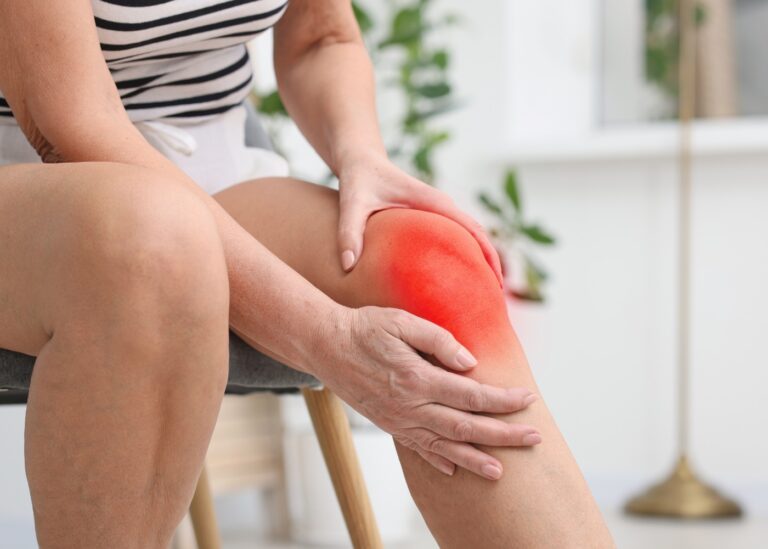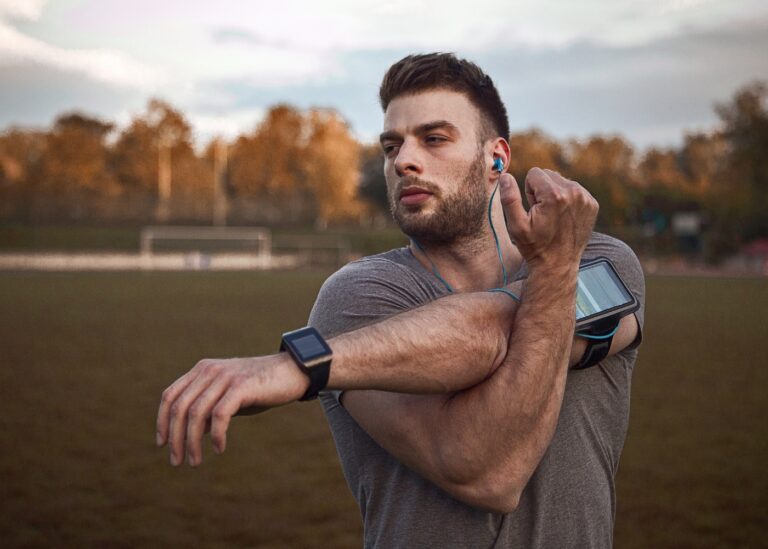

You already know how frustrating shoulder pain can be. Picking up a coffee mug, reaching for your seatbelt, or trying to sleep on your favorite side suddenly feels like a chore. When your rotator cuff is hurting, even the smallest daily movements can remind you that something is off, and that constant discomfort can wear you down over time.
You are not alone in dealing with this. Around 4.5 million patient visits related to shoulder pain happen each year in the United States, and rotator cuff problems are the leading cause of shoulder-related disability (AAOS). The good news is that many people find meaningful relief through simple, targeted exercises they can do at home.
Below is a step-by-step guide to the most effective rotator cuff stretching exercises and strengthening movements, designed to help you start feeling more like yourself again.
Key Takeaways
- The rotator cuff is a group of four muscles that stabilize your shoulder joint during movement.
- Gentle stretches may help improve flexibility and reduce stiffness in the shoulder.
- Strengthening exercises can support the muscles around the shoulder and may lower the risk of future injury.
- Most people can perform these exercises at home with a resistance band and light weights.
- Always check with a healthcare provider before starting a new exercise routine, especially after an injury.
What Is the Rotator Cuff and Why Does It Matter?
Your shoulder is one of the most mobile joints in your body, and four muscles along with their tendons work together to keep the upper arm bone stable inside the shoulder socket. Those four muscles are the supraspinatus, infraspinatus, subscapularis, and teres minor, and together they form the rotator cuff.
Because the shoulder relies heavily on these muscles for stability, any weakness, overuse, or injury to the rotator cuff may lead to pain, reduced range of motion, and difficulty with daily activities. Common problems include tendinitis from repetitive overhead movements or load-bearing activities that strain the arm, partial or full-thickness tears, and impingement where soft tissue gets pinched between shoulder bones.
The American Academy of Orthopaedic Surgeons notes that a structured conditioning program with stretching and strengthening may help you return to daily activities after a rotator cuff injury (AAOS OrthoInfo).
Top Rotator Cuff Stretches for Flexibility
Stretching plays an important role in keeping the shoulder joint flexible and reducing stiffness after an injury. For each stretch below, hold the position for about 30 seconds, relax for 30 seconds, and repeat on each side.
How Does the Pendulum Stretch Help Your Shoulder?
The pendulum is one of the gentlest ways to start moving a sore shoulder. Gravity does most of the work, which means less strain on the rotator cuff muscles.
- Lean forward and place one hand on a table for support.
- Let your other arm hang freely at your side.
- Gently swing the hanging arm forward and backward, then side to side, then in small circles.
- Repeat the full sequence with the other arm.
- Aim for two sets of 10 in each direction, five to six times a week.
What Does the Cross-Over Arm Stretch Target?
A cross-body stretch can help loosen up the back of the shoulder. The posterior deltoid and surrounding muscles tend to get tight, especially in people who sit at a desk for long periods.
- Stand or sit with your shoulders relaxed.
- Gently pull one arm across your chest as far as comfortable, holding at the upper arm.
- Hold for 30 seconds, then relax, and repeat on the other side for four sets each.
How Do You Perform a Subscapularis Muscle Stretch?
The subscapularis sits at the front of your shoulder blade and allows your shoulder to rotate inward. A passive internal rotation stretch using a stick or cane is one of the most effective subscapularis stretching exercises, and it requires no special equipment.
- Hold a stick behind your back with one hand. Grasp the other end with your opposite hand.
- Pull the stick horizontally so the shoulder stretches passively.
- You may feel the stretch at the front of your shoulder.
- Hold for 30 seconds, relax, and repeat on the other side for four sets.
What Is the Sleeper Stretch and How Does the Infraspinatus Stretch Work?
The sleeper stretch, also known as the infraspinatus stretch, targets the back of the shoulder. Tightness in the infraspinatus and teres minor muscles can limit mobility and may contribute to pain.
- Lie on your side on a firm surface with the affected shoulder underneath you.
- Bend the bottom arm at the elbow so your forearm points toward the ceiling.
- With your top hand, gently push the bottom forearm toward the floor.
- Hold for 30 seconds, relax, and repeat for four sets on each side.
How Does the Doorway Stretch Support Shoulder Mobility?
Spending long hours sitting or hunching forward can tighten the chest and front shoulder muscles. For people who work at desks or drive for long periods, pairing a doorway stretch with clinical options like shockwave therapy may offer additional relief for chronic tightness.
- Stand in a doorway with both elbows bent and forearms resting on each side of the doorframe at chest height.
- Step one foot forward and gently lean your chest through the doorway.
- Hold for 15 to 30 seconds, then step back. Repeat three to four times.
Top Strengthening Exercises for the Rotator Cuff
Once flexibility has improved, strengthening exercises can help stabilize the shoulder and reduce the chance of re-injury. A resistance band is the most common tool, though light dumbbells (1 to 5 pounds) also work well.
How Does External Rotation With a Band Build Stability?
External rotation strengthens the infraspinatus and teres minor, two muscles that play a key role in keeping the shoulder stable. Weakness in this area can become especially noticeable during overhead activities or when recovering from an arm extension load bearing rotary cuff injury.
- Attach a resistance band to a doorknob at elbow height.
- Stand with your side to the door, holding the band with the far hand.
- Keep your elbow bent at 90 degrees and pressed against your side.
- Slowly rotate your forearm outward, away from your body, then return with control.
- Perform two to three sets of 10 on each arm.
How Do Internal Rotation Exercises Strengthen the Subscapularis?
Internal rotation is the opposite movement, and the subscapularis powers it. Warming up with a subscapularis muscle stretch before the exercise can help prepare the muscle for work. When an injury is more advanced and exercises alone are not enough, clinical approaches like peptide therapy and stem cell therapy may support tissue repair alongside a rehabilitation program.
- Attach a resistance band to a doorknob at elbow height.
- Stand with your side to the door, holding the band with the near hand.
- Keep your elbow bent at 90 degrees and against your side.
- Slowly rotate your forearm inward, pulling the band across your body, then return.
- Perform two to three sets of 10 on each arm.
Why Are Scapular Rows Important for Shoulder Health?
Strong shoulder blade muscles may help keep the rotator cuff tendons from getting pinched (Medical Science Monitor, 2020). Scapular rows target the middle trapezius and rhomboid muscles, which control shoulder blade positioning. If shoulder blade pain persists despite regular exercise, regenerative options like hyperbaric oxygen therapy and exosome therapy may complement a physical therapy program by supporting the body’s natural healing processes.
- Attach a resistance band to a stable object at chest height.
- Hold one end in each hand with arms straight in front of you.
- Pull your elbows straight back, squeezing your shoulder blades together.
- Hold for five seconds, then slowly return. Perform two to three sets of 10.
How Do Wall Slides Help With Overhead Movement?
Wall slides improve shoulder stability during overhead reaching by using the wall to limit excessive movement, making the exercise safer for people recovering from injury.
- Stand facing a wall and place your forearms flat against it at shoulder height, fingers pointing up.
- Slowly slide your forearms up the wall as high as comfortable.
- Gently press into the wall as you hold at the top, then lower back down.
- Perform two to three sets of 10.
Which Exercises Should You Avoid With a Rotator Cuff Injury?
Knowing what not to do is just as important as knowing the right exercises. Certain movements can put extra strain on an already irritated or torn rotator cuff, so when dealing with shoulder pain, consider avoiding:
- Heavy overhead lifts such as military presses or overhead dumbbell presses, which place significant load on the rotator cuff tendons.
- Deadlifts and heavy shrugs, which pull downward on the shoulder joint and may stress an injured rotator cuff.
- Bench presses with poor form, especially wide-grip variations that force the shoulder into a vulnerable position.
- High-intensity throwing or rapid overhead motions, which may aggravate tears or tendinitis.
- Aggressive stretching, which can do more harm than good if the shoulder is pushed beyond a comfortable range.
A good rule of thumb: if an exercise causes sharp pain in the shoulder, stop and consult with your healthcare provider before continuing.
Tips for Exercising Safely
- Warm up first. Walk briskly for five to ten minutes before stretching. Warm muscles respond better and are less likely to strain.
- Start with stretching, then strengthen. Restoring range of motion is the first priority. Once flexibility improves, you can add strengthening exercises. Pushing into strength work too early may delay recovery.
- Start light. Use the lightest resistance band or smallest weight available. Add resistance gradually.
- Stop if you feel sharp pain. Mild stretch or gentle fatigue is normal. Sharp or worsening pain is not.
- Be consistent. The AAOS recommends a four-to-six-week conditioning program. After recovery, exercising two to three days a week can help maintain shoulder health.
- Work with a professional. A physical therapist can tailor exercises to your specific condition and check your form.
Conclusion
Shoulder pain does not have to slow you down, and a consistent routine of targeted stretches and strengthening exercises can make a meaningful difference in how your shoulder feels and functions over time.
If your shoulder pain has not improved with at-home exercises, Rocky Mountain Regenerative Medicine in Boulder, CO offers personalized, regenerative approaches to musculoskeletal health. Through the Annual Membership Program, Dr. Khoshal Latifzai and the RMRM team provide individualized care plans that go beyond symptom management to support long-term recovery and overall wellness.
Contact RMRM or book an appointment to discuss your shoulder health with a provider who takes a whole-body approach.
Disclaimer: The information in this article is for educational purposes only and is not intended as medical advice, diagnosis, or a substitute for professional medical care. Always consult with a qualified healthcare provider before beginning any exercise program, especially if you have an existing injury or medical condition.
Sources:
- American Academy of Orthopaedic Surgeons (AAOS). Rotator Cuff and Shoulder Conditioning Program. OrthoInfo. https://orthoinfo.aaos.org/en/recovery/rotator-cuff-and-shoulder-conditioning-program/
- American Academy of Orthopaedic Surgeons (AAOS). Management of Rotator Cuff Injuries, Clinical Practice Guideline (2025). https://www.aaos.org/quality/quality-programs/rotator-cuff/
- National Center for Biotechnology Information (NCBI). Influence of scapula training exercises on shoulder joint function after surgery for rotator cuff injury. Medical Science Monitor, 2020. https://pmc.ncbi.nlm.nih.gov/articles/PMC7607672/