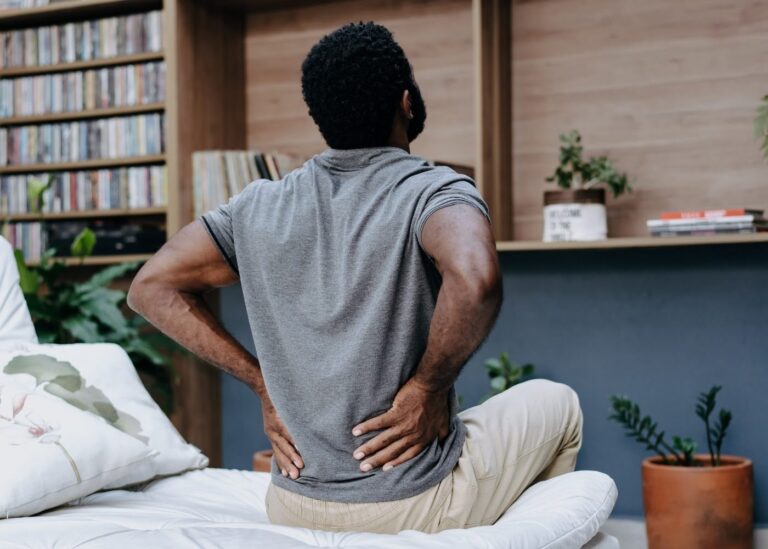
Chronic back pain without surgery starts with understanding what may be contributing to the pain and what you want to be able to do again. For many people, a thoughtful non-surgical plan can improve comfort and function. The right approach depends on the cause, duration, health history, and response to treatment.
Back pain can affect sleep, work, exercise, and time with family. If it has persisted, it is reasonable to want a clearer explanation and a plan that fits your situation. In most cases, surgery is not the first step. A National Institute of Neurological Disorders and Stroke fact sheet explains that many people with low back pain improve without surgery, though some causes require specialist evaluation.
Chronic low-back pain is generally defined as pain lasting 12 weeks or longer. That label describes duration, not the cause. Here are nine non-surgical approaches that may be considered as part of an individualized plan.
Key Takeaways
- Chronic low-back pain lasts 12 weeks or longer, but the cause and best treatment vary.
- Physical therapy, graded exercise, and staying active are common foundations of non-surgical care.
- Medicines and injections may have a role for selected people, with benefits and risks reviewed individually.
- Acupuncture, mindfulness, yoga, and other approaches may help some people, though the strength of evidence differs.
- Regenerative treatments should be discussed with a clear explanation of evidence, uncertainty, risks, alternatives, and cost.
What Can Contribute to Chronic Back Pain?
Back pain may relate to muscles, joints, discs, nerves, prior injury, or more than one factor. Sometimes imaging findings are present without explaining a person’s symptoms. A clinician can review the history, examine movement and strength, and decide whether imaging or other evaluation is likely to change the plan.
Treatment should match the likely source of symptoms. It should also account for function, sleep, activity level, other health conditions, and the person’s goals.
9 Ways to Address Chronic Back Pain Without Surgery
What works best depends on the cause, severity, and duration of your pain. Here are nine approaches, from common first-line options to more specialized ones.
1. Physical Therapy and Graded Exercise
Physical therapy can help build strength, mobility, and confidence with movement. A therapist may tailor a program to the person’s symptoms and starting point. Depending on the evaluation, it may include:
- Strengthening for the trunk, hips, and legs
- Mobility and flexibility work
- Gradual aerobic activity
- Movement strategies for tasks that trigger symptoms
- A home program that can be adjusted over time
Consistency matters, but exercises should be appropriate for the person. A sudden increase in activity can aggravate symptoms. Progress is often more sustainable when activity is increased gradually and adjusted with guidance.
2. Staying Active and Building Self-Management Skills
Pain can make people understandably cautious about movement. Extended bed rest, however, is rarely a useful long-term strategy for chronic back pain. A clinician or physical therapist can help identify safe ways to keep moving and set a gradual return-to-activity plan.
Pacing can help. This means breaking demanding tasks into manageable parts, alternating positions, and increasing activity in steps rather than doing too much on a better day and then needing prolonged recovery.
The goal is not to ignore pain. It is to find a level of activity that supports function without repeatedly triggering large setbacks.
3. Medication, When Appropriate
Medication may be considered when pain is limiting sleep or daily activity, but the choice depends on the cause, medical history, other medications, and expected benefit. Nonsteroidal anti-inflammatory drugs may be appropriate for some people for limited periods. Other medicines may be considered for particular pain patterns.
Every medication has potential risks. Long-term use of opioids is generally approached cautiously because of risks such as dependence and overdose. Talk with a qualified clinician about whether a medicine is appropriate, how long to try it, what side effects to watch for, and how success will be measured.
Medication is usually more useful as one part of a plan than as the only strategy.
4. Injections and Other Procedures
Injections may be considered when an evaluation suggests a specific source of pain and symptoms have not improved with other care. Examples include epidural injections for selected nerve-related symptoms or other procedures directed at a particular structure.
The likely benefit, duration, risks, and alternatives vary. An injection may reduce symptoms for some people, but it does not resolve every underlying cause or guarantee lasting relief. A clinician should explain why a specific procedure is being considered and what activity or rehabilitation plan will follow.
6. Massage or Manual Therapy
Massage may provide short-term relief for some people, particularly when muscle tension is part of the picture. Evidence for lasting benefit is less clear. The NCCIH review notes that massage studies have generally found short-term improvement, with limited evidence of effects over longer follow-up.
Manual therapy or spinal manipulation may be considered in selected cases. These approaches should be provided by appropriately trained professionals and used in a plan that supports activity and function, rather than replacing active rehabilitation.
Chronic pain can affect mood, stress, sleep, and concentration. That does not mean the pain is imaginary. It means pain is influenced by the nervous system and by a person’s overall physical and emotional state.
Approaches that may be included in a care plan are:
- Cognitive behavioral therapy or pain coping skills
- Mindfulness-based stress reduction
- Yoga or tai chi adapted to ability
- Relaxation and breathing practices
- Biofeedback in selected situations
Evidence varies by approach. NCCIH reviews research on complementary approaches for chronic pain, including yoga and tai chi for low-back pain. These practices are best viewed as possible additions to a broader plan, not guaranteed cures.
8. Sleep, Ergonomics, and Whole-Health Habits
Sleep disruption can make pain harder to manage. Creating a regular sleep routine, adjusting positions for comfort, and addressing factors that interrupt sleep may help support day-to-day coping.
Other practical adjustments can include:
- Taking brief movement breaks during prolonged sitting
- Varying positions during repetitive tasks
- Setting up a workspace that reduces sustained strain
- Avoiding smoking and seeking support to quit
- Working toward a sustainable activity and nutrition routine
These changes are not a substitute for evaluation or treatment. They can support general health and make it easier to participate in rehabilitation.
9. Regenerative Treatments: Ask About Evidence and Uncertainty
Some people ask about platelet-rich plasma (PRP), cell-based treatments, shockwave therapy, or exosomes for back pain. These approaches should not be presented as established solutions for every type of chronic back pain. Evidence and regulatory status differ by treatment and diagnosis, and some uses remain investigational.
Before considering a regenerative treatment, ask:
- What evidence supports it for my specific diagnosis?
- What benefits are realistic, and how uncertain are they?
- What are the potential risks and alternatives?
- What is the full cost, and is it covered by insurance?
- Is the proposed use FDA-approved, cleared, or investigational?
RMRM offers PRP services, but the availability of a service does not mean it is appropriate for every back condition. A qualified clinician should discuss the evidence and limitations without promising a result. We do not recommend replacing established evaluation or care with an unproven treatment.
When Should You Seek Medical Evaluation?
Arrange an evaluation if pain is not improving, keeps returning, or is limiting normal activities. Seek urgent medical attention for new loss of bowel or bladder control, numbness around the groin or saddle area, rapidly worsening leg weakness, or severe back pain with fever or after significant trauma.
A clinician can help determine whether conservative care is appropriate, whether further testing is needed, or whether a spine specialist should be involved.
Finding a Plan That Fits
Chronic back pain without surgery is not one treatment. It is a process of understanding the likely cause, choosing reasonable options, and tracking whether pain and function improve. Physical therapy and gradual movement are often central, while medicines, procedures, or complementary approaches may have a role in selected cases.
At Rocky Mountain Regenerative Medicine in Boulder, I take time to review a person’s history, goals, and prior evaluation before discussing options. Any treatment plan should be clear about what is established, what is still being studied, and what outcomes are realistic.
If persistent back pain is affecting your daily life, contact us to discuss an evaluation.