
If knee pain has been making it harder to enjoy your morning walk along Boulder Creek or keep up on a weekend hike in the Flatirons, you are not alone. Living with that kind of daily discomfort is exhausting, especially when the treatments you have already tried only take the edge off. Platelet-rich plasma (PRP) is one option that more and more patients across the Front Range are asking about. PRP uses a concentrate of your own blood platelets to target inflammation in the knee joint, and some patients report meaningful relief. Here is what the current research says, who may benefit most, and what to realistically expect.
Table of Contents
- Why PRP Is Used for Knee Pain and Arthritis
- What Is PRP and How Does It Work for Knee Pain?
- Does PRP Work for Knee Pain?
- Who May Be a Good Candidate for PRP Knee Therapy?
- How Many PRP Injections Are Needed for Knee Arthritis?
- How Does PRP Compare to Other Knee Pain Options?
- Is PRP a Realistic Alternative to Knee Replacement?
- What Are the Risks and Side Effects of PRP?
- How Much Do PRP Injections Cost?
- Frequently Asked Questions
The Quick Version:
- PRP uses concentrated platelets from your own blood, injected directly into the knee to help reduce inflammation.
- Research suggests PRP may work best for mild to moderate knee osteoarthritis, not advanced bone-on-bone disease.
- Most protocols call for one to three injections, spaced several weeks apart.
- Improvement may take six weeks to three months to become noticeable, and individual results can vary.
- Benefits may last anywhere from six months to two years, depending on the individual.
- Most insurance plans do not cover PRP, with costs typically ranging from $500 to $2,500 per injection.
Why PRP Is Used for Knee Pain and Arthritis
Knee osteoarthritis is one of the most common causes of chronic joint pain in adults. Physical therapy helps many people, but progress can plateau. Cortisone shots offer quick relief, but that relief often fades within weeks. For patients stuck in that frustrating gap between conservative care and surgery, PRP has become an option worth considering. Among all joints studied for PRP, the knee has the most research behind it.
What Is PRP and How Does It Work for Knee Pain?
Platelet-rich plasma, commonly called PRP, is made from your own blood. Platelets are small blood cells that carry growth factors, which are proteins your body uses to repair damaged tissue. A PRP injection concentrates those platelets to much higher levels than normal, then delivers them directly into the knee joint.
According to the American Academy of Orthopaedic Surgeons (AAOS), these concentrated growth factors may help speed up healing, though the exact mechanism is still being studied. You can read more about how platelet rich plasma therapy works as a treatment approach.
One detail many patients overlook is that not all PRP preparations are the same. Leukocyte-poor PRP, which contains fewer white blood cells, is generally the type used for knee osteoarthritis, while leukocyte-rich PRP may be better suited for tendon injuries. Asking your provider which type they use is a reasonable question before scheduling.
How Are Platelets Concentrated and Injected?
The PRP process is simpler than most people expect, and the full appointment usually wraps up in about an hour.
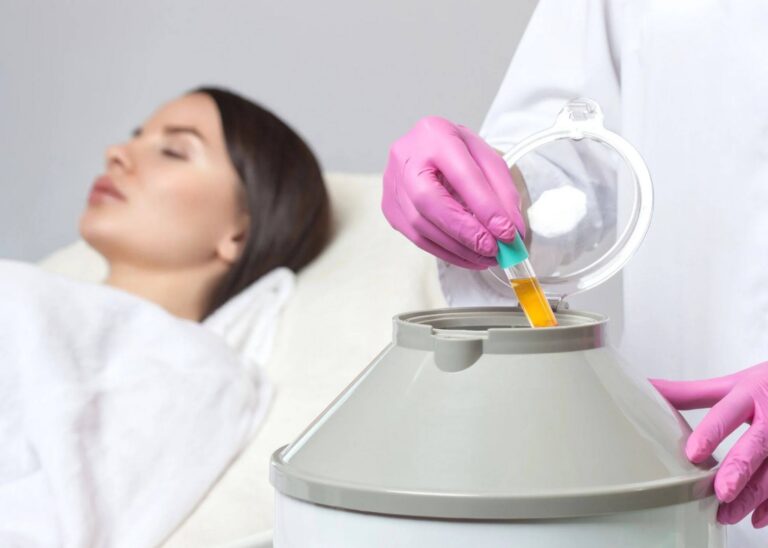
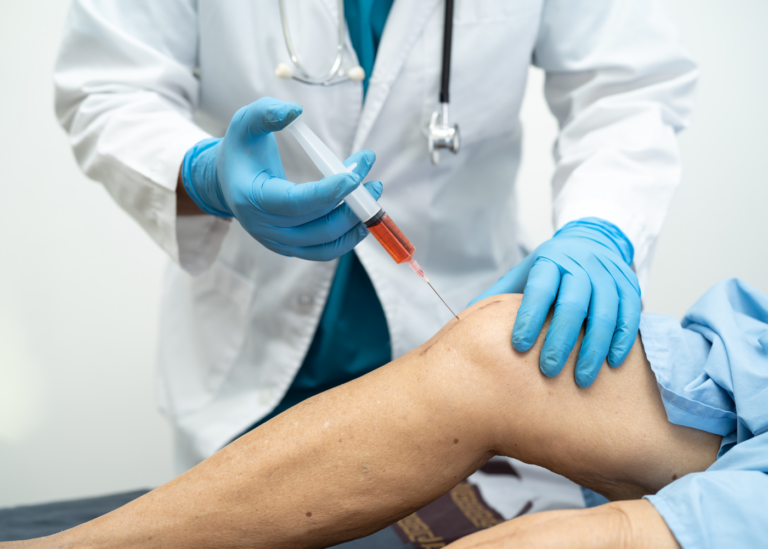
A provider draws a small amount of blood from your arm, similar to routine lab work. The sample goes into a centrifuge, which spins at high speed to separate platelets from other blood components. The platelet-rich portion is then injected directly into the knee joint, sometimes with ultrasound guidance for precise placement.
Why Does the Knee Respond Well to PRP?
The knee is a synovial joint, meaning it has an enclosed capsule filled with fluid, which may make it a particularly good target for PRP.
When PRP is injected into this enclosed space, the concentrated growth factors may remain more localized rather than dispersing quickly into surrounding tissue. Those growth factors may help calm inflammation in the synovial lining and support the cartilage surface. The knee is also relatively easy to access with a needle, so providers can place the injection precisely where the inflammation is concentrated.
Does PRP Work for Knee Pain?
PRP has become one of the most studied non-surgical options for knee osteoarthritis, but the evidence is nuanced.
The AAOS notes that growing research supports the effectiveness of PRP for mild to moderate knee osteoarthritis, with some studies reporting benefits lasting up to two years. A 2023 systematic review in Cureus found that PRP may help manage knee osteoarthritis symptoms in many patients, though results varied due to differences in preparation methods. At the same time, some large trials have shown more modest results, so the evidence is still evolving. PRP injections for knee pain appear to work best in earlier stages, when enough cartilage still remains.
What Does Current Research Suggest About Long-Term Results?
The long-term picture is still coming into focus, so realistic expectations matter.
A 2024 review in Advances in Orthopedics concluded that PRP may be safe and potentially effective for knee osteoarthritis, while noting that further standardized studies are needed. For people with severe arthritis where most cartilage is gone, PRP is less likely to help. In those cases, providers may recommend stem cell therapy for knee pain or other approaches depending on the stage of damage.
Who May Be a Good Candidate for PRP Knee Therapy?
Not everyone with knee pain will respond to PRP. Candidates who may see the best results include:
- Adults with mild to moderate knee osteoarthritis
- People who still have some remaining cartilage in the joint
- Patients whose symptoms have not improved enough with physical therapy, exercise, or medication
- Active individuals looking to delay or avoid more invasive procedures
Factors like overall health, body weight, and joint alignment can all influence outcomes. Underlying hormonal imbalances may also play a role in joint inflammation and recovery for some people.
How Many PRP Injections Are Needed for Knee Arthritis?
Most protocols involve one to three injections. Some patients improve after a single session, while others need additional injections spaced four to six weeks apart.
PRP may provide meaningful relief for months at a time, though the effects do gradually wear off. Many patients return for follow-up injections, with repeat sessions typically spaced six to twelve months apart. Working with a physical therapist before and after each injection may help strengthen the muscles around the knee and extend the window of relief.
What Should You Expect on the Day of Your Injection?
A little preparation goes a long way toward making the appointment feel routine.
You may need to pause blood thinners or anti-inflammatory medications a few days beforehand, since NSAIDs may interfere with the inflammatory healing response that PRP is designed to trigger. After the injection, mild soreness and swelling are common for a few days, though some patients experience discomfort for up to one to two weeks. Most people return to light activities fairly quickly, and providers generally recommend avoiding strenuous exercise for about a week.
How Does PRP Compare to Other Knee Pain Options?
Several injection options exist for knee pain beyond PRP. Here is how the most common choices compare.
| Feature | PRP Injection | Cortisone Injection | Hyaluronic Acid Injection |
|---|---|---|---|
| Source | Your own blood (platelets) | Anti-inflammatory medication | Gel-like lubricating substance |
| Goal | Support longer-term healing | Fast, short-term pain relief | Cushion and lubricate the joint |
| Onset | Gradual, over several weeks | Often within days | Gradual, over a few weeks |
| Duration | May last 6 months to 2 years | Weeks to a few months | Varies, often several months |
| Best for | Mild to moderate osteoarthritis | Acute pain flare-ups | Knee osteoarthritis specifically |
| Insurance | Typically not covered | Generally covered | Coverage varies |
Is PRP a Realistic Alternative to Knee Replacement?
A PRP vs knee replacement comparison comes up often. The two serve very different purposes.
Knee replacement is reserved for advanced osteoarthritis, when cartilage is severely damaged and other options have failed. PRP is a non-surgical injection for joints that still have cartilage left. For some patients, combining PRP with regenerative approaches and rehabilitation may help manage symptoms and push back the timeline for surgery. Cartilage that has already broken down is beyond what current non-surgical approaches can restore, so for bone-on-bone arthritis, knee replacement remains the standard of care.
How Does PRP Compare to Cortisone Shots?
Cortisone and PRP target knee pain differently, and both can play a role.
Cortisone delivers fast relief, often within days, but effects tend to fade within weeks or months. PRP works more gradually, with benefits that may last longer for some patients. Providers often recommend cortisone for acute flares and PRP as a longer-term strategy. Complementary options like peptide therapy may also support tissue repair through different pathways.
What Are the Risks and Side Effects of PRP?
PRP is generally considered low-risk because the injection comes from your own blood, which reduces the chance of allergic reactions or rejection. Common side effects may include:
- Soreness at the injection site, typically lasting a few days but occasionally up to one to two weeks
- Mild swelling around the knee
- Temporary stiffness after the procedure
Serious complications are rare. The AAOS notes that risks appear similar to those of cortisone injections. Patients on blood thinners or anti-inflammatory medications may need to pause those beforehand, so reviewing your medication list with your provider is important.
How Much Do PRP Injections Cost?
A single injection typically costs depending on provider and location. Most protocols call for one to three injections, so total costs can add up. The AAOS notes that few insurance plans provide even partial reimbursement for PRP. For a deeper breakdown, see our guide on PRP injection costs in Boulder.
Some clinics offer annual wellness memberships that bundle regenerative services at a reduced cost.
Conclusion
PRP for knee pain is a promising non-surgical option for adults in Boulder and across the Front Range dealing with mild to moderate osteoarthritis. PRP may help reduce inflammation, ease discomfort, and potentially delay more invasive procedures, especially when paired with physical therapy and regular exercise.
At Rocky Mountain Regenerative Medicine (RMRM), our team takes a personalized approach to knee pain and joint health.
Book an appointment to get started, or call 720-739-1616 to speak with our team.
Note: The information in this article is for educational purposes only and should not be considered medical advice. Always consult a qualified healthcare professional before pursuing any options for knee pain or osteoarthritis.
Sources:
- American Academy of Orthopaedic Surgeons (AAOS). Platelet-Rich Plasma (PRP). OrthoInfo. https://www.orthoinfo.org/treatment/nonsurgical-treatments/platelet-rich-plasma-prp
- Crowley JL, Soti V, et al. Platelet-Rich Plasma Therapy: An Effective Approach for Managing Knee Osteoarthritis. Cureus. 2023;15(12):e50774. https://pmc.ncbi.nlm.nih.gov/articles/PMC10729545/
- Addressing Knee Osteoarthritis Pathology Through Platelet-Rich Plasma Treatment: A Comprehensive Review. Advances in Orthopedics. 2024;2024:6551525. https://pmc.ncbi.nlm.nih.gov/articles/PMC11599444/
- Khalilizad M, Emadian ST, et al. Comparative Efficacy of Different Doses of Platelet-Rich Plasma Injection in the Treatment of Knee Osteoarthritis: A Systematic Review and Network Meta-Analysis. Journal of Orthopaedic Surgery and Research. 2025. https://pmc.ncbi.nlm.nih.gov/articles/PMC11871810/