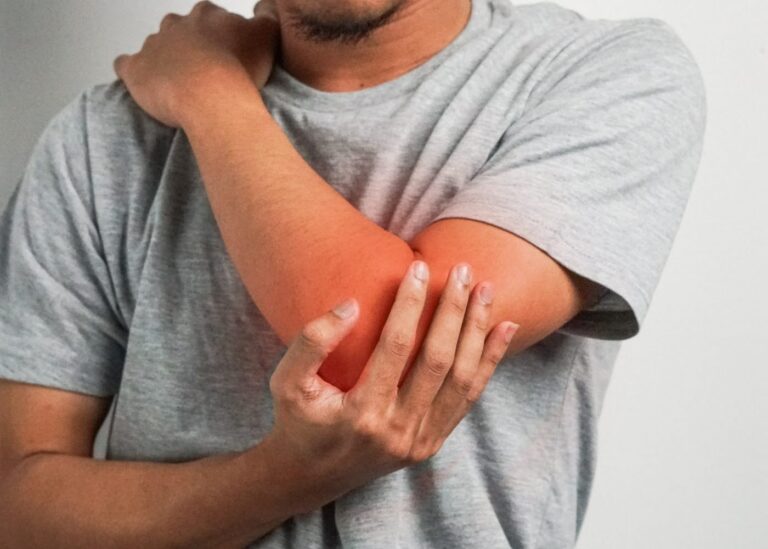

Musculoskeletal injuries affect millions of American men every year. Shockwave therapy for men may help speed up recovery from chronic tendon problems, muscle strains, and sports injuries by using focused acoustic waves to promote the body’s natural healing response, all without surgery or medication.
Traditional treatments like rest, ice, and anti-inflammatory medications can help manage symptoms, but don’t always address the root problem. Also called extracorporeal shockwave therapy (ESWT), shockwave therapy is gaining popularity among active men, weekend athletes, and competitive sports players looking to get back to what they love faster.
Key Takeaways
- Shockwave therapy (ESWT) is a non-invasive treatment that uses acoustic waves to promote tissue repair
- Sessions typically last 10 to 30 minutes, with most people needing 3 to 6 sessions
- Published reviews report success rates of 65% to 91% across common musculoskeletal conditions
- Common applications include plantar fasciitis, tennis elbow, Achilles tendinopathy, and muscle strains
- Full tissue healing may take 8 to 12 weeks, even though many patients notice improvement within a few sessions
- Side effects are generally mild, such as temporary soreness or redness at the treatment site
What Is Shockwave Therapy?
Originally developed for breaking up kidney stones, shockwave therapy has been adapted for musculoskeletal care over the past three decades.
How Acoustic Wave Therapy Works
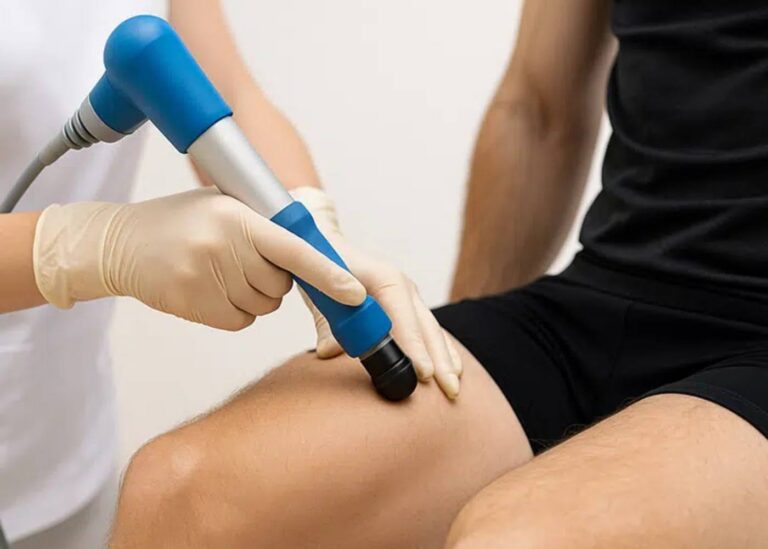
Acoustic wave therapy delivers high-energy sound waves to injured tissue via a handheld device applied to the skin. A water-based gel is applied first to help the waves travel effectively. Depending on the device, those pressure waves can penetrate 6 centimeters or more, reaching deep muscle, tendon, and bone tissue that surface-level treatments cannot.
When acoustic waves reach damaged tissue, they create mechanical stress at the cellular level, activating a process called mechanotransduction. That process signals cells that repair is needed, triggering them to release growth factors that recruit additional cells to the injury site to form new collagen, blood vessels, and functional tissue.
No needles, no incisions, and no anesthesia required. A typical session lasts about 10 to 30 minutes. Most people need 3 to 6 sessions, 1-2 sessions weekly.
Focused vs. Radial Shockwave Therapy
Focused shockwave therapy (FSWT) generates pressure waves that converge at a specific depth, making it ideal for smaller, deeper targets like a calcified tendon insertion. Radial shockwave therapy (RSWT) produces waves that radiate outward from the applicator, covering a larger area and working well for a broader range of soft tissue conditions. Many providers use both types during a single session.
How Shockwave Therapy May Help With Recovery
Shockwave therapy recovery involves several biological responses. None are guaranteed for every person, but published research points to encouraging patterns.
Promoting Blood Flow and New Blood Vessel Growth
Shockwave therapy may support recovery through angiogenesis, the formation of new blood vessels. More blood flow means more oxygen and nutrients reaching the injury site. A 2012 review in the Journal of Orthopaedic Surgery and Research noted that ESWT promotes tissue repair and regeneration while encouraging enhanced tissue perfusion.
Breaking Down Scar Tissue and Calcifications
Chronic injuries often lead to scar tissue or calcium deposit buildup around tendons and joints. In chronic plantar fasciitis, calcifications can keep tissue stuck in a damaged state. Shockwaves may help break up these deposits and restart healing, which could allow for:
- Better circulation to the affected area
- Improved range of motion
- Reduced stiffness and discomfort over time
Reducing Pain and Modulating Inflammation
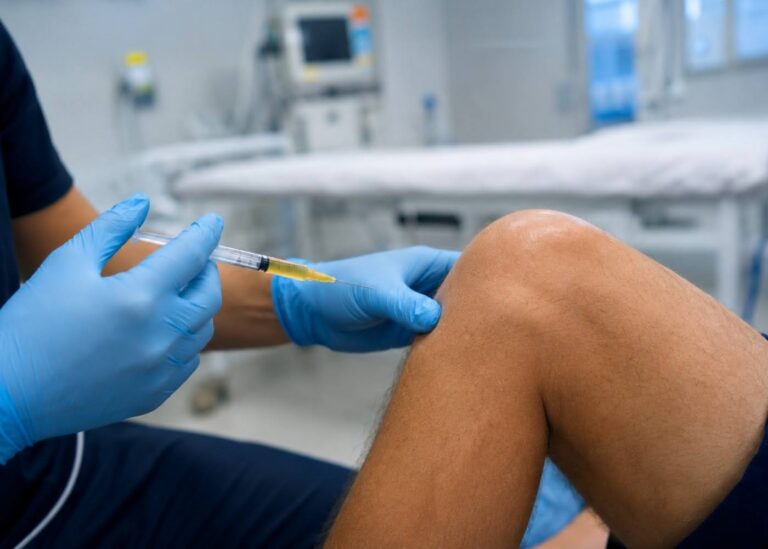
For men dealing with ongoing pain from a sports injury or overuse condition, shockwave therapy recovery may offer relief without long-term medication. Unlike steroid injections that temporarily manage pain, ESWT may help modulate chronic inflammatory responses that keep tissue in a damaged state. A 2024 meta-analysis of 45 clinical studies found a significant impact on pain reduction across plantar fasciitis, tennis elbow, Achilles tendinopathy, and rotator cuff issues.
Common Injuries That May Respond to Shockwave Therapy
Shockwave treatment for sports injuries and chronic musculoskeletal problems has been studied across a range of conditions.
Tendon Injuries
Tendon problems are among the most well-researched applications of shockwave therapy. Conditions like tennis elbow, golfer’s elbow, and Achilles tendinitis involve collagen degeneration, and acoustic waves may stimulate the response needed to rebuild that tissue.
- Plantar fasciitis (heel pain): A 2023 systematic review found high-quality evidence that ESWT has a large effect on both pain and function for plantar fasciitis.
- Tennis elbow and golfer’s elbow: Among the most studied applications of ESWT, with a reported success rate ranging from 65% to 91% across musculoskeletal conditions.
- Achilles tendinopathy: Often seen in runners and active men
- Rotator cuff tendinopathy: Common in overhead athletes and men who lift weights regularly
Bursitis and Myofascial Pain
Inflamed bursa sacs, particularly in the shoulder and hip, may improve with acoustic wave treatment. Chronic muscle and fascia pain can also respond to radial shockwave therapy, especially when combined with physical therapy and exercise.
Muscle Strains
A 2021 study on elite European football players found that radial shockwave therapy was well tolerated for acute muscle injuries, even when applied daily. Early results suggest it could be a useful part of muscle injury recovery plans.
Bone Stress Injuries
Some research suggests shockwave therapy could play a role in managing bone stress injuries like medial tibial stress syndrome (shin splints). A 2024 systematic review of 56 studies involving 1,874 athletes found that ESWT may be effective for conditions including plantar fasciitis, hamstring tendinopathy, medial tibial stress syndrome, and osteitis pubis.
What a Typical Shockwave Therapy Session Looks Like
Before Treatment
Getting the right diagnosis before starting shockwave therapy matters. Your provider should confirm the injury with imaging such as ultrasound, X-ray, or MRI, understand the exact location of damage, and rule out conditions that shockwave cannot treat.
During the Session
A water-based gel is applied to the skin over the injured area. The provider then uses a handheld device to deliver controlled acoustic waves to the tissue. You may feel a tapping or thumping sensation during treatment. Most people describe mild discomfort rather than actual pain, and intensity can be adjusted if needed.
After the Session
Most men can return to regular activities the same day. Some mild soreness, redness, or temporary bruising is normal and usually fades within a few days. Providers often recommend avoiding anti-inflammatory medications (like ibuprofen) right after treatment, since the inflammatory response is part of healing.
Treatment Timeline
Shockwave therapy is not a one-time fix. Most conditions require 3 to 6 sessions spaced over 3 to 6 weeks. Many patients notice improvement after 2 to 4 sessions, but the full healing response can take 8 to 12 weeks to develop, since actual tissue remodeling takes time.
Who Is a Good Candidate?
Shockwave therapy works best for chronic soft tissue injuries that have been diagnosed and have not responded to conservative treatment.
Shockwave therapy could be worth considering if you:
- Have a chronic tendon or soft tissue injury that hasn’t improved with rest and physical therapy
- Want a non-surgical, non-medication approach to pain and recovery
- Are you an active or athletic man looking to get back to training sooner
Shockwave therapy may not be recommended if you:
- Have a bleeding disorder or take blood-thinning medication at therapeutic levels
- Are you dealing with an infection or an open wound at the treatment site
- Have had a recent steroid injection in the affected area (typically within 6 weeks)
- Are you pregnant or have a bone tumor at the treatment site
- Have a severe or complete tendon/ligament tear that may need surgical repair first
- Have an acute injury where rest and physical therapy should be tried first
Results vary by person and condition. Always talk to a qualified healthcare provider before starting any new treatment.
What the Research Says Overall
Published evidence on ESWT continues to grow. A 2023 study specifically focused on in-season athletes noted that ESWT may accelerate return to play and often requires no time away from sport (PMC, 2023).
How Shockwave Compares to Other Options
Compared to steroid injections, shockwave therapy works more slowly but may trigger actual tissue repair rather than just reducing inflammation temporarily. Compared to surgery, ESWT is far less invasive and requires no recovery period. Combining shockwave with physical therapy typically works better than either alone.
Conclusion
Shockwave therapy recovery is a growing area of interest for men who want to heal faster without surgery or long-term medication. Rather than just masking pain, acoustic wave therapy aims to address the underlying tissue damage and support your body’s own repair process.
At Rocky Mountain Regenerative Medicine in Boulder, Colorado, providers combine shockwave therapy with advanced diagnostics and personalized care planning. RMRM also integrates stem cell therapy, peptide therapy, exosome therapy, and hyperbaric oxygen therapy when appropriate. The Annual Membership Program makes ongoing care more accessible.
Ready to see if shockwave therapy is right for your injury? Contact RMRM or book an appointment to schedule a consultation.
Disclaimer: The content in this article is for educational and informational purposes only. It is not intended as medical advice and should not replace a consultation with a qualified healthcare professional. Individual results from shockwave therapy may vary. Please consult your provider before starting any new treatment.