
Whether you’re seeking accelerated recovery from injury, enhanced cognitive performance, or support for healthy aging, hyperbaric oxygen therapy Boulder CO offers a scientifically-backed approach to optimizing your body’s natural healing processes. By delivering dramatically increased oxygen levels to your tissues under controlled pressure conditions, Hyperbaric Oxygen Therapy (HBOT) triggers powerful regenerative mechanisms that support your journey to Live, Look, and Perform Better Longer. Let’s explore the evidence-based benefits that make this therapy a valuable addition to comprehensive regenerative medicine protocols.
What Are The Key Benefits of Hyperbaric Oxygen Therapy
1. Increased Oxygen Delivery to Damaged Tissues
Hyperbaric Oxygen Therapy (HBOT) fundamentally works through Henry’s Law, dramatically increasing the amount of oxygen dissolved directly in your blood plasma. Under normal conditions, your blood carries approximately 0.3 ml of dissolved oxygen per deciliter. Research demonstrates that at 2.0 atmospheres of pressure, blood oxygen content is increased 2.5% and sufficient oxygen becomes dissolved in plasma to meet tissue needs in the absence of haemoglobin-bound oxygen, increasing tissue oxygen tensions 10-fold. This enhanced oxygen delivery bypasses the limitations of hemoglobin transport, ensuring that even tissues with compromised blood flow can receive therapeutic levels of oxygen essential for cellular repair and regeneration.
2. Faster Wound Healing and Tissue Repair
HBOT leads to improved angiogenesis through multiple mechanisms. Fibroblast proliferation and collagen synthesis are oxygen-dependent, with collagen forming the foundational matrix for new blood vessel formation. Studies demonstrate that HBOT therapy effectively accelerates wound epithelialization and neovascularization, reversing negative effects from compromised healing conditions. HBOT stimulates growth factors, particularly vascular endothelial growth factor (VEGF), which drives angiogenesis and other wound healing processes. This comprehensive approach to tissue repair makes HBOT particularly valuable for compromised wounds, skin grafts, and radiation-damaged tissues where conventional healing processes may be impaired.
3. Reduced Inflammation and Swelling
HBOT therapy modulates inflammatory responses by suppressing stimulus-induced proinflammatory cytokine production while affecting the release of key inflammatory mediators like TNF-α. Research shows VEGF levels increase significantly with HBOT, while inflammatory markers like PGE2 and COX-2 mRNA are markedly reduced. In muscle injuries, HBOT reduces tissue swelling and muscle weight while promoting strength recovery within days of therapy. The anti-inflammatory effects are mediated through hyperoxia’s interaction with key inflammatory pathways, including NF-κB signaling. This anti-inflammatory action helps reduce tissue swelling and creates optimal conditions for healing while minimizing secondary damage from excessive inflammatory responses.

4. Stem Cell Mobilization and Regeneration
HBOT mobilizes stem/progenitor cells from bone marrow through a nitric oxide-dependent mechanism. The population of CD34+ cells in peripheral circulation doubles after a single 2-hour exposure to 2.0 atmospheres oxygen, while a course of 20 therapy can increase circulating CD34+ cells eightfold. At Rocky Mountain Regenerative Medicine, we encourage undergoing HBOT sessions immediately following stem cell therapy to create optimal conditions for cellular integration and survival. The hyper-oxygenated tissue beds support angiogenesis and reduce inflammatory cytokines that might otherwise compromise your stem cell investment.
5. Post-Concussion and Cognitive Function Support
While the FDA hasn’t cleared HBOT concussions or traumatic brain injuries (TBIs), research demonstrates significant improvements in cognitive function, memory, attention, and executive function for patients with persistent post-concussion symptoms. As a result, it is used off-label for these indications. Studies on post-stroke patients reveal improvements in global cognitive function and brain tissue perfusion. For athletes and active individuals experiencing post-concussion syndrome, brain fog, or seeking cognitive optimization, HBOT supports neuroplasticity by increasing perfusion to underperforming brain tissue.
6. Enhanced Physical Recovery and Performance
HBOT helps inhibit muscle fatigue progression while sustaining muscle strength output during exercise. Both single and repeated mild hyperbaric oxygen sessions effectively alleviate subjective fatigue while promoting heart rate and blood perfusion recovery following muscle fatigue. Multiple therapy sessions show significant reductions in blood markers associated with muscle damage, metabolites, and oxidative stress. Professional athletes have successfully used HBOT for fatigue recovery and training optimization. Athletes preparing for competitions or recovering from intense training blocks benefit from HBOT’s ability to reduce delayed-onset muscle soreness (DOMS) and soft tissue injury recovery time.
7. Support for Longevity and Cellular Health
HBOT produces remarkable effects on cellular aging markers. Telomere length of key immune cells, including T cells, natural killer cells, and B cells, increases significantly by over 20% following HBOT protocols. Simultaneously, populations of senescent (damaged) T helper cells decrease by over 37%. These improvements far exceed the 2-5% telomere length effects typically seen with lifestyle interventions, exercise programs, and dietary supplements.
Read More: What Hyperbaric Oxygen Therapy Is And Why It Is Used
Conditions Commonly Supported by Hyperbaric Oxygen Therapy
The Undersea and Hyperbaric Medical Society (UHMS) recognizes specific medical conditions where HBOT provides evidence-based therapeutic benefits. The 2024 edition added avascular necrosis as the newest approved indication, reflecting ongoing research into HBOT’s regenerative potential.
UHMS-Approved Conditions:
- Air or gas embolism
- Diabetic foot ulcers and chronic wounds
- Radiation injuries and delayed radiation effects
- Carbon monoxide poisoning
- Decompression sickness
- Gas gangrene and necrotizing infections
- Compromised skin grafts and flaps
- Sudden sensorineural hearing loss
- Central retinal artery occlusion
- Acute traumatic ischemia (crush injury, compartment syndrome)
- Chronic refractory osteomyelitis
- Necrotizing fasciitis
- Acute thermal burns
- Intracranial abscess
- Avascular necrosis (newest addition, 2024)
Emerging Applications: Research continues exploring HBOT’s potential for post-concussion syndrome, athletic recovery optimization, and longevity enhancement. These applications are considered off-label but evidence-supported.
The RMRM HBOT Experience: Why Our Approach Is Different
When you seek HBOT at hospital-based centers like Rose Medical Center, you navigate insurance pre-authorizations, months-long scheduling backlogs, and rigid protocols limited to FDA-approved indications. If you’re seeking HBOT for post-concussion recovery, athletic optimization, or to maximize stem cell effectiveness, the traditional healthcare system isn’t built for you.
At Rocky Mountain Regenerative Medicine, HBOT operates on a different model designed for Boulder’s athletes and optimization-minded patients:
Access & Scheduling:
- No insurance requirements, available à la carte for anyone
- Priority scheduling for members, ensuring rapid access for acute neurological injuries, such as a concussion
- Therapy available within days, not months, is critical because timing matters for concussion recovery and pre-surgical optimization
Technology Advantages:
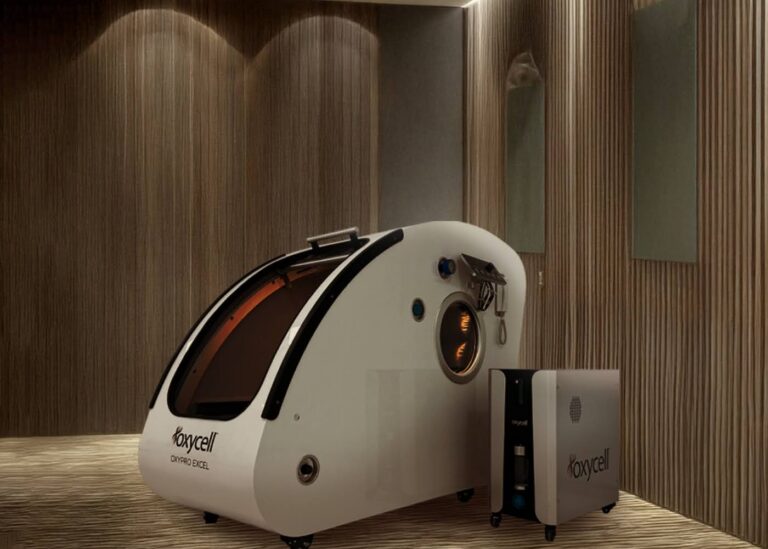
- Sit-down chamber pressurized to 2 ATA (higher than the 1.3-1.5 ATA found in soft-shell chambers and many competing facilities)
- Oxygen delivered via mask, not ambient chamber flooding, significantly lower fire risk than monoplace systems
- Electronics permitted (laptops, phones, tablets), essential for professionals who can’t disconnect for 60-90 minutes
What to Expect: During a typical 60-90 minute session, you’ll sit comfortably in the chamber while pressure gradually increases to 2 ATA. You’ll breathe oxygen via a mask while reading, working, or resting. The most common temporary side effect is ear pressure changes, similar to an airplane descent. Most patients tolerate HBOT exceptionally well.
Integrated Optimization: HBOT doesn’t exist in isolation at RMRM. It functions as a force multiplier for other regenerative modalities,
- Stem cell synergy: HBOT immediately post-deployment maximizes cellular integration
- Peptide & hormone optimization: Enhanced cellular responsiveness to BPC-157, MOTS-c, TB-500, and hormone protocols
- Pre/post-surgical enhancement: Pre-operative HBOT optimizes vascular beds; post-operative therapy reduces swelling and scar tissue
Read More: Benefits Of Hyperbaric Oxygen Therapy For Cancer Patients
Who This Is For
The Concussed Athlete: Whether you’re a high school soccer player in Boulder County, a cyclist who wrecked on Flagstaff, or a skier with lingering post-concussion symptoms, persistent headaches, brain fog, or mood changes weeks after impact, HBOT can support neurological recovery beyond rest and standard rehabilitation.
The Optimization-Minded Biohacker: You track HRV, optimize sleep, and manage metabolic health. HBOT represents another lever in your biological optimization stack, supporting mitochondrial function, reducing systemic inflammation, and enhancing the longevity dividend of your other interventions.
The Surgical Patient: Preparing for ACL reconstruction or joint replacement? Pre-surgical HBOT optimizes tissue oxygenation and vascularity, potentially improving surgical outcomes and recovery trajectories.
The Post-Radiation Patient: For patients experiencing delayed radiation injuries (osteoradionecrosis, radiation cystitis, soft tissue radionecrosis), HBOT is FDA-approved and essential.
Safety and What You Should Know
HBOT is generally well-tolerated. Absolute contraindications include pneumothorax, acute severe bronchospasm, or recent chemotherapy therapy with Bleomycin, Cisplatin, Disulfiram, or Doxorubicin. Relative contraindications include seizure disorders, severe COPD, claustrophobia, and active cancer. We conduct thorough screening to ensure your safety.
Conclusion
Hyperbaric oxygen therapy represents a scientifically-validated approach to enhancing your body’s natural healing and optimization mechanisms. From delivering dramatically increased oxygen to damaged tissues and mobilizing your stem cells to supporting cognitive function and longevity markers, HBOT offers comprehensive benefits that align with regenerative medicine principles.
At Rocky Mountain Regenerative Medicine in Boulder, we integrate HBOT with personalized diagnostic testing and complementary therapies to create therapy protocols designed specifically for your health goals. Whether you’re recovering from a concussion, optimizing athletic performance, preparing for surgery, or maximizing a recent stem cell investment, our multiplace chamber offers immediate access without insurance delays.
Ready to explore how hyperbaric oxygen therapy can support your health and performance goals? Contact our team
Medical Disclaimer: This information is for educational purposes only and is not a substitute for professional medical advice. Hyperbaric oxygen therapy is FDA-approved for specific conditions; applications for concussion, TBI, athletic recovery, and optimization are considered off-label and investigational. Individual results may vary. Consult with qualified healthcare providers regarding HBOT appropriateness for your specific health needs.