8 Factors to Consider When Choosing the Best Platelet-Rich Plasma Therapy Clinic
Picking a PRP provider isn’t like choosing a general practitioner, so here are the eight factors I think matter most.
Factor 1: Does the Provider Have Relevant Credentials and Training?
PRP is a specialized procedure that requires training beyond a standard medical degree, and not every physician has formal education in regenerative medicine or direct experience with the technique.
When you’re researching a clinic, I’d look for providers who have:
- Board certification in a relevant specialty such as sports medicine, orthopedics, or regenerative medicine.
- Specific training in PRP preparation and injection techniques.
- Meaningful clinical experience performing PRP across a range of patients.
This is usually the first thing that separates the best platelet-rich plasma therapy clinic from an average one.
Factor 2: Does the Clinic Specialize in Your Condition?
PRP can be used for joint pain, tendon injuries, hair loss, and skin rejuvenation, but each application requires a different approach. A clinic focused on orthopedic injuries may not be the right fit for someone seeking PRP for hair restoration, and vice versa.
Ask which conditions the clinic treats most often with PRP. If your concern is knee arthritis, a provider experienced in musculoskeletal conditions and regenerative orthopedic care will likely be a better fit. For hair thinning, look for a provider with hair restoration experience and scalp-specific protocols. The best platelet-rich plasma therapy clinic for you is the one that specializes in what you’re actually dealing with.
Factor 3: What PRP Preparation Protocol Does the Clinic Use?
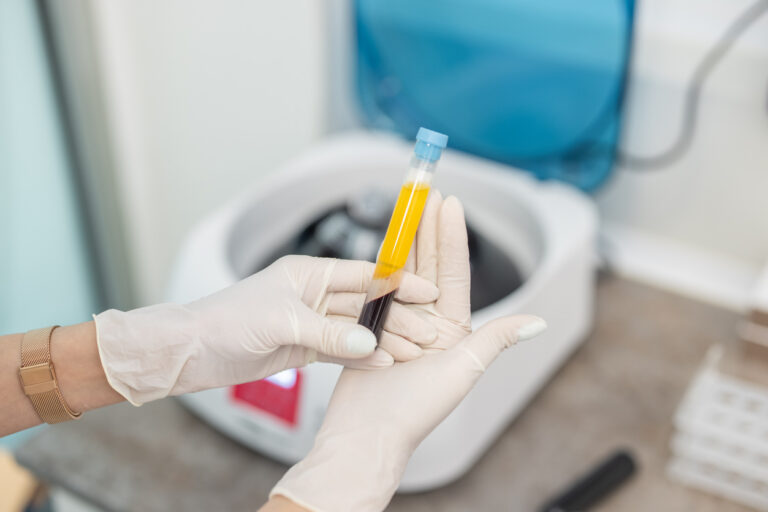
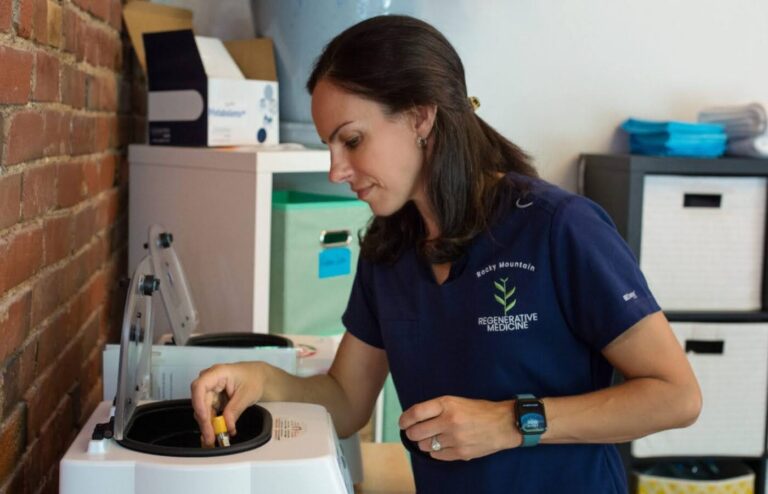
Not all PRP is the same, and the concentration of platelets, the type of centrifuge used, and the presence or absence of white blood cells can all influence your results.
A review in the National Library of Medicine found that commercial PRP preparation kits vary widely, and the type of PRP used may influence outcomes.
When you’re speaking with a clinic, I’d ask:
- What centrifuge system do you use, and is it FDA-cleared?
- Do you measure the platelet count in your preparations?
- Do you use leukocyte-rich or leukocyte-poor PRP, and why?
Clinics that can clearly explain their preparation method tend to have a more evidence-based approach, which is exactly what I look for in the best platelet-rich plasma therapy clinic. A few warning signs I’d watch for: blood handled by someone other than a qualified nurse or physician, no clear explanation of platelet concentration, or vague claims like “high-quality PRP” with no data behind them.
Factor 4: Does the Provider Use Image Guidance for Injections?
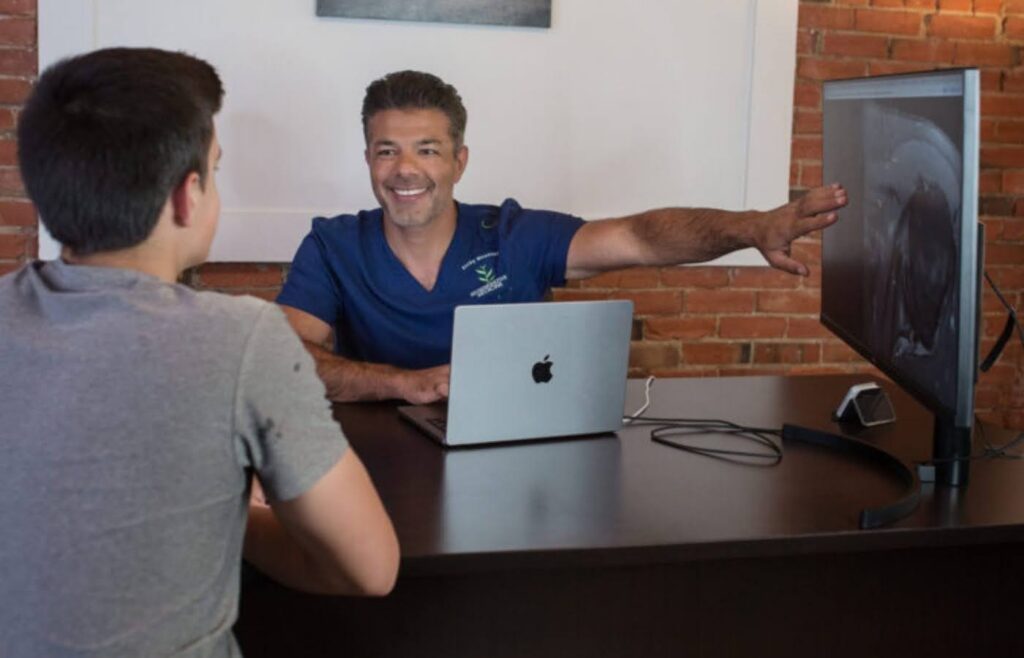
Where the PRP is injected matters just as much as what is injected. For joint and tendon conditions, ultrasound-guided injections improve accuracy significantly. Without guidance, a provider is estimating where the damaged tissue is located.
Ultrasound lets the provider see the needle in real time and place the PRP precisely where healing is needed. In my experience, this is one of the clearest signals of the best platelet-rich plasma therapy clinic. Clinics that invest in imaging technology tend to take precision seriously across the board, not just for PRP.
Factor 5: What Is the Clinic’s Reputation?
Online reviews, patient testimonials, and word-of-mouth recommendations reveal a lot about a clinic’s track record. I’d look for consistent patterns rather than any single review.
Pay attention to how patients describe the consultation process, whether they felt heard, and what they say about follow-up and results.
Factor 6: Does the Provider Offer a Thorough Initial Evaluation?
I won’t recommend PRP to a patient without first understanding their condition in detail. This is where the best platelet-rich plasma therapy clinic and an average one really part ways. A thorough evaluation should include a review of your medical history, a physical examination, and imaging, such as an MRI or ultrasound, when appropriate.
Something else worth keeping in mind is that PRP may not be suitable for everyone. People with blood-clotting disorders, active infections, or certain chronic conditions may need other options, and I believe a responsible provider tells you that upfront rather than pushing the maximum number of sessions.
Even among good candidates, different conditions require different approaches, and pain being in the same area does not always mean the same procedure applies. I often combine PRP with shockwave therapy or peptide therapy based on what the evaluation reveals.
Factor 7: Is the Pricing Transparent?
Most insurance plans do not cover PRP because the procedure is still considered investigational for many uses. Out-of-pocket costs can range from roughly $800 to $2,500 per injection, depending on the clinic, location, and area being treated.
Before committing, I’d ask for a clear breakdown of costs, including:
- The price per injection.
- Whether multiple sessions are recommended, and the total estimated cost.
- Any additional fees for imaging, consultations, or follow-up visits.
- Available payment plans or membership programs.
A clinic that is upfront about costs and doesn’t pressure you into unnecessary sessions is worth your attention. Transparent pricing is one of the hallmarks I’d expect from the best platelet-rich plasma therapy clinic.
Factor 8: What Follow-Up and Aftercare Does the Clinic Provide?
PRP often involves more than a single session, and your body needs time to respond, so results may take several weeks to become noticeable.
I’d ask about:
- When your first follow-up appointment is scheduled.
- Whether additional sessions may be needed, and how progress will be measured.
- Any activity restrictions or rehabilitation guidance after the injection.
Clinics that provide ongoing support, such as check-ins at key milestones or integration with physical therapy, tend to deliver more consistent outcomes in my experience. This kind of follow-through is a hallmark of the best platelet-rich plasma therapy clinic. Some providers, including us, also offer complementary regenerative services like exosome therapy or hormone optimization, which can address multiple factors under one roof.