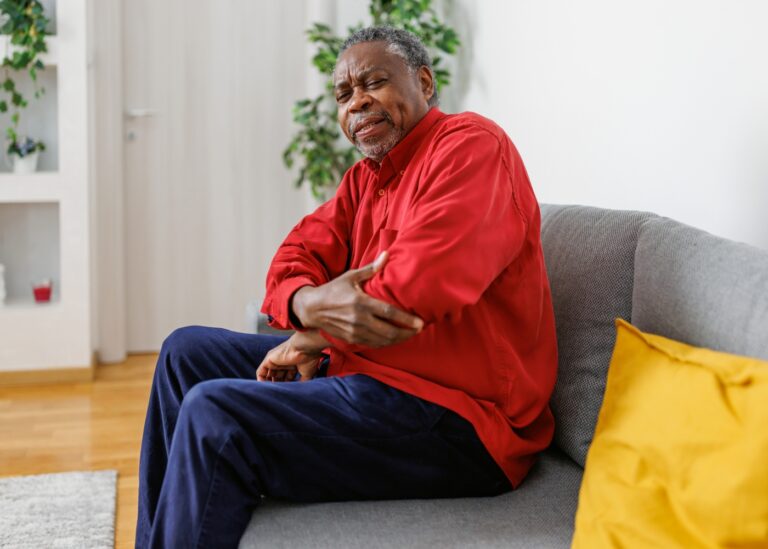

If lower back pain has been slowing you down, making mornings harder, or keeping you from the activities you love, you are not alone. According to the National Institutes of Health, roughly 80% of adults will deal with low back pain at some point. CDC data shows that about 39% of U.S. adults reported back pain within three months. Behind those numbers are real people missing workouts, struggling at a desk, and wondering if the pain will ever let up.
You do not have to wait it out. Gentle, regular stretches for lower back pain may help ease discomfort and prevent flare-ups. A meta-analysis in the American Journal of Epidemiology found that combining strengthening and stretching exercises two to three times per week could reduce the risk of low back pain. Below is a guide to some of the best stretches for lower back pain and strengthening exercises you can try at home.
Key Takeaways
- Gentle movement and regular stretching may help relieve and prevent lower back pain.
- Core strengthening exercises can help support your lower back and reduce strain.
- Always listen to your body and stop any movement that causes sharp pain.
- Consistency matters more than intensity. Even a few minutes daily can help.
- Talk to a healthcare provider before starting a new routine, especially if you have an existing injury.
Before You Start
Starting a new routine for your lower back should feel manageable. A few ground rules can help you stay safe.
- Start slow. Do not push through sharp or shooting pain. Mild discomfort is normal, but pain is a signal to stop.
- Breathe steadily. Hold each stretch while breathing at a comfortable pace.
- Stay consistent. A short daily routine tends to be more helpful than one long session per week.
- Warm up first. A brief walk or light movement before stretching helps prepare your muscles.
- See a professional. If you have a recent injury, numbness, tingling, or pain that does not improve, consult a doctor or physical therapist.
Lower Back Stretches
Tight hamstrings, hips, and glutes can pull on your pelvis and lower spine, which may contribute to back discomfort. Learning how to stretch the lower back, along with the muscle groups that support it, could help ease that tension.
Stretch 1: Knee-to-Chest Stretch
One of the simplest lower back stretches is the knee-to-chest. The AAOS Spine Conditioning Program recommends it for your lower back and hip area.
How to do it:
- Lie on your back with knees bent and feet flat on the floor.
- Lift one knee and gently pull it toward your chest with both hands.
- Tighten your abdominal muscles and press your spine into the floor.
- Hold for 5 seconds, then return to the start. Repeat with the other leg, then both together.
- Do the full sequence about 10 times.
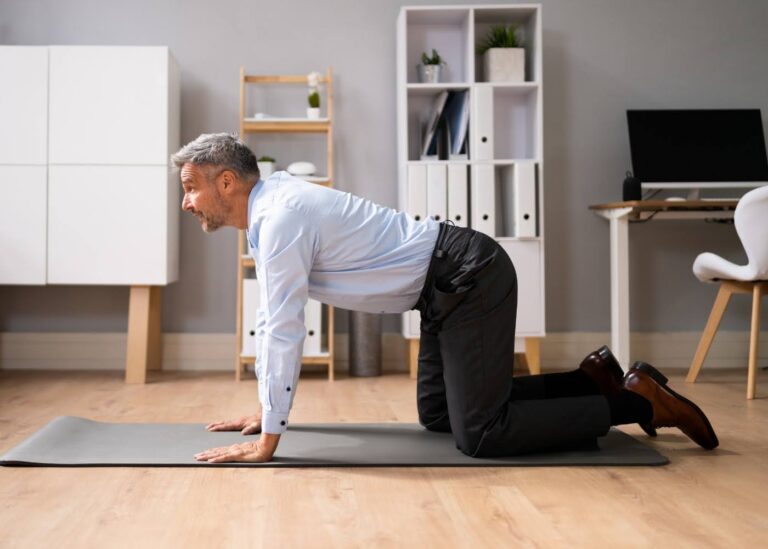
Stretch 2: Cat-Cow Stretch
The cat-cow gently moves your spine through flexion and extension, which may help loosen tight lower back muscles.
How to do it:
- Start on your hands and knees, hands under your shoulders and knees under your hips.
- Slowly arch your back upward, pulling your belly toward the ceiling and tucking your chin (the “cat”). Hold for 1 to 3 seconds.
- Let your belly drop toward the floor while lifting your head slightly (the “cow”). Hold for 1 to 3 seconds.
- Alternate between cat and cow 5 to 10 times.
Stretch 3: Child’s Pose
Child’s pose gently stretches the muscles along your spine and can help relieve tension in your lower back and neck.
How to do it:
- Start on your hands and knees. Sit back so your hips rest toward your heels.
- Walk your hands forward and lower your forehead toward the floor.
- Hold for 20 to 30 seconds while breathing deeply. Repeat 2 to 3 times.
Stretch 4: Seated Spinal Twist
A seated twist may help improve mobility in your lower spine. The AAOS recommends seated rotational stretches as part of their spine conditioning program.
How to do it:
- Sit in a chair without arms and cross your right leg over your left.
- Brace your left elbow against the outside of your right knee and gently twist to the right.
- Hold for 10 seconds, then repeat on the other side. Do 3 to 5 times on each side.
Stretch 5: Figure Four Stretch (Piriformis Stretch)
The piriformis is a small muscle deep in your buttocks that can contribute to lower back pain when tight.
How to do it:
- Lie on your back with both knees bent and feet flat on the floor.
- Place your right ankle on top of your left knee.
- Reach behind your left thigh and gently pull both legs toward your chest.
- Hold for 30 seconds to 1 minute, then repeat on the other side.
Strengthening Exercises
Stretching alone may not be enough, because weak core and gluteal muscles can leave your lower back unsupported. The AAOS Spine Conditioning Program recommends strengthening alongside stretching for a more complete approach.
Exercise 1: Pelvic Tilt
The pelvic tilt activates your abdominal muscles and gently works your lower back. The Williams flexion exercise guidelines, published through the NIH, include it among seven recommended exercises for low back pain.
How to do it:
- Lie on your back with knees bent and feet flat on the floor.
- Tighten your abdominal muscles as if bracing for a light push.
- Flatten your lower back into the floor, hold for 5 seconds, then relax.
- Start with 5 repetitions and gradually build to 30.
Exercise 2: Glute Bridge
Bridges target your glutes, hamstrings, and lower back extensors, which may help support your back during everyday activities.
How to do it:
- Lie on your back with knees bent and feet hip-width apart.
- Tighten your abdominal and gluteal muscles.
- Push through your heels and lift your hips 4 to 6 inches off the floor.
- Hold for 5 seconds, then slowly lower. Repeat 5 to 10 times.
Exercise 3: Bird Dog
The bird dog builds core stability as you balance on one arm and the opposite leg at the same time. The AAOS lists it as a key exercise for back extensors and glutes.
How to do it:
- Start on your hands and knees with your stomach muscles tightened.
- Raise one arm to shoulder height while extending the opposite leg behind you.
- Keep your back flat and hips level. Hold for 2 to 3 seconds.
- Return to the start and repeat on the other side. Do 3 sets of 8 on each side.
Exercise 4: Modified Plank
Planks work your abdominals, back extensors, and obliques at the same time. A modified version on your knees is a great starting point if you are new to core work.
How to do it:
- Place your forearms and elbows on the ground.
- Lift your body onto your knees (or toes, if ready), keeping your back flat.
- Hold for 10 to 30 seconds. Repeat 2 to 5 times, increasing hold time over time.
When to See a Doctor
Most lower back pain improves within a few weeks with gentle movement. However, see a healthcare provider if you experience:
- Pain lasting longer than a few weeks without improvement.
- Numbness, tingling, or weakness in one or both legs.
- Pain following a fall, accident, or sudden impact.
- Difficulty with bladder or bowel control.
Conclusion
Gentle stretching and core strengthening may be the simplest tools for managing and preventing lower back pain.
If your lower back pain has not responded to stretching and exercise alone, Rocky Mountain Regenerative Medicine in Boulder, CO, offers personalized approaches beyond conventional care. Therapies like shockwave therapy, stem cell therapy, peptide therapy, and hyperbaric oxygen therapy may help support tissue recovery and long-term relief. Through the Annual Membership Program, patients receive ongoing care designed to address the root causes of pain.
Contact RMRM or book an appointment to learn how a regenerative medicine plan could help.
Medical Disclaimer: The information in this article is for educational purposes only and is not intended as medical advice. Consult a qualified healthcare professional before starting any new exercise program or making decisions about your health.