
Chronic knee pain is one of those problems that won’t go away quietly. You wake up stiff. You modify your workouts. You reach for ice packs more often than you’d like. Eventually, you face a choice: undergo knee replacement surgery, or explore regenerative options like stem cell therapy for your knees.
Both paths can work. Neither is obviously “better” across the board. The right choice depends on your specific situation, goals, and how much downtime you can tolerate.
Stem Cell Therapy for Knees: How It Works
Stem cells are your body’s repair crew. When injected into damaged knee tissue, they can potentially help stimulate your body’s natural healing process. For a detailed look at the science, check out our guide on how stem cell therapy works.
Here’s what happens in practice:
Your clinician harvests stem cells (usually from your adipose, or fat, tissue). The cells are prepared and concentrated. They’re injected directly into the damaged area of your knee, usually guided by ultrasound. The goal is tissue healing, repair, and regeneration, not just pain suppression.
Unlike cortisone injections or pain medications that offer temporary relief, stem cell therapy for knee pain attempts to address the underlying damage. Many patients experience reduced pain and improved movement after the procedure.
Why adipose-derived stem cells? Adipose tissue provides 500 to 1,000 times more stem cells per gram of tissue than bone marrow, delivering a more potent therapeutic dose. The harvest is minimally invasive, requiring only a small liposuction procedure under local anesthesia. This approach is particularly advantageous for patients over 50, as bone marrow stem cell counts decline significantly with age. Additionally, adipose-derived cells secrete powerful anti-inflammatory factors that can help reset the joint environment and reduce chronic inflammation that drives osteoarthritis progression.
Why people choose stem cell therapy for knees: It’s a minimally invasive outpatient procedure with a shorter recovery time than surgery. The therapy aims to rebuild damaged cartilage rather than replace it, uses no implants or foreign materials, and offers the potential for long-term pain relief.
RMRM’s Integrated Stem Cell Therapy for Knees
At Rocky Mountain Regenerative Medicine, stem cell therapy is not delivered in isolation. We combine cellular regeneration with complementary therapies to optimize healing outcomes.
Platelet-Rich Plasma (PRP)
We often use PRP alongside stem cells. PRP concentrates your blood’s healing growth factors, which stimulate your body’s own stem cells to migrate to the damaged area, reduce inflammation, and promote new blood vessel formation. Research shows PRP can provide significant pain relief and functional improvement lasting a year or more.
Peptide Therapy
Specific peptides like BPC-157 and TB-500 enhance the healing environment. BPC-157 promotes new blood vessel formation and reduces inflammation, while TB-500 supports cell migration and protects cells from stress. These are administered in the weeks surrounding stem cell therapy to optimize conditions for healing.
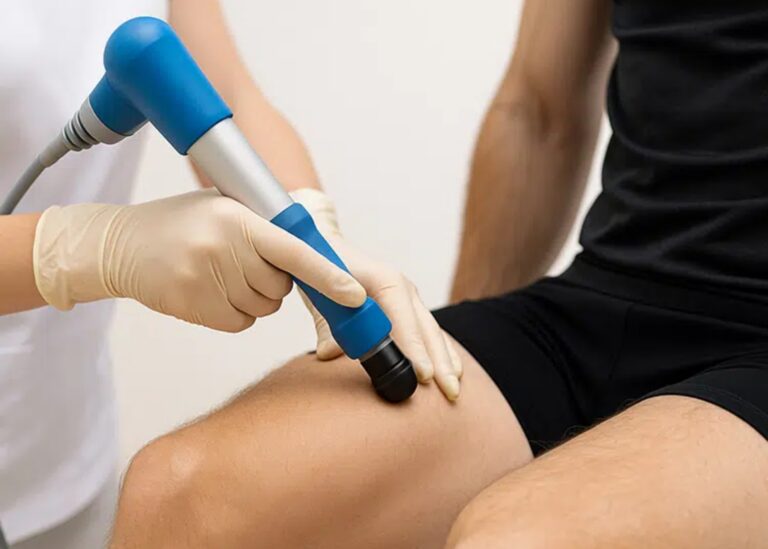
Shockwave Therapy
Acoustic waves stimulate healing responses by breaking down scar tissue, improving blood flow to the joint, and activating cellular repair mechanisms. Shockwave therapy is typically performed before stem cell injection to prepare the joint and enhance cellular therapy effectiveness.
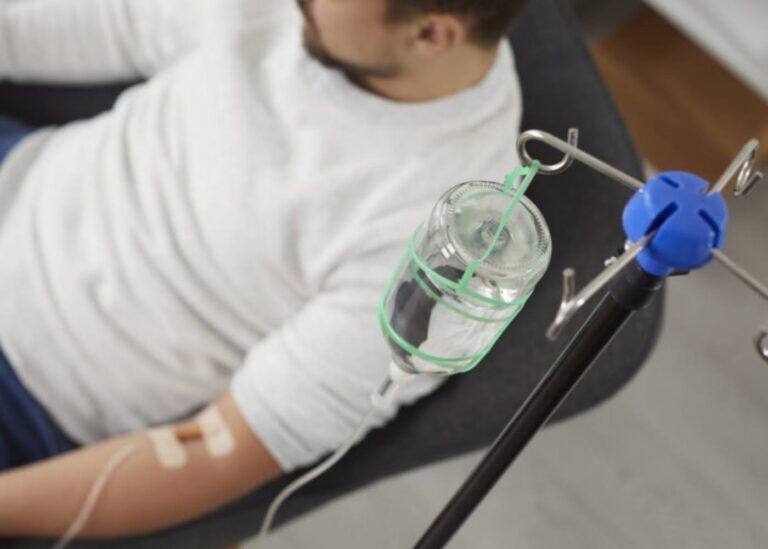
Hyperbaric Oxygen Therapy (HBOT)
This rare clinic capability delivers concentrated oxygen under pressure, dramatically reducing inflammation and oxidative stress in the joint. Hyperbaric oxygen therapy enhances stem cell survival and function after transplantation. Learn more about what hyperbaric oxygen is used for and its specific benefits in supporting cellular healing. HBOT is often recommended in the days following stem cell deployment.
This comprehensive approach addresses knee osteoarthritis from multiple angles simultaneously, creating conditions for actual healing rather than symptom management alone.
How Knee Replacement Surgery Works
Knee replacement is more direct. Your orthopedic surgeon removes the damaged portions of your knee joint and replaces them with a prosthetic implant. The procedure involves general or regional anesthesia, removal of damaged cartilage and bone, and installation of metal and plastic implants designed to mimic your natural knee. Depending on the facility, you may have a hospital stay or undergo outpatient surgery, followed by weeks of intensive physical therapy.
Knee replacement is one of the most commonly performed joint surgeries in the United States, and it has a long track record of success. Most patients report significant pain relief and restored mobility. People choose knee replacement because it offers proven long-term results, directly addresses severe osteoarthritis or joint destruction, restores joint stability in advanced cases, and is widely covered by insurance.
Stem Cell Injections in the Knee vs Surgery: Recovery Timeline
Stem cell therapy for knee joints typically requires minimal downtime. The procedure takes approximately 2 hours in our office, with patients returning home the same day. Most patients experience soreness at the injection site for a few days and return to normal activities within one to two weeks. We recommend avoiding high-impact activities for 4 to 6 weeks to allow the joint to heal. Some patients notice improvement within weeks, while others require 3 to 6 months to see full benefits.
Knee replacement surgery demands a longer commitment. Expect 6 to 12 weeks before you’re cleared for most activities. Physical therapy is mandatory and intensive. Full recovery can take 6 months or longer.
If you can’t afford significant time away from work or training, stem cell therapy offers a practical advantage. If you’re already taking time off or have someone to help during recovery, knee replacement may not feel like a major hardship.
What Makes Them Different
Invasiveness
Stem cell therapy is a needle-based injection. Knee replacement is surgery, complete with anesthesia, incisions, and hospitalization. Invasiveness alone matters for many people, regardless of outcome.
Success Rates
Knee replacement has decades of data showing consistent results. The vast majority of patients experience substantial pain relief and regain normal function.
Stem cell therapy results are increasingly well-documented. Studies show that 70 to 80 percent of appropriately selected patients experience significant pain relief and functional improvement after stem cell therapy for knee osteoarthritis. For detailed information on recovery timelines and expected benefits, see our comprehensive stem cell therapy for knees guide. Some patients also show evidence of cartilage regeneration on follow-up imaging. Results depend on disease severity, patient age, and healing capacity, and the research continues to evolve.
Long-Term Durability
A prosthetic knee implant lasts 15 to 20 years on average. After that, revision surgery may be needed if the implant wears out.
Stem cell therapy doesn’t have a built-in expiration date. Results can last several years, depending on factors like age, activity level, and initial condition severity. Some patients choose periodic maintenance treatments to sustain results. If regeneration takes hold, improvement may be durable. If it doesn’t, you haven’t foreclosed other options.
When Stem Cells for Knees Are the Best Option
Consider stem cell therapy for your knee if you have early to moderate osteoarthritis without severe bone loss, cartilage damage without complete joint collapse, a desire to avoid surgery and extended recovery, an active lifestyle or job that limits time off, or a preference for a less invasive first approach. Important note: Stem cell therapy may not be appropriate if your knee damage is advanced or if you have severe structural problems requiring immediate stabilization.
When Knee Replacement Is the Better Choice
Knee replacement is typically the stronger option if your osteoarthritis is severe and limiting your daily life, multiple bones in the joint are damaged, conservative and regenerative approaches haven’t worked, you need immediate and predictable pain relief, or you want a solution with the longest track record. Knee replacement addresses catastrophic joint damage directly. When your knee is bone-on-bone, stem cell therapy alone may not solve the structural problem.
Can Stem Cell Injections in the Knee Work for You?
Yes. One practical advantage of stem cells for knee pain is that you’re not burning bridges. If you try stem cell therapy and it doesn’t deliver the results you want, knee replacement remains available to you later. Surgery, however, represents a point of no return. Once hardware is implanted, it rarely comes out, and you’re permanently altered. This makes many patients and clinicians favor a “start less invasive, escalate if needed” approach.
Factors That Influence Your Choice
- Your age: Younger patients sometimes prefer to preserve their natural knee longer, even if it means a regenerative therapy first. Older patients may prioritize rapid, proven relief.
- Severity of damage: A small area of cartilage loss is different from widespread osteoarthritis. Imaging and clinical examination guide this assessment.
- Activity level: Athletes and highly active people sometimes choose stem cell therapy to return to training faster.
- Timeline: If you need relief in weeks, knee replacement offers more certainty. If you have time to explore regeneration, stem cell therapy allows that exploration.
- Work and life demands: Can you take off 3 to 6 months for surgery recovery? If not, stem cell therapy’s shorter downtime is a real advantage.
RMRM’s Stem Cells Knee Therapy Services
Your knee pain deserves personalized evaluation from a team that understands both regenerative and surgical pathways.
At Rocky Mountain Regenerative Medicine, we specialize in stem cell therapy for knee pain and other regenerative options. We begin with a comprehensive evaluation, including physical examination, advanced imaging (MRI), and biomarker analysis, to understand the full scope of your condition. Rather than treating your knee in isolation, we assess your body as an integrated system. Metabolic factors, inflammatory status, hormonal balance, and age all influence healing capacity. We personalize every protocol based on your specific biology, goals, and preferences.
If stem cell therapy is appropriate for your situation, we guide you through the entire process. If significant metabolic or inflammatory factors are limiting your healing potential, we address those first. This systems approach, combined with our integrated use of PRP, peptides, shockwave, and HBOT, creates the optimal biological environment for actual tissue regeneration.
We also maintain relationships with select physical therapists in the Boulder area who understand our regenerative approach, ensuring seamless continuity of care before and after your procedure.
If knee surgery is the appropriate path, we’ll support that decision too.
We also offer annual memberships that provide access to ongoing diagnostics, imaging, and specialist consultation, which can be valuable as you navigate chronic knee concerns.
Ready to explore your options? Contact us to schedule a consultation or book an appointment with one of our clinicians.