
When everyday movements like walking downstairs or getting out of a car become something you dread, it is natural to start looking for answers beyond what you have already tried. You deserve options that take your pain seriously and work with your body, not against it.
Platelet-rich plasma (PRP) is one of those options. PRP uses a concentrated portion of your own blood to support healing, and over the past decade it has become one of the most widely used regenerative approaches for joint pain, tendon injuries, and arthritis. If you are in the Boulder area and considering PRP, this guide covers what the procedure involves, what it costs, and whether it could be right for you.
Table of Contents
- What Are PRP Injections?
- What Determines PRP Injection Cost
- What to Expect During and After the Procedure
- Conditions PRP May Support
- Is PRP Right for You?
- Frequently Asked Questions
- Book a Consultation
What You Need to Know
- PRP uses your own blood, processed to concentrate platelets and growth factors, then injected into the affected area.
- Cost varies depending on the treatment area and number of sessions. A consultation is the best way to understand pricing for your situation.
- The procedure takes about an hour, is done in an office setting, and most people return to normal activity within a few days.
- PRP for knee therapy may help people with mild to moderate osteoarthritis who have not found enough relief from physical therapy and medication alone.
- Side effects tend to be mild, including temporary soreness, swelling, or bruising at the injection site.
What Are PRP Injections?
Platelets are a component of your blood that play a role in clotting and contain proteins called growth factors. PRP therapy concentrates those platelets into a small volume of plasma, which a doctor then injects directly into the injured or painful area.
How does PRP work in the body?
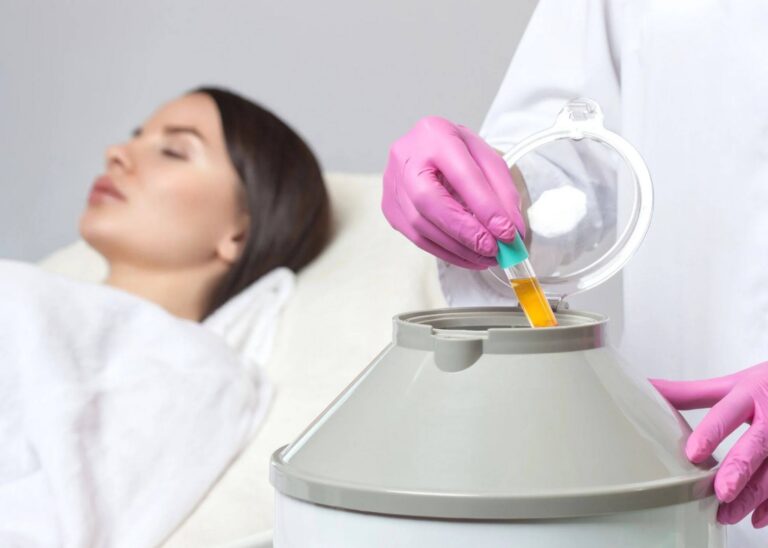
A PRP injection starts with a blood draw, similar to a routine lab test. The sample goes into a centrifuge, a machine that spins at high speed to separate the platelets from red and white blood cells. The concentrated plasma is then injected into the target site, where delivering a higher concentration of platelets to damaged tissue may help:
- Support the body’s natural healing response
- Reduce inflammation around the affected area
- Promote tissue repair over time
Because PRP comes from your own blood, the risk of allergic reaction or rejection is very low.
What Determines PRP Injection Cost
The cost of PRP injections varies based on several factors, and pricing is typically discussed during a consultation so your provider can tailor a plan to your needs.
What factors influence the price?
Several variables play a role in what you can expect to pay:
- Treatment area. Joints, tendons, and other areas may require different volumes of PRP, which can affect the total cost.
- Number of sessions. Some conditions may respond to a single injection, while others may call for a series of two to four sessions spaced a few weeks apart.
- Imaging guidance. Some providers use ultrasound to guide the injection for more precise placement, which may factor into the overall cost.
- Preparation method. Not all PRP is prepared the same way. Some clinics use more advanced processing systems that produce a higher platelet concentration, which can add to the investment.
A 2024 study published in PMC found wide pricing variation across top U.S. orthopedic hospitals, confirming that cost depends heavily on the clinic and your individual plan.
Does insurance cover PRP?
Most insurance companies do not currently cover PRP injections because many payers have not yet added the procedure to their standard coverage. You will likely pay out of pocket, though HSA and FSA funds can usually be applied. Always ask your provider for a detailed overview of your investment before scheduling.
What to Expect During and After the Procedure
What does the procedure look like from start to finish?
A PRP injection is an in-office procedure. Here is a general outline of what happens:
- Blood draw. A small amount of blood is drawn from your arm.
- Processing. The blood goes into a centrifuge and spins for about 10 to 15 minutes to separate the platelet-rich portion.
- Injection. The concentrated plasma is injected into the target area. Many providers use ultrasound guidance for precise placement.
- Post-procedure. You may rest briefly before heading home. The entire visit typically takes no longer than one hour.
Does the injection hurt?
Most people describe the blood draw as similar to any routine lab visit. The injection itself may cause brief pressure or discomfort, though many providers apply a local numbing agent beforehand. The process is generally well tolerated, and any soreness tends to fade within a few days.
What does recovery look like?
Most people can go back to their regular routine within a day or two. You may notice some soreness, swelling, or mild bruising at the injection site, and as with any injection, there is a small risk of infection or bleeding, though serious complications are rare.
Here are a few things to keep in mind during recovery:
- Your provider may recommend avoiding anti-inflammatory medications (like ibuprofen) for a period after the injection, as they could interfere with the healing response.
- Light activity is usually fine within the first week, with a gradual return to full activity after that.
- Results are not immediate. According to Harvard Health, patients have experienced noticeable changes somewhere between six weeks and three months.
Some providers recommend physical therapy before and after the injection to help prepare the tissue and support a stronger recovery. Your provider can advise whether adding rehab to your plan makes sense.
Conditions PRP May Support
While knee osteoarthritis is the most studied application, platelet-rich plasma shots in Boulder and across the country are also used for a range of musculoskeletal and cosmetic concerns.
What orthopedic conditions may benefit from PRP?
PRP has been explored for issues including:
- Knee osteoarthritis
- Rotator cuff injuries
- Tennis elbow (lateral epicondylitis)
- Achilles tendinitis
- Plantar fasciitis
- Chronic tendon injuries
For joint and tendon concerns that have not responded to rest, medication, or physical therapy, PRP may offer another path forward. Depending on your situation, options like shockwave therapy or peptide therapy can also be part of a broader plan to support healing and recovery.
What about aesthetic and hair restoration applications?
PRP has also been used for hair thinning and facial skin rejuvenation. When injected into the scalp, it may help support follicle health and density over time, and when applied to the skin, it may improve texture and reduce the appearance of fine lines. Some clinics offer dedicated hair restoration programs that incorporate PRP as part of a broader approach.
Is PRP Right for You?
PRP tends to be best suited for people seeking a non-surgical option for persistent pain or slow-healing injuries, whether that means a knee that aches during everyday activities or a shoulder that has not responded to physical therapy.
What does the evidence say about PRP for knees?
The American Academy of Physical Medicine and Rehabilitation (AAPM&R) released a guidance statement on PRP for knee osteoarthritis, recommending that providers consider PRP for people with mild to moderate knee osteoarthritis who still have symptoms after trying conservative options like physical therapy, weight management, and pain relievers.
A few key points from that guidance:
- PRP may help reduce pain and improve function in people with early to moderate knee arthritis.
- People with severe, bone-on-bone arthritis or significant joint misalignment may not be good candidates for PRP and could benefit more from surgical options or other therapies.
- PRP should complement, not replace, rehabilitation and other multimodal care.
Who may be a good candidate for PRP injections for knee pain?
PRP tends to work best for people who:
- Have mild to moderate knee osteoarthritis or a chronic tendon injury
- Have tried physical therapy, exercise, and over-the-counter pain medication without enough relief
- Want a non-surgical option
- Are looking to delay or avoid knee replacement surgery
Some patients also explore PRP as an alternative to repeated corticosteroid injections, which may offer short-term relief but are generally not recommended for long-term use in the same joint.
On the other hand, PRP may be less helpful for people with advanced arthritis where very little cartilage remains. An evaluation that includes imaging and a physical exam can help confirm whether PRP is a reasonable next step, and a consultation is always recommended before starting any regenerative approach.
Book a Consultation
If you are in the Boulder, Colorado area and want to learn whether PRP could be a fit for your situation, Rocky Mountain Regenerative Medicine (RMRM) offers personalized regenerative care designed around your goals. RMRM also offers an Annual Membership Program that provides ongoing access to regenerative therapies and monitoring.
Ready to take the next step? Book an appointment to discuss whether PRP or another regenerative approach is right for you, or call 720-739-1616 to speak with the team directly.
This blog is for educational purposes only and is not intended as medical advice, diagnosis, or treatment. Always consult a qualified healthcare professional before making any decisions about your health.
Sources
- Harvard Health Publishing. “PRP Injection for Knee Osteoarthritis: Does It Work?” July 2026. https://www.health.harvard.edu/bones-and-joints/prp-injection-for-knee-osteoarthritis-does-it-work
- Johns Hopkins Medicine. “Musculoskeletal Platelet-Rich Plasma Injections.” https://www.hopkinsmedicine.org/musculoskeletal-center/platelet-rich-plasma-injections
- AAPM&R. “Platelet-Rich Plasma (PRP) for Knee Osteoarthritis.” 2026. https://www.aapmr.org/quality-practice/clinical-practice-guidelines/platelet-rich-plasma-(prp)-for-knee-osteoarthritis
- PMC/NIH. “There Is Wide Variation in Platelet-rich Plasma Injection Pricing: A United States Nationwide Study.” 2024. https://pmc.ncbi.nlm.nih.gov/articles/PMC10936995/