
You look in the mirror, and something feels different. Maybe the firmness along your jawline is not what it used to be, or the fine lines around your eyes seem a little deeper than last year. For a lot of people, these changes carry more weight than just appearance. Your face is how you show up in the world, and when it starts to change in ways you did not expect, it can quietly chip away at your confidence.
You are not alone in feeling that way, and you deserve options that go beyond surface-level fixes. Stem cell therapy for facial rejuvenation is a growing area of regenerative medicine that aims to support your skin’s own ability to repair and renew itself from within, working at the cellular level rather than simply masking what is happening underneath.
Here is what you should know about how the process works, what early research suggests, and what to consider.
Key Takeaways
- Facial aging involves declining collagen, elastin, and slower skin cell turnover.
- Stem cell facial rejuvenation may encourage skin repair at the cellular level.
- Adipose-derived stem cells (from your own fat tissue) are most commonly used.
- Early clinical studies suggest potential improvements in skin texture, elasticity, and wrinkle reduction.
- Stem cell therapy for facial purposes is still considered investigational.
- A personalized evaluation is the best way to determine whether this approach could fit your goals.
What Causes Your Face to Age?
Aging skin is not just about wrinkles. A combination of internal and external factors changes how your skin looks and feels over the years, and the process starts earlier than most people realize.
Why Does Facial Skin Lose Its Structure Over Time?
Collagen is the protein responsible for keeping skin firm and smooth. Starting in your mid-20s, your body produces roughly 1% less collagen each year (NIH/PMC – Decreased Collagen Production in Chronologically Aged Skin). Over decades, that decline adds up. Elastin, the protein that helps skin snap back into place, also breaks down with age.
Several other factors play a role:
- Slower cell turnover means your skin takes longer to replace damaged cells with new ones.
- Reduced blood flow delivers fewer nutrients and less oxygen to skin tissues.
- Sun exposure, pollution, and smoking can accelerate these changes well beyond what natural aging alone would cause.
- Hormonal shifts, especially during menopause, can further reduce collagen and elastin levels.
The result is a gradual loss of volume, firmness, and smoothness. Regenerative approaches like stem cell therapy aim to target the biology behind those changes.
What Is Stem Cell Therapy for Facial Rejuvenation?
With that foundation in mind, a natural question follows: is there a way to support the skin’s repair process rather than just covering up what aging has changed? Stem cells are unique because they can develop into many different cell types, and when applied to aging skin, the goal is to help your body rebuild from the inside out.
How Is a Stem Cell Facial Different from Traditional Options?
A stem cell facial is fundamentally different from Botox, dermal fillers, or chemical peels. Botox works by relaxing muscles to smooth wrinkles, fillers add volume beneath the skin to restore fullness, and peels remove damaged outer layers to reveal fresher skin underneath. Each of those approaches targets what you can see on the surface.
Stem cell treatment for skin rejuvenation takes a different approach. Rather than adding something external or removing a layer of skin, the goal is to introduce cells that may stimulate your skin’s own repair processes, including collagen production, new blood vessel formation, and reduced inflammation (NIH/PMC – Adipose-Derived Stem Cells for Facial Rejuvenation).
The most commonly used cells for facial applications are mesenchymal stem cells (MSCs) sourced from adipose (fat) tissue. Because they come from your own body, the risk of immune rejection is very low.
One distinction worth understanding: some spas and skincare clinics offer “stem cell facials” that use topical serums or creams containing plant-derived stem cell extracts. While these products may support general skin health, they are different from injectable stem cell therapy, which delivers your own living cells directly into the skin to actively participate in tissue repair.
How Does the Procedure Work?
If you are considering this type of approach, knowing what actually happens during a session can ease a lot of uncertainty. Protocols vary from clinic to clinic, but the general process follows a consistent pattern.
What Happens During a Stem Cell Facial Rejuvenation Session?
A typical session involves several stages:
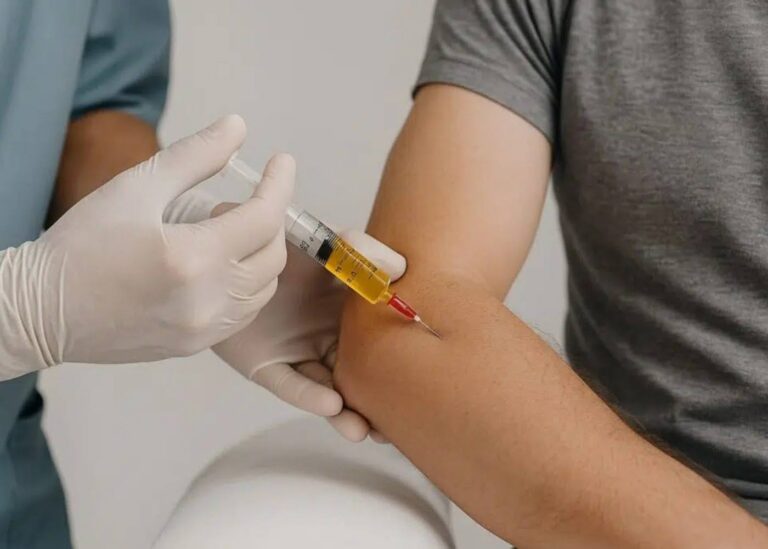
- Harvesting: A small amount of fat tissue is collected from an area like the abdomen or thighs through a minimally invasive procedure under local anesthesia.
- Processing: Cells are processed, evaluated, expanded and cryopreserved at a FDA approved stem cell bank. These cells can be drawn from for years to come. Initial processing takes 6 weeks, but subsequent use of cells only requires a 3 week lead time.
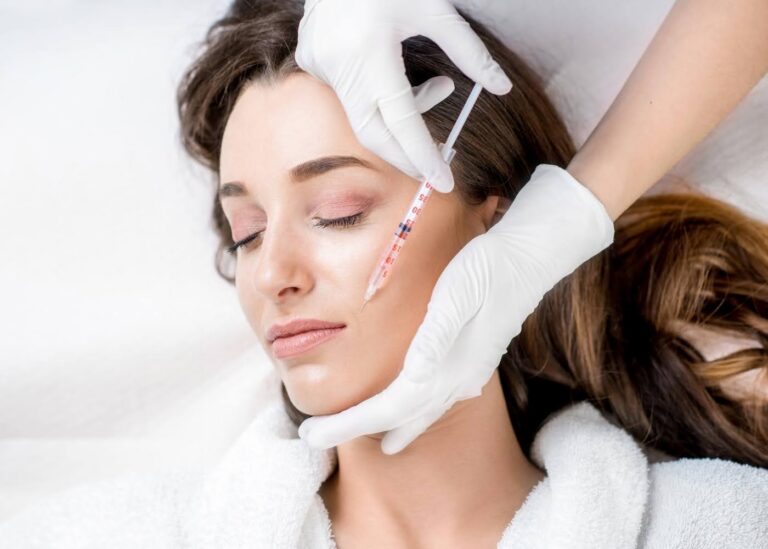
- Application: Cells can be injected or used with a microneedling procedure.
Harvesting takes about 1.5-2 hours and the application takes about 1 hours. Most people return to normal activities within a day or two, though mild swelling may last 48 to 72 hours.
What Are the Potential Benefits?
Early research points to several possible advantages, though no approach is guaranteed, and results can vary depending on age, skin condition, and overall health.
What Improvements Could You See?
Once injected, adipose-derived stem cells may release growth factors and signaling molecules that support collagen production, blood vessel formation, and tissue renewal in the skin. A study published in Bioimpacts found that patients who received autologous stromal vascular fraction injections saw improvements in facial skin quality, including better texture and volume (Amirkhani et al., 2016, as cited in NIH/PMC).
In a separate study, eight patients received a single intradermal injection of cultured adipose-derived stem cells. Researchers observed visible wrinkle reduction, including forehead lines and crow’s feet, over a 12-month follow-up (NIH/PMC).
Changes from stem cell therapy tend to unfold gradually. Some patients notice early improvements in hydration and skin tone within the first few weeks. Bigger changes, like increased collagen production and wrinkle reduction, typically develop over 3 to 6 months as the regenerative process matures.
Potential benefits reported across studies include:
- Improved skin texture and smoothness
- Increased collagen and elastin production
- Reduced appearance of fine lines and wrinkles
- Better skin hydration and elasticity
- Enhanced blood flow to treated facial areas
Most of these studies involved small patient groups, so larger trials are still needed to confirm long-term outcomes.
How Does Stem Cell Rejuvenation Compare to Other Approaches?
Most people exploring facial rejuvenation have already looked into other options, so understanding how stem cell approaches stack up can help clarify which path makes sense for you.
Which Option Might Be Right for Your Situation?
Botox and fillers address surface-level concerns. Botox relaxes muscles (lasting 3 to 4 months), while fillers add volume (lasting 6 to 18 months). Neither stimulates your skin to rebuild on its own.
Chemical peels and laser resurfacing remove damaged outer layers to reveal fresher skin, but multiple sessions may be needed.
PRP (platelet-rich plasma) uses growth factors from your own blood to encourage skin renewal, and can be combined with stem cell therapy for a more comprehensive strategy.
Stem cell facial rejuvenation is distinct because the goal is deeper cellular repair. Results develop gradually, and effects observed in studies have lasted up to 12 months or longer after a single session.
What Should You Know Before Considering a Stem Cell Approach?
Any regenerative procedure deserves careful thought, and a thorough evaluation by a qualified provider is the best place to start.
Who Could Be a Good Candidate?
People who may benefit most from stem cell facial procedures generally:
- Notice early to moderate signs of facial aging, such as fine lines, reduced firmness, or uneven texture
- Are you looking for a regenerative option rather than a temporary cosmetic fix
- Have enough body fat for a small liposuction harvest
- Are in overall good health without active infections or autoimmune conditions
Stem cell therapy for cosmetic uses is still considered investigational in the United States, which means results vary from person to person and no outcome is guaranteed. That said, the safety profile for autologous procedures is generally favorable, with most side effects being mild and temporary (NIH/PubMed).
From a practical standpoint, costs vary widely depending on the clinic, session count, and protocol, so a consultation is the best way to understand pricing for your situation. Most insurance plans do not cover these procedures at this time.
For those interested in a broader approach, complementary therapies like peptide therapy, hormone optimization, and hyperbaric oxygen therapy may further support skin health when part of a well-rounded regenerative plan.
Conclusion
Stem cell therapy for facial rejuvenation is one of the most promising areas in regenerative medicine. While research is still evolving, early findings suggest real potential for helping skin renew itself at a deeper level than conventional options alone.
At Rocky Mountain Regenerative Medicine, we believe lasting results start with understanding the full picture of your health, not just the visible signs of aging. Every patient begins will be evaluated and treated by our excellent staff of providers including Dr. Khoshal Latifzai. During the visit, you can expect a detailed review of your health history, a focused physical examination, an imaging review if applicable, and an open discussion about your goals so that any recommendations are tailored specifically to you.
Before moving forward with a regenerative procedure, our team may also recommend pre-treatment optimization. That could include comprehensive biomarker testing, hormone assessment and balancing, nutritional evaluation, and lifestyle adjustments, all designed to create the best possible internal environment for healing. From there, we combine advanced therapies like stem cell therapy, exosome therapy, and peptide therapy into a plan built around your unique needs.
Pricing is transparent, with no hidden fees. Our team accepts HSA and FSA payments, and financing options are available to make care more accessible. Through our Annual Membership Program, patients receive ongoing follow-up, maintenance support, and integrated therapies that extend well beyond a single visit.
If you are ready to explore what regenerative medicine could do for your skin and your confidence, contact us or book an appointment to schedule your consultation.
Medical Disclaimer: The information in this article is for educational purposes only and is not intended as medical advice. Always consult before considering any procedure.