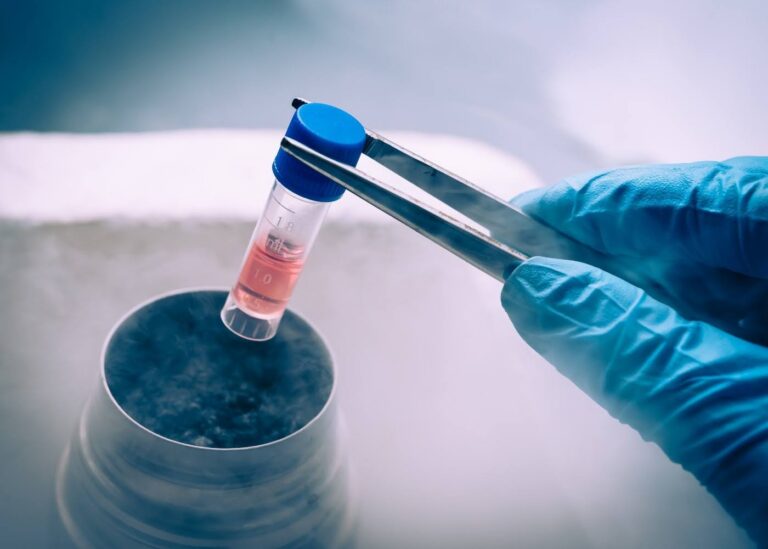

Stem cells come from four main sources: embryos at the blastocyst stage, adult tissues like bone marrow and fat, umbilical cord blood and placenta collected after birth, and lab-reprogrammed adult cells called induced pluripotent stem cells (iPSCs). Each source has different properties, different levels of versatility, and different uses in medicine and research.
Beyond knowing where stem cells come from, many people also want to understand what makes each source unique and how the collection actually works. A clear picture of these origins can help you make sense of the growing conversation around stem cell therapy and regenerative medicine.
What Are Stem Cells, and What Are They Made Of?
Stem cells are special cells that can both copy themselves and turn into other cell types in the body, like muscle, blood, or nerve cells. So what are stem cells made of? The same basic building blocks as any human cell. Each one contains:
- A nucleus with DNA (the genetic blueprint)
- A cell membrane that protects the cell
- Cytoplasm is filled with the same basic structures found in most human cells
What makes stem cells special is not their physical makeup. Rather, the genes inside them can be activated in different ways, allowing them to become many different types of cells depending on what the body needs. According to the National Institutes of Health (NIH), stem cells serve as an internal repair system, generating replacements for cells lost through normal wear and tear, injury, or disease.

The Main Sources of Stem Cells
Where do stem cells come from? According to the Mayo Clinic and the NIH, stem cells come from four primary sources: embryos, adult body tissues, umbilical cord blood and placenta, and lab-reprogrammed cells. Here is how each source works.
Embryonic stem cells
Embryonic stem cells come from human embryos that are three to five days old, at a stage called the blastocyst. At that point, the embryo may contain anywhere from about 50 to 150 cells.
According to the Mayo Clinic, the embryos used in research come from eggs that were fertilized at in vitro fertilization (IVF) clinics but never implanted. Donors give informed consent before these embryos are used for research purposes.
Embryonic stem cells are pluripotent, meaning they can turn into almost any cell type in the body. However, their use does involve ethical questions, since extracting these cells requires the embryo to be broken apart.
Adult stem cells
Adult stem cells, sometimes called somatic stem cells, are found in small numbers in various tissues throughout the body. Where in a human adult do stem cells reside? Common sources include:
- Bone marrow (the spongy tissue inside bones)
- Adipose tissue (body fat)
- Peripheral blood (the blood circulating through the body)
- Skin, liver, and brain tissue
According to the University of Rochester Medical Center, adult stem cells are generally more limited in their abilities compared to embryonic stem cells. A stem cell found in the liver, for example, may only produce more liver cells. Such cells are considered multipotent rather than pluripotent.
One of the most well-known adult stem cell types is the hematopoietic stem cell (HSC), which lives in bone marrow and produces all the different types of blood cells. According to UCLA’s Broad Stem Cell Research Center, hematopoietic stem cells have been used to treat patients with blood and immune diseases for more than 50 years.
Another important type is the mesenchymal stem cell (MSC), which can be found in bone marrow, adipose (fat) tissue, and other connective tissues. MSCs may have the ability to develop into bone, cartilage, muscle, and fat cells.
Perinatal stem cells (umbilical cord and placenta)
Perinatal stem cells come from tissues associated with birth, specifically the umbilical cord blood and the placenta. Cord blood is rich in hematopoietic stem cells and also contains mesenchymal stem cells. Because these cells are collected after a baby is born from tissues that would otherwise be discarded, their collection does not raise the same ethical concerns as embryonic stem cells.
According to the NCBI Bookshelf, parents can choose to donate their newborn’s cord blood to a public cord blood bank or store it privately for potential future use. Cord blood stem cells have been successfully used to treat certain genetic and blood-related diseases, with tens of thousands of cord blood transplants performed worldwide since 1988.
Induced pluripotent stem cells (iPSCs)
Induced pluripotent stem cells (iPSCs) are created in a lab by taking regular adult cells, typically skin or blood cells, and reprogramming them to behave like embryonic stem cells. According to UCLA’s Broad Stem Cell Research Center, specific genes are introduced that revert the adult cell back to an embryonic-like state, giving the resulting cells the ability to develop into many different cell types.
A peer-reviewed article notes that iPSC technology was first demonstrated in 2006 by Shinya Yamanaka at Kyoto University in Japan, using four specific genes to convert mouse cells into pluripotent stem cells. The same approach was successfully applied to human cells the following year. Because iPSCs come from the patient’s own cells, they may reduce the risk of immune rejection and avoid the ethical concerns associated with embryonic stem cells.
Where Are Stem Cells Located in the Body?
Stem cells are located in bone marrow, fat tissue, skin, the intestines, the brain, and peripheral blood, among other tissues. According to the Massachusetts General Hospital Stem Cell FAQ, adult stem cells are thought to exist in every type of tissue in the body, though isolating many types has been difficult.
Key locations include:
- Bone marrow: Houses hematopoietic stem cells (blood-forming) and mesenchymal stem cells
- Adipose (fat) tissue: A rich source of mesenchymal stem cells, often used in regenerative therapies
- Skin: Contains epidermal stem cells that help regenerate and maintain the outer layer of skin
- Intestines: Intestinal stem cells constantly renew the lining of the digestive tract
- Brain: Contains neural stem cells, though in very small numbers
- Peripheral blood: Hematopoietic stem cells can also circulate in the bloodstream
According to the University of Notre Dame Center for Stem Cells, adult stem cells have been found in a wide range of tissues, including the heart, liver, and muscles. However, they are usually restricted to becoming cell types related to the tissue where they live.
How Are Stem Cells Collected?
Collection methods vary by source. Here is a brief overview of each.
From bone marrow
Bone marrow stem cells are typically collected through a procedure called bone marrow aspiration. According to the NCBI Bookshelf, a needle is inserted into the back of the pelvic bone to withdraw bone marrow. The procedure is performed under anesthesia.
From adipose (fat) tissue
Fat tissue is one of the most accessible sources for mesenchymal stem cells. A small amount of fat is collected through a minimally invasive liposuction-like procedure. The fat is then processed to isolate and concentrate the stem cells.
When stem cells come from the patient’s own fat tissue, the process is called autologous stem cell therapy, meaning the cells come from you. At Rocky Mountain Regenerative Medicine, adipose tissue is harvested, concentrated using minimally manipulated processing, and deployed precisely where needed using image guidance. Because the cells belong to the patient, there is no risk of immune rejection.
From umbilical cord blood
Cord blood is collected right after a baby is born. According to the NCBI Bookshelf, the blood is drawn from the umbilical cord and placenta, which are normally discarded. The process is painless for both the mother and the baby.
From peripheral blood
Stem cells can also be collected from circulating blood. According to the NCBI Bookshelf, a growth factor medication is given beforehand to move stem cells from the bone marrow into the bloodstream. Blood is then drawn and passed through a machine that separates out the stem cells.
Types of Stem Cell Transplants
When stem cells are used in medical treatment, there are three main transplant types:
- Autologous: Stem cells come from the patient’s own body
- Allogeneic: Stem cells come from a matched donor, which could be a family member or an unrelated person; also, it can be lab-reprogrammed cells that have been stripped of identifiers to reduce the chance of an immune reaction.
- Syngeneic: Stem cells come from an identical twin
Autologous transplants carry a lower risk of rejection because the cells belong to the patient. Allogeneic transplants require careful matching to reduce complications. There are also allogenic, which can include those purchased from a tissue bank. There have been cases of autoimmune reactions from the use of these, and they are now more regulated in the USA. We at RMRM do not use allogenic products
In regenerative medicine, autologous stem cell therapy from adipose tissue has gained attention because the body recognizes these cells as “self.” However, many providers in this space emphasize that the injection itself is only one piece of the puzzle. The biological environment into which cells are introduced, including inflammation levels, hormonal balance, and metabolic health, may influence how well those cells survive and function.
What Happens Beyond the Stem Cell Injection?
Some regenerative clinics pair autologous stem cell treatment with supportive therapies designed to optimize the body’s environment for healing. At RMRM, available adjunctive therapies may include:
- Hyperbaric oxygen therapy (HBOT): Concentrated oxygen under pressure, which may support the survival of newly introduced cells
- Shockwave therapy: Helps direct cellular attention to damaged areas and may provide pain relief during preparation
- Hormone optimization: Addresses hormonal imbalances that could impair tissue repair
- Peptide therapy: Specific peptides that may support healing and reduce inflammation
Every protocol at RMRM is personalized. Not every adjunctive therapy fits every case, and nothing is recommended that does not align with the patient’s biology and goals.
Safety considerations
Autologous stem cell therapy carries risks similar to any minor surgical procedure, including potential infection, bleeding, or bruising at the harvest site. Because the process uses the patient’s own cells without chemical alteration, there is no risk of immune rejection. Individual results vary based on age, overall health, and severity of tissue degeneration.
Conclusion
So where do stem cells come from? From early-stage embryos, adult tissues like bone marrow and fat, umbilical cord blood, and lab-reprogrammed cells. Stem cells are located in the body and span nearly every tissue, with bone marrow and adipose tissue being among the most commonly used sources for therapeutic purposes.
For anyone exploring regenerative options, understanding these origins is a practical first step. Autologous stem cell therapy, which uses cells from the patient’s own adipose tissue, removes the risk of immune rejection and allows for a personalized approach to care.
At Rocky Mountain Regenerative Medicine, autologous stem cell therapy is part of a broader, systems-level approach to health. Rather than treating an injury in isolation, RMRM creates the biological conditions where regenerative cells may actually survive, integrate, and function, with access to supportive therapies like HBOT, shockwave, hormone optimization, and peptide therapy. Whether you want full-system optimization or prefer to proceed directly to stem cell therapy, every aspect of care is tailored to you.
Contact RMRM today or book an appointment to schedule your comprehensive evaluation.
Note: The content in this article is for educational and informational purposes only. Always consult with a qualified healthcare provider before making any decisions about your health or treatment options.