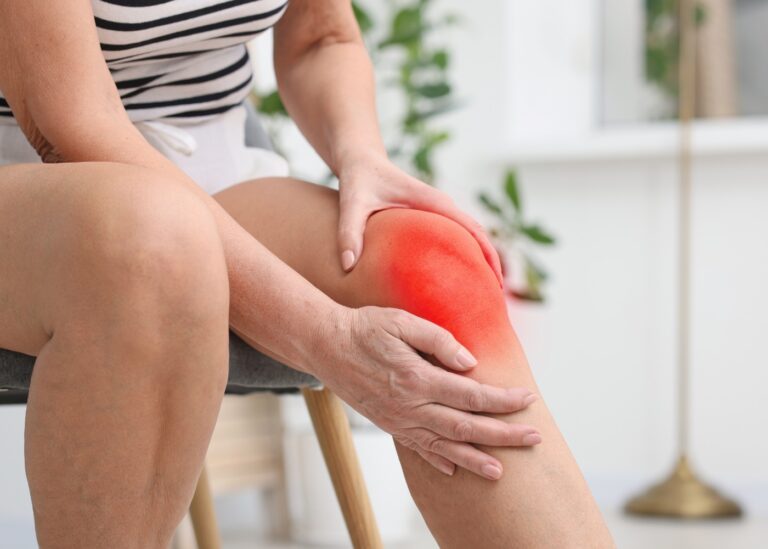

You have been on your feet all day, your body is tired, and you finally settle into bed. You close your eyes, and then your knee starts throbbing.
If that sounds familiar, you are not alone. Knee joint pain at night affects a significant number of adults, with some estimates suggesting nearly one in four people over 45 deal with frequent knee pain. You deserve answers, not another restless night. Knowing the possible causes, recognizing key symptoms, and understanding when to get help can put you back in control.
Key Takeaways
- Knee pain often feels worse at night because reduced movement decreases joint lubrication and increases stiffness.
- Common causes include osteoarthritis, bursitis, tendonitis, gout, and meniscus injuries.
- Simple changes like adjusting your sleep position or applying ice before bed may help reduce discomfort.
- Persistent or worsening nighttime knee pain should be evaluated by a healthcare provider.
Why Your Knees May Hurt More at Night
Most people assume knee pain would ease up once they stop moving, but the opposite is often true. In fact, a PubMed focus group study found that the majority of people with knee osteoarthritis reported experiencing pain at night, regardless of the stage of the condition.
What Makes Knee Pain Worse When You Lie Down?
During the day, movement keeps your joints lubricated with synovial fluid. Once you settle into bed, that natural lubrication decreases, and joint surfaces may rub together more, leading to stiffness and aching. Fewer distractions at night also mean a low-grade ache that went unnoticed during the day may suddenly feel much stronger.
Inflammation from the day’s activities tends to build up as well. On top of that, cortisol, a hormone that naturally helps manage inflammation, drops to its lowest levels during sleep. According to research published in PMC, cortisol acts as a natural anti-inflammatory, so when those levels dip overnight, pain signals may feel stronger. Overnight dehydration may also play a part, since joint cartilage is roughly 65 to 80 percent water, and even mild fluid loss can reduce the cushioning your knees rely on. Sleep position matters too: lying on your side without a pillow between your knees, or sleeping flat without support under the knees, can add extra pressure to an already sore joint.
Common Causes of Knee Pain at Night
Several conditions may lead to aching knees at night time. Some are related to wear and tear, while others stem from injury or inflammation.
Could Osteoarthritis Be Behind Your Nighttime Knee Pain?
Osteoarthritis is one of the most common causes of nighttime knee pain, especially for adults over 40. Over time, the cartilage that cushions the joint wears down, and as that protective layer thins, bone surfaces may begin to rub against each other. According to the National Institute of Arthritis and Musculoskeletal and Skin Diseases (NIAMS), osteoarthritis pain may worsen at night in later stages of the condition. Common signs include:
- Joint stiffness after periods of rest
- A grinding or scraping sensation during movement
- Swelling around the knee
Osteoarthritis has no cure, but a range of approaches, from low-impact exercise to regenerative therapies, may help manage symptoms and support joint health.
What Role Does Bursitis Play in Nighttime Knee Discomfort?
Bursae are small, fluid-filled sacs that cushion the bones, tendons, and muscles around your knee. When one of these sacs becomes inflamed, the result is bursitis, which can cause localized pain, swelling, and tenderness. The NCBI Bookshelf notes that bursitis often responds well to rest, ice, compression, and elevation. Lying on the affected side at night may increase pressure on the inflamed bursa, making discomfort in knees at night more intense, so avoiding direct pressure while sleeping can help.
Can Tendonitis Lead to Pain While You Sleep?
Tendonitis happens when a tendon, the tissue connecting muscle to bone, becomes irritated or inflamed. In the knee, the most common form is patellar tendonitis, sometimes called “jumper’s knee,” which affects the tendon just below the kneecap. After a day of repetitive motions like running, climbing stairs, or squatting, the inflammation may intensify into a dull, persistent ache that becomes more obvious once you stop moving. Shockwave therapy may be one option worth exploring for chronic tendon issues.
What About Gout and Sudden Knee Pain at Night?
Gout is a form of inflammatory arthritis caused by a buildup of uric acid crystals in the joints. NIAMS states that gout flares often start suddenly at night and may cause intense pain, redness, warmth, and swelling. Uric acid crystals tend to form more readily at lower body temperatures, which may explain why flare-ups happen during sleep. Pain in one knee at night that comes on suddenly, especially with visible swelling, could signal a gout episode. MedlinePlus describes gout pain as often severe and throbbing, and sudden flare-ups like these warrant prompt medical attention.
Could a Meniscus Tear Be Causing Your Nighttime Pain?
The meniscus is a piece of cartilage that acts as a shock absorber between the thighbone and shinbone, and a tear can happen during activities that involve forceful twisting or rotating of the knee. Once you lie down, a torn meniscus may cause a dull, achy feeling as the damaged tissue presses on surrounding structures. Swelling, a catching or locking sensation, and difficulty fully straightening the leg are common signs. For ongoing cartilage or soft tissue issues, regenerative approaches like PRP or exosome therapy may help support the body’s natural repair processes.
Can Overuse or Rheumatoid Arthritis Cause Knee Pain at Night?
Repetitive stress from daily activities, sports, or physical work can lead to overuse injuries like runner’s knee or IT band syndrome, all of which may contribute to nighttime pain as inflammation builds up during the day and becomes more noticeable at rest.
Not all nighttime knee pain comes from physical wear, though. Rheumatoid arthritis (RA) is an autoimmune condition in which the immune system mistakenly attacks the joint lining. According to PMC research, the nighttime increase in inflammatory activity in RA patients is linked to the natural dip in cortisol during sleep. Morning stiffness lasting 30 minutes or longer, along with symmetrical joint swelling, may point to RA.
Symptoms to Watch For
Nighttime knee pain can show up in different ways, and the specific symptoms you notice can offer clues about the cause. Common signs include:
- A throbbing or aching sensation once you lie down
- Stiffness that sets in after being still for a while
- Swelling or warmth around the knee
- Pain that wakes you up during the night
When Should You See a Doctor?
Not all knee pain at night requires urgent care, but certain situations call for a professional evaluation. You should consider seeing a healthcare provider if you experience persistent pain lasting more than a few days, significant swelling or warmth, pain severe enough to regularly disrupt sleep, a feeling of instability or the knee “giving way,” or pain accompanied by fever. Early evaluation can help identify the cause and prevent potential long-term joint damage.
Simple Ways to Ease Knee Pain at Night
While you work on identifying the root cause, a few simple strategies may help you get better rest.
How Can Sleep Position, Ice, Heat, and Stretching Help?
If you sleep on your side, placing a pillow between your knees can help keep the hips aligned. Back sleepers can try a pillow tucked under the knees to reduce strain. Before bed, cold packs may help reduce swelling, while heat may help loosen stiff muscles. Wrapping the pack in a towel and applying for 15 to 20 minutes is a good starting point.
Even 10 minutes of gentle stretching before bed, like quad stretches, hamstring stretches, or calf raises, may help your muscles relax and reduce nighttime stiffness. Consistent stretching, paired with supportive therapies like peptide therapy or hormone optimization, may also contribute to long-term joint comfort.
Can Over-the-Counter Pain Relievers Help?
When the strategies above are not enough, over-the-counter NSAIDs like ibuprofen or naproxen may help reduce both pain and inflammation. Taking a dose after dinner, roughly 30 minutes before bed, may allow the medication to take effect before you try to sleep. Keep in mind that OTC medications address symptoms, not the underlying cause, and anyone taking blood thinners or other prescriptions should check with a healthcare provider first.
Conclusion
Nighttime knee pain does not have to control your sleep. Understanding the causes, recognizing key symptoms, and trying simple home strategies can put you on the path to better rest.
If your pain persists or gets worse, a personalized evaluation is the best next step. Rocky Mountain Regenerative Medicine offers a comprehensive approach to joint health, including stem cell therapy, shockwave therapy, PRP, and advanced diagnostics designed to address the root of the problem rather than just masking symptoms. Through the Annual Membership Program, patients receive ongoing, individualized care for lasting results.
Contact us to learn more, or book an appointment to take the first step toward relief.
Note: The content in this blog is for educational purposes only and should not be considered medical advice. Always consult with a qualified healthcare provider before making decisions about your care.
Sources
- National Institute of Arthritis and Musculoskeletal and Skin Diseases (NIAMS). “Osteoarthritis.” https://www.niams.nih.gov/health-topics/osteoarthritis
- National Institute of Arthritis and Musculoskeletal and Skin Diseases (NIAMS). “Gout.” https://www.niams.nih.gov/health-topics/gout
- NCBI Bookshelf. “Overview: Osteoarthritis of the Knee.” https://www.ncbi.nlm.nih.gov/books/NBK544982/
- NCBI Bookshelf. “Bursitis: How Can Bursitis Be Treated?” https://www.ncbi.nlm.nih.gov/books/NBK525763/
- MedlinePlus. “Gout.” https://medlineplus.gov/ency/article/000422.htm
- Centers for Disease Control and Prevention (CDC). “Gout.” https://www.cdc.gov/arthritis/gout/index.html
- PubMed. “Night Pain in Hip and Knee Osteoarthritis: A Focus Group Study.” https://pubmed.ncbi.nlm.nih.gov/20191575/
- PMC. “Chronic Stress, Cortisol Dysfunction, and Pain.” https://pmc.ncbi.nlm.nih.gov/articles/PMC4263906/
- PMC. “Glucocorticoids and Chronotherapy in Rheumatoid Arthritis.” https://pmc.ncbi.nlm.nih.gov/articles/PMC4800804/