
Living with a wound that won’t close, pain that lingers after every other option, or a condition that standard care hasn’t fully addressed can feel exhausting. If you have been researching hyperbaric oxygen therapy (HBOT) as a possible next step, you are not alone, and looking for honest answers is the right thing to do.
HBOT involves breathing close to 100% oxygen inside a pressurized chamber at two to three times normal atmospheric pressure. Since the air you normally breathe contains only about 21% oxygen, the difference is significant, and your blood may carry far more oxygen to tissues throughout your body as a result.
Not every claim holds up equally, though. Some wellness centers promote HBOT for everything from anti-aging to chronic fatigue, while medical authorities take a more measured view. Below is what the UHMS and published hyperbaric oxygen therapy research actually support.
Table of Contents
- What Is Hyperbaric Oxygen Therapy and How Does It Work?
- What Is the UHMS, and Why Does Its Opinion Matter?
- What Conditions Has the UHMS Approved for HBOT?
- What Does the Research Say About Specific Conditions?
- Where Is the Evidence Still Emerging?
- Are There Risks or Side Effects?
- How RMRM’s HBOT Protocol Aligns with UHMS Guidance
What You Need to Know at a Glance
- The UHMS currently recognizes 15 medical conditions for which HBOT has sufficient evidence of safety and effectiveness.
- HBOT may support wound healing, fight certain infections, and help with emergencies like carbon monoxide poisoning and decompression sickness.
- Regulatory authorities recognize hyperbaric oxygen therapy for specific disorders and recommend UHMS-accredited facilities.
- “Mild” hyperbaric oxygen offered in wellness centers lacks adequate research backing, according to the UHMS.
- Claims about HBOT for autism, cancer, and Alzheimer’s disease go beyond what current research supports.
What Is Hyperbaric Oxygen Therapy and How Does It Work?
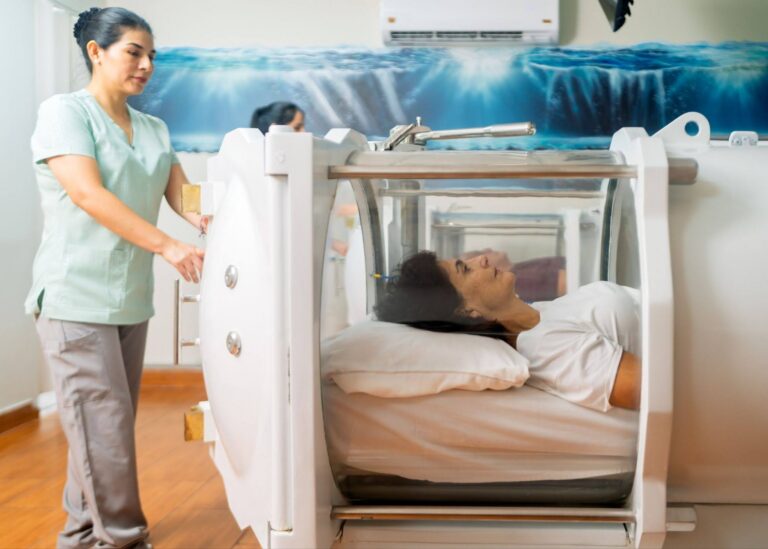
HBOT is a medical procedure that requires a doctor’s prescription. During a session, you sit or lie inside a hard-sided pressurized chamber at 2.0 to 3.0 atmospheres absolute (ATA) and breathe medical-grade oxygen for about 90 to 120 minutes.
Why Does Pressurized Oxygen Matter?
At normal air pressure, oxygen moves through your body mainly by attaching to red blood cells. Inside a hyperbaric chamber, the increased pressure allows your blood plasma to absorb much more oxygen on its own, a principle known as Henry’s Law. According to research published in the journal Medicina, this extra dissolved oxygen can reach areas where blood flow has been reduced by injury or disease. That additional oxygen may encourage new blood vessel growth, boost collagen production, help fight infections by creating an environment hostile to bacteria, and support cellular repair throughout the body.
What Do Sessions Look Like, and What Do They Cost?
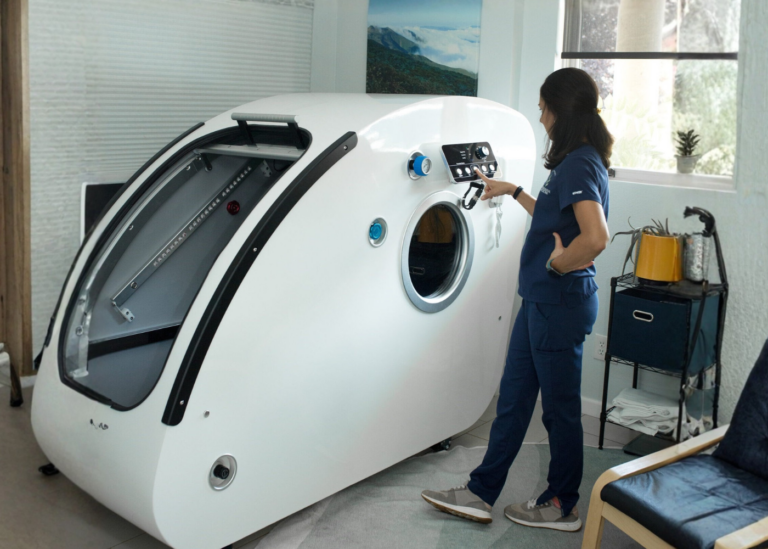
Most patients receive HBOT five days a week for about four to six weeks. Each session involves gradual compression, a 60- to 90-minute treatment plateau, and a slow decompression back to normal. Monoplace chambers hold one person with pure oxygen, while multiplace chambers seat several patients who breathe oxygen through masks. Self-pay sessions range from about $200 to $1,250, and Medicare may cover HBOT for approved conditions, though private insurance varies and most plans require pre-authorization.
What Is the UHMS, and Why Does Its Opinion Matter?
The Undersea and Hyperbaric Medical Society is the primary scientific organization for hyperbaric medicine worldwide. Originally founded in the 1960s for underwater medicine, the UHMS expanded its scope as clinical uses for pressurized oxygen grew.
How Does the UHMS Evaluate HBOT?
In 1976, the UHMS established its Hyperbaric Oxygen Therapy Committee to review research and clinical data on an ongoing basis. When UHMS hyperbaric oxygen therapy guidelines describe a condition as “approved,” the committee has found sufficient evidence for that specific use. Conditions without adequate proof are still being studied and reviewed. A public advisory from the FDA also recommends that anyone considering HBOT should go to a UHMS-accredited facility.
What Conditions Has the UHMS Approved for HBOT?
The UHMS currently recognizes 15 conditions for which HBOT is considered safe and effective:
- Air or gas embolism
- Carbon monoxide poisoning (including cases with cyanide poisoning)
- Gas gangrene (clostridial myositis and myonecrosis)
- Crush injuries, compartment syndrome, and acute traumatic ischemias
- Decompression sickness
- Arterial insufficiencies, including central retinal artery occlusion and problem wounds
- Severe anemia (when transfusions are not an option)
- Intracranial abscess
- Necrotizing soft tissue infections
- Refractory osteomyelitis (chronic bone infection unresponsive to standard care)
- Delayed radiation injury (soft tissue and bone damage from radiation)
- Compromised grafts and flaps
- Acute thermal burn injury
- Idiopathic sudden sensorineural hearing loss
- Avascular necrosis (osteonecrosis), added by the UHMS Board in June 2022
Which Conditions Are Emergencies, and Which Take Longer?
Air or gas embolism, carbon monoxide poisoning, decompression sickness, and gas gangrene all require urgent hyperbaric oxygen therapy, and starting quickly may significantly affect outcomes. Non-emergency conditions like chronic wounds, radiation injury, and refractory osteomyelitis, on the other hand, typically require sessions over several weeks. Patients with non-healing diabetic wounds, for example, may receive 30 to 40 sessions at 2.0 to 2.4 ATA.
What Does the Research Say About Specific Conditions?
Evidence strength varies across the 15 approved conditions. Some have been studied in randomized clinical trials, while others rely more on expert consensus and clinical experience. Here is what the research shows for five of the most discussed uses.
Wound Healing and Diabetic Foot Ulcers
Chronic wounds, especially diabetic foot ulcers, are one of the most studied uses of HBOT. A 2021 review in Medicina noted that HBOT may be associated with higher healing rates and lower amputation risk, and a Cochrane systematic review found potential short-term benefits, though the authors called for more high-quality trials.
Carbon Monoxide Poisoning
HBOT is widely accepted as a primary option for serious carbon monoxide poisoning. The increased pressure helps the body clear carbon monoxide from the bloodstream much faster than breathing normal air, and clinical studies support its role in reducing the risk of delayed neurological complications.
Radiation Injury
Radiation therapy for cancer can sometimes cause tissue damage months or years after treatment. HBOT may help by promoting new blood vessel growth in irradiated tissues, and systematic reviews suggest it may improve outcomes for radiation-related damage, though results vary.
Decompression Sickness
Decompression sickness occurs when gas bubbles form in the blood after a rapid pressure drop. Pressurized oxygen helps dissolve those bubbles and restore normal oxygen delivery, and according to the U.S. Navy’s hyperbaric medicine program, treatment tables from decades of military research remain the foundation of decompression protocols worldwide.
Sudden Hearing Loss
Idiopathic sudden sensorineural hearing loss is a recent UHMS-approved indication. According to the UHMS multicenter registry, referrals rose from 172 cases in 2023 to 218 in 2024, and early evidence suggests HBOT may improve outcomes when combined with steroid therapy within two weeks of onset.
Where Is the Evidence Still Emerging?
Some facilities offer HBOT for conditions where the research is still catching up. Regulatory authorities have noted that certain centers promote HBOT for uses that go beyond what the current evidence supports, including cancer, Lyme disease, autism, and Alzheimer’s disease.
What About Traumatic Brain Injury and Chronic Pain?
Several randomized trials have explored HBOT for traumatic brain injury (TBI), and a 2022 systematic review in Frontiers in Neurology found improvements in mild TBI patients treated at 1.5 ATA. The overall body of research is growing, though it has not yet reached the threshold the UHMS requires to add these to its approved list. Early research into HBOT for chronic pain and post-concussion symptoms is also ongoing, with more trials expected in the coming years.
What Are “Mild” Hyperbaric Chambers?
Some wellness centers offer “mild” hyperbaric oxygen using portable chambers below 1.5 ATA, but the UHMS notes that these chambers lack adequate research backing and often fail to deliver sufficient oxygen. The American Medical Association adopted a resolution in 2022 opposing mild hyperbaric therapy in unregulated facilities, citing concerns about inappropriate targeting of vulnerable populations, incorrect dosing, and delayed access to proper care.
How Can You Tell if a Facility Is Legitimate?
Look for a facility accredited by the UHMS and staffed by physicians board-certified in undersea and hyperbaric medicine. Accreditation means the facility meets rigorous standards for equipment, training, and patient safety.
Are There Risks or Side Effects?
HBOT is generally considered safe at accredited facilities, but side effects can include ear and sinus discomfort from pressure changes and short-term nearsightedness (oxygen myopia) that typically resolves after sessions end. Oxygen toxicity seizures are rare and tend to occur only at higher pressures. The only absolute contraindication is an untreated collapsed lung (pneumothorax), and conditions like certain seizure disorders, COPD with air trapping, uncontrolled fever, and pregnancy require evaluation before starting sessions.
How RMRM’s HBOT Protocol Aligns with UHMS Guidance
Rocky Mountain Regenerative Medicine in Boulder, Colorado delivers hyperbaric oxygen therapy within UHMS-aligned, evidence-based parameters as part of a broader care plan alongside stem cell therapy, peptide therapy, shockwave therapy, and hormone therapy. Explore the full benefits of hyperbaric oxygen therapy on the RMRM website.
Book a Consultation
Whether you are managing a chronic wound, recovering from radiation therapy, or exploring longevity-focused care, the team at RMRM takes a personalized approach to help you Live, Look, and Perform Better Longer. Book an appointment or call 720-739-1616 to discuss whether HBOT may be a good fit for your health goals.
Disclaimer: The information in this article is for educational purposes only and is not intended as medical advice. Always consult with a qualified healthcare professional before starting any new therapy or making changes to your care plan.
Sources
- Undersea and Hyperbaric Medical Society (UHMS), Indications for Hyperbaric Oxygen Therapy
- U.S. Food and Drug Administration, Hyperbaric Oxygen Therapy: Get the Facts
- Ortega MA, et al., “A General Overview on the Hyperbaric Oxygen Therapy: Applications, Mechanisms and Translational Opportunities,” Medicina, 2021
- Kranke P, et al., “Hyperbaric Oxygen Therapy for Chronic Wounds,” Cochrane Database of Systematic Reviews, 2015
- Duke University, UHMS Indications for Hyperbaric Oxygen Therapy
- UHMS Multicenter Registry, 2024 Year-End Summary
- U.S. Navy, Department of Hyperbaric Medicine
- DiveNewsWire, AMA Resolution on Mild Hyperbaric Therapy