By Colleen Grady • June 12, 2026

Hair Loss: What Is Actually Driving It, What Works, and How to Protect What You Have

BOOK AN APPOINTMENT

Hair loss affects approximately 80 million men and 46 million women in the United States. It is one of the most common concerns I encounter in my practice, and also one of the most undertreated. Most people who notice thinning or shedding do one of two things: they ignore it, hoping it will stabilize on its own, or they grab an over-the-counter product without understanding whether it addresses the actual cause of their hair loss.

Both approaches typically lead to the same outcome: more loss. Because hair follicles, once they have miniaturized past a certain point, reach a point of no return. The biology of hair loss is one where early action matters enormously, and where doing the right thing at the right time can make a meaningful difference in what you look like and how you feel a decade from now.

Let me walk you through what is actually driving hair loss, what the evidence-based treatment options are, and how we think about this at RMRM.


1. The Biology of Hair Loss

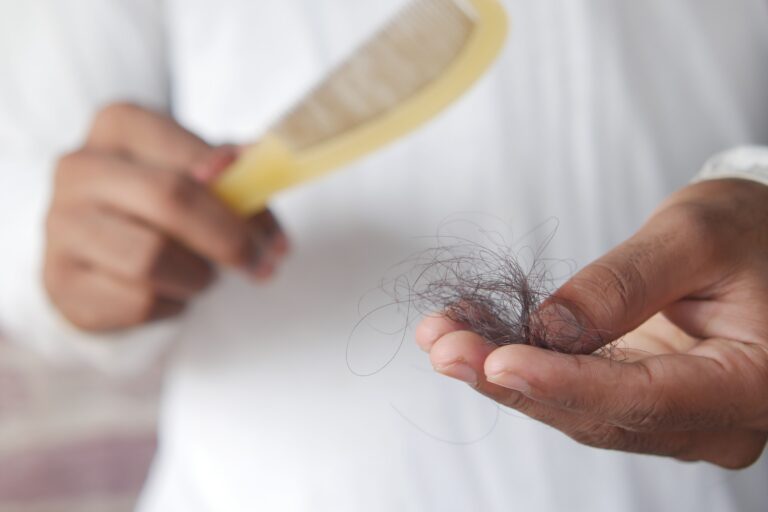
Every hair on your head goes through a continuous cycle. It grows for five to seven years in the anagen phase, transitions briefly, and then rests for about 90 days in the telogen phase before the cycle begins again. Under normal conditions, approximately 84 to 85 percent of your follicles are in the growing phase at any given time. Hair loss, in its most fundamental form, is a shift in that ratio: more follicles in the resting phase, fewer in the growing phase, and over time, follicles that miniaturize from producing thick terminal hairs to producing thin, unpigmented vellus hairs that are nearly invisible.

Once a follicle has miniaturized to the point of producing a vellus hair, no current treatment can revive it. This is the point of no return. Everything in hair loss medicine is about preventing follicles from reaching that point and maintaining the function of the ones that still have meaningful growth capacity.

pexels-towfiqu-barbhuiya-3440682-9755382 (1)

2. What Drives Hair Loss in Men

In men, the primary driver of pattern hair loss is dihydrotestosterone, or DHT. DHT is produced when an enzyme called 5-alpha reductase converts testosterone into DHT. In genetically susceptible individuals, DHT miniaturizes hair follicles in the androgen-sensitive areas of the scalp, primarily the top and front, while leaving the sides and back largely unaffected.

The genetics of male hair loss are about 98 to 99 percent heritable, with approximately 200 genes playing a role. Approximately 20 percent of men in their 20s show visible signs of hair loss, 30 percent in their 30s, and 40 percent in their 40s. The old idea that you need only look at your maternal grandfather to predict your hair loss is not accurate. Genetic contributions come from both sides of the family and influence not just whether you lose hair but the pattern, speed, color, texture, and caliber of what you have.


3. What Drives Hair Loss in Women

Female pattern hair loss is more complex and more multifactorial than the male pattern. DHT plays a role in some women, particularly those with polycystic ovary syndrome or hormonal imbalances, but many women with significant hair loss have relatively low DHT levels and are simply more androgen-sensitive at the follicular level.

Hormonal transitions are among the most significant triggers for female hair loss. During pregnancy, a higher percentage of follicles stay in the growing phase, producing thicker, fuller hair. After childbirth, hormones crash back to baseline, follicles shift into the telogen phase, and shedding begins within six to twelve weeks. For most women this is temporary. For women who are already prone to female pattern hair loss, this postpartum effluvium can be the event that unmasks or accelerates a permanent pattern.

Menopause is another critical window. The abrupt decline in estrogen and the relative increase in androgen activity during menopause can trigger or accelerate female pattern hair loss, often in the central and diffuse pattern that is characteristic in women. This is one of the reasons that hormonal optimization, including the work we do through our Thrive Women’s Health Program, has implications not just for cardiovascular and cognitive health but for hair health as well.

pexels-karola-g-7320782

4. Scalp Health: The Soil Matters as Much as the Seed

One of the most underappreciated aspects of hair health is the scalp environment. Hair follicles are extraordinarily metabolically active structures. The soil in which they grow, meaning the scalp, needs to be healthy for them to perform at their best. Scalp inflammation, whether from dandruff, seborrheic dermatitis, product buildup, or chronic micro-inflammation at the follicular level, can impair follicle function and accelerate miniaturization.

The relationship between scalp inflammation and hair loss is well-supported by research. Addressing inflammation at the scalp level, through appropriate scalp care, anti-inflammatory treatments, and targeted topical therapies, is an important component of a comprehensive hair preservation strategy.

For everyday care, the approach matters. 

  • Shampoo functions as a cleanser and should be worked into the scalp first. 
  • Conditioner replenishes the natural moisture stripped by shampooing and is most important for the ends of the hair, which are the oldest, driest, and most damaged. The ends should receive conditioner first, working toward the scalp. 
  • Overusing heat styling, chemical treatments, and harsh products causes hair breakage, which is a significant and underappreciated contributor to hair loss in women.
pexels-rdne-7755473

5. Treatment Options: What Actually Works

  1. Finasteride is the most effective medical treatment for male pattern hair loss. By blocking 5-alpha reductase, it reduces DHT levels and slows or stops the miniaturization of susceptible follicles. Studies show a 90 percent success rate at maintaining or improving hair density over five years. It is available in oral and topical formulations. The topical option is particularly valuable for men who experience sexual side effects with oral dosing. Finasteride is not appropriate for women of childbearing age but may be beneficial in postmenopausal women with androgen-sensitive hair loss.
  2. Minoxidil works differently, through a potassium channel mechanism that keeps follicles in the growing phase longer and shifts resting follicles back into active growth. It does not address DHT but acts as a direct follicular stimulant. Compounded formulations that include tretinoin have better scalp penetration and clinical evidence of improved hair density compared to standard over-the-counter products. The most common mistake with minoxidil is using it once daily: twice-daily application is required for meaningful clinical effect.
  3. Low-level laser therapy works by delivering specific wavelengths of light to the scalp that are absorbed by the mitochondria in follicular cells, increasing ATP production and stimulating healthier, stronger hair growth. Modern laser cap devices make this practical: six minutes per day of wearing a device that looks like a baseball cap. The evidence base for laser therapy has grown substantially and it is now FDA-cleared for both male and female hair loss.
  4. PRP, or platelet-rich plasma therapy, involves concentrating the patient’s own platelets and injecting them into areas of the scalp where hair loss is occurring. Platelets contain growth factors and cytokines that stimulate tissue repair, promote blood vessel formation, and can recruit stem cells to the treated area. PRP is not a cure for advanced hair loss and will not regrow hair in areas where follicles have already been lost. But it can meaningfully slow ongoing loss, improve the thickness and caliber of miniaturizing follicles, and in appropriate patients produce a 20 to 50 percent improvement in hair volume in areas of active thinning. The quality of the PRP preparation matters enormously. Concentration of platelets, white blood cell composition, and the preparation process all affect clinical outcomes.

At RMRM, we offer platelet-rich plasma therapy as part of our regenerative medicine toolkit. The same biological principles that make PRP effective for orthopedic and wound healing applications apply to hair follicle restoration. Explore our therapies and diagnostics to learn more.


6. The Most Important Thing You Can Do

The most important message in all of hair loss medicine is to act early. The window during which treatment can meaningfully preserve follicular function and prevent progression to irreversible loss is real and finite. Most people wait years after noticing thinning before seeking evaluation. By that point, significant follicular miniaturization has already occurred.

A proper evaluation involves measuring hair density and caliber in different areas of the scalp, comparing the permanent donor zone to the areas at risk, and identifying the pattern and stage of loss. This is not a doorknob conversation on the way out of a general practitioner’s office. It requires a specialist with the tools to measure, monitor, and build a layered treatment protocol tailored to your specific pattern of loss.

The approach that produces the best results combines multiple modalities: addressing the primary driver of loss through DHT reduction or hormonal optimization, stimulating follicular activity through minoxidil and laser therapy, and reducing scalp inflammation and supporting the follicular environment. These are not competing interventions. They work synergistically, and the combination consistently outperforms any single approach.

Understanding your own glucose dynamics, even without diabetes, provides actionable insight into your metabolic health and your dietary choices. At RMRM, we incorporate continuous glucose monitoring as part of our comprehensive metabolic assessment for patients who want to understand their metabolic health at a level of detail that standard lab testing cannot provide.

BOOK FIRST CONSULTATION HERE

Tailored Care
for a Life Well Lived

Personalized treatment plans to help you live longer, look better, and perform at your best—no matter your age.

Step 1 – Understanding You

We start by listening carefully to your health concerns, objectives, and goals. Through a personalized consultation, we gather critical information, including relevant biomarkers, to establish a clear baseline for your individual health needs.

Step 2 – Personalized Plan Implementation

Using detailed insights gained from your assessment, we design and initiate a tailored health plan. This data-driven approach ensures interventions are specific to your body, lifestyle, and wellness goals, setting you on a clear path toward optimal health.

Step 3 – Reassessment and Refinement

Your progress is regularly measured against key health indicators and biomarkers, enabling us to objectively evaluate your improvement. Based on these insights, we continually refine your treatment plan to keep you moving toward your desired outcomes and long-term wellness.

GET STARTED

Frequently Asked Questions By Patients


Patient Success Stories

These patient success stories reflect our commitment to treating the root biological causes of knee pain, rather than just masking symptoms. Our mission is to help you restore function, stay active, and age stronger, so you can move better and live better every day.

Book a consultation to explore your personalized path to living, moving, and performing better, longer.

Stay Informed on Your Health

Take the First Step Towards a Better You

Connect with us today to start your journey to living, looking, and performing better, longer.