
Hair loss affects millions of Americans, driving research into innovative therapy approaches. Among the most promising developments in regenerative medicine is stem cell therapy for hair loss, a cutting-edge therapy targeting hair follicle regeneration at the cellular level. While still investigational, early clinical studies show encouraging results for this revolutionary approach to hair restoration.
At RMRM, we understand the emotional and psychological impact of hair loss. Our comprehensive approach includes stem cell therapy, PRP, hormone optimization, and hyperbaric oxygen therapy that work synergistically to support your body’s natural healing processes. Through our Annual Membership Program, patients receive personalized care that addresses the root causes of hair loss while supporting overall health and longevity.
Why Hair Loss Happens: Understanding the Root Causes
Hair loss affects millions of men and women and can significantly impact self-confidence. Usually, there is not one single cause of Hair loss , instead, multiple interconnected biological processes: follicle miniaturization (follicles shrink, producing thinner hairs), reduced blood flow to the scalp, inflammation around follicles, hormonal factors (particularly DHT in men), and stem cell depletion in hair follicles.
While conventional therapy like minoxidil and finasteride can slow hair loss, they must be used indefinitely. Hair transplantation moves hair from one area to another, but does not address the underlying biology causing hair loss. If that biology remains compromised, it can lead to rejection of the transplanted hair follicles.
Hair transplantation moves hair from one area to another but does not address the underlying biology causing hair loss. If that biology remains compromised, it can lead to rejection of the transplanted hair follicles.
Regenerative approaches aim to restore the biological health of follicles themselves, creating conditions for natural hair growth.
What Is Stem Cell Therapy for Hair Loss and How Does It Work?
Stem cell therapy for hair loss represents a paradigm shift from traditional therapy that merely slow hair loss progression. This regenerative approach aims to reactivate dormant hair follicles and stimulate new growth at the cellular level.
The therapy utilizes adipose-derived stem cells (ADSCs), harvested from the patient’s own fat tissue through a minimally invasive procedure. These autologous cells eliminate immune rejection risk while providing a rich source of growth factors essential for tissue regeneration.
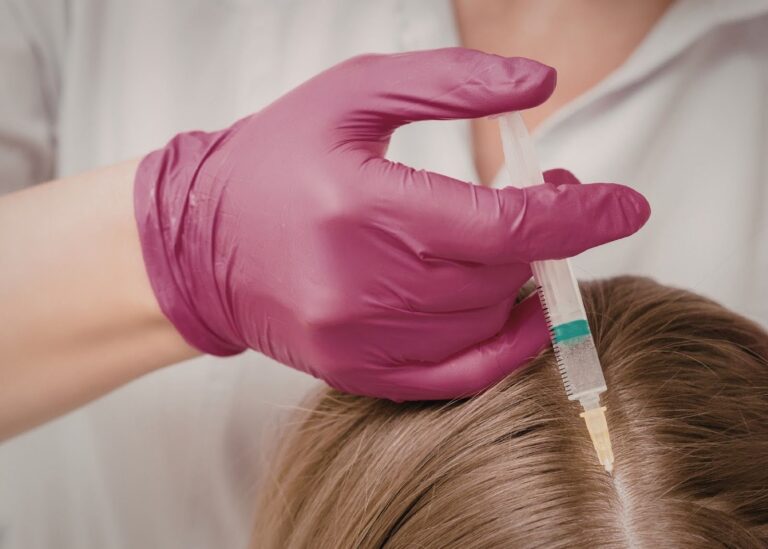
Adipose tissue is carefully extracted and processed to concentrate stem cells, then strategically injected into areas of hair loss. The stem cells release potent growth factors, including VEGF, IGF-1, and PDGF, which revitalize hair follicles and extend the anagen (growth) phase.

How Stem Cell Therapy Helps With Hair Loss
Understanding exactly how stem cell therapy works at the biological level helps set realistic expectations and explains why this approach is fundamentally different from conventional hair loss therapies.
Here is how the therapy addresses each root cause of hair loss:
Reversing follicle miniaturization: ADSCs secrete growth factors that signal miniaturized follicles to re-enter a healthy growth cycle. Over successive therapy sessions, follicles that have been shrinking gradually regain their diameter and produce thicker, more pigmented hair strands.
Restoring blood supply: One of the key growth factors released by ADSCs is VEGF (vascular endothelial growth factor), which stimulates the formation of new blood vessels around hair follicles, a process called angiogenesis. Improved blood flow means better nutrient and oxygen delivery to each follicle.
Reducing scalp inflammation: Chronic low-grade inflammation around follicles is a major driver of progressive hair loss. Mesenchymal stem cells have well-documented anti-inflammatory properties, modulating the immune environment around follicles and creating conditions more favorable for sustained hair growth.
Counteracting DHT damage: While stem cell therapy does not directly block DHT production (as finasteride does), the growth factors released by ADSCs can partially offset the miniaturizing effect of DHT by reinforcing follicle health and resilience. When combined with hormone optimization at RMRM, the synergy is significantly stronger.
Replenishing follicular stem cell reserves: Hair follicles contain their own resident stem cell population in the bulge region. In androgenetic alopecia, these stem cells become depleted or dormant over time. Injected ADSCs help reactivate and support these native follicular stem cells, essentially helping your scalp regenerate from within.
Extending the anagen (growth) phase: IGF-1 and PDGF, both released by ADSCs, are known to prolong the active growth phase of the hair cycle while shortening the resting (telogen) phase. This means more follicles are actively producing hair at any given time.
The Science Behind Adipose-Derived Stem Cells for Hair Restoration
Research demonstrates that adipose tissue provides one of the richest and most accessible sources of mesenchymal stem cells for regenerative applications. Clinical studies show that adipose-derived stem cells possess superior regenerative capacity compared to other stem cell sources, making them particularly effective for hair follicle regeneration.
A landmark study published in Stem Cell Investigation documented significant improvements in hair density following stem cell therapy.. Researchers found that patients experienced a 29% increase in hair density at 23 weeks post-therapy, representing substantial clinical improvement for androgenetic alopecia patients.
ADSCs secrete growth factors that enhance perifollicular angiogenesis, providing improved blood supply to hair follicles. They also modulate inflammatory responses and create an optimal microenvironment for follicular stem cell activation. Stem cell therapy can help regulate the hair growth cycle by prolonging the anagen phase while reducing the impact of DHT on follicular miniaturization.
Stem Cell vs. PRP vs. Other Hair Loss Therapy: Full Comparison
Choosing the right hair restoration approach depends on your stage of hair loss, goals, budget, and how much time you can commit. Here is a side-by-side comparison of the leading options:
| Feature Stem Cell therapy PRP Therapy Hair Transplant Minoxidil Finasteride | |||||
| Mechanism | Regenerates follicles via ADSCs + growth factors | Growth factor injection stimulates follicles | Moves existing healthy follicles | Widens blood vessels; extends the anagen phase | Blocks DHT production |
| Invasiveness | Minimally invasive (local anesthesia) | Minimally invasive (injections only) | Surgical procedure | Topical application
OR Oral Medication |
Oral medication |
| Sessions needed | 3–6 sessions, 4–6 weeks apart | 3–4 sessions, 4–6 weeks apart | 1–2 surgical sessions | Daily application/pill (ongoing) | Daily pill (ongoing) |
| Results timeline | 3–6 months; peak at 6–8 months | 2–4 months | 6–12 months for full growth | 3–6 months | 3–6 months |
| Duration of results | 12–18 months per cycle | 6–12 months per cycle | Permanent (follicle relocation) | Only while using, loss may return if stopped | Only while using, loss may return if stopped |
| Best for | Mild–moderate AGA with viable follicles | Early hair thinning; maintenance | Those with a stable donor area | Early-stage hair loss; maintenance | Male pattern hair loss (DHT-driven) |
At RMRM, we frequently combine stem cell therapy with PRP for enhanced results; the two work through complementary mechanisms and amplify each other’s effects. The best approach for you will be determined during your initial consultation.
Regenerative Hair Restoration Options: Stem Cells and PRP
RMRM offers stem cell therapy and PRP (platelet-rich plasma) therapy as standalone therapy or combined approaches for enhanced results.
PRP for Hair Loss: How It Works
When injected into the scalp, PRP stimulates dormant hair follicles to re-enter the growth phase, improves blood flow through angiogenesis, reduces inflammation, and provides growth factors supporting hair growth. Multiple studies show that PRP increases hair count and thickness in patients with androgenetic alopecia.
RMRM typically recommends a series of 3-4 PRP therapy spaced 4-6 weeks apart, followed by maintenance therapy every 6-12 months. PRP can be combined with stem cell therapy for enhanced results by addressing multiple factors contributing to hair loss.
Stem Cell Therapy for Hair Loss: Clinical Results and Effectiveness
Clinical trials consistently demonstrate encouraging results for stem cell-based hair loss therapies. Most patients experience noticeable improvements in hair density, thickness, and overall scalp health within 3–6 months following therapy.
Patients with mild to moderate androgenetic alopecia often respond most favorably to stem cell therapy. Those with complete follicular loss may see limited results, while those with recent or moderate thinning may achieve more noticeable improvements. Results typically peak at 6–8 months post-therapy and can be maintained for 12–18 months. Many patients benefit from periodic maintenance therapies to help sustain and optimize long-term outcomes.
Your Personalized Hair Restoration Journey at RMRM
At RMRM, we begin with a comprehensive consultation to understand your unique situation:
- Evaluation: We assess your hair loss pattern, genetics, hormonal factors, and regenerative capacity.
- Personalized Planning: We recommend stem cell therapy alone, PRP alone, or combined approaches based on your specific situation.
- Customized Protocol: We create a therapy plan including frequency and sessions, with integration of peptide therapy, hormone optimization, or HBOT.
- Ongoing Monitoring: We track progress and adjust therapy as needed.
- Maintenance Support: Through our Annual Membership Program, we provide ongoing maintenance therapies and integrated wellness support.
Therapy Process and Safety Considerations
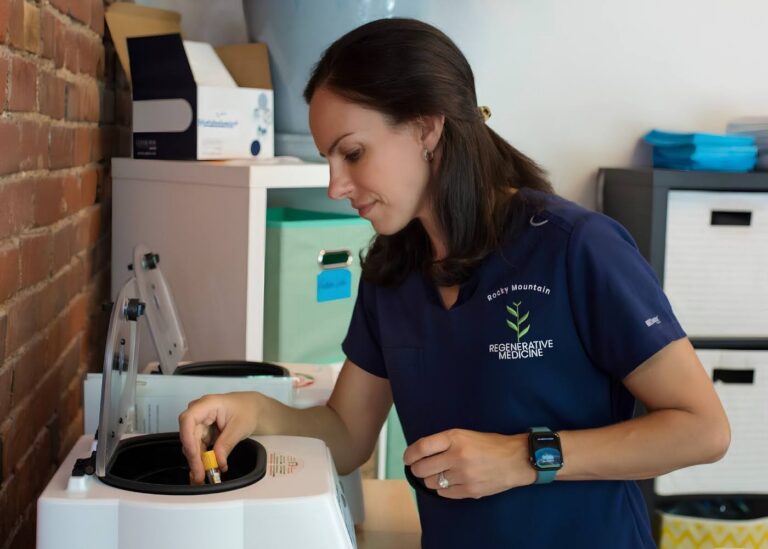
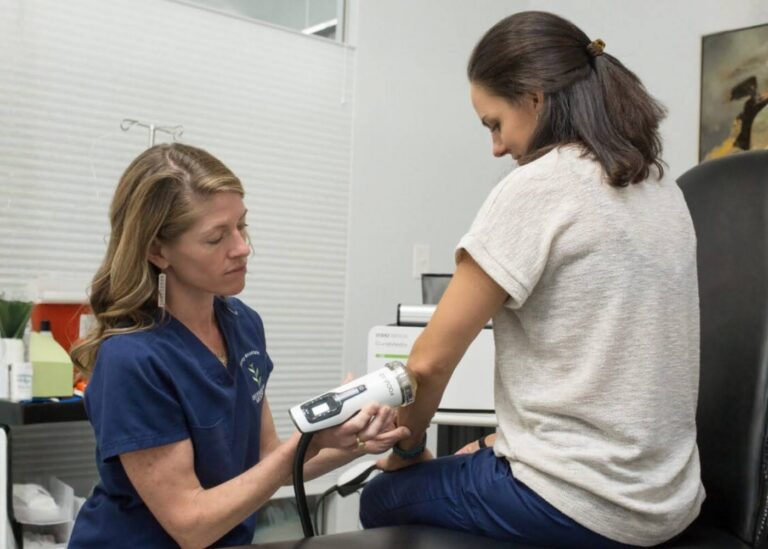
The stem cell therapy procedure takes approximately 2-3 hours and is performed under local anesthesia on an outpatient basis. Adipose tissue is harvested through a minor liposuction procedure, processed in a specialized centrifuge to concentrate stem cells, and carefully injected into the scalp using fine needles.
Most patients require 3-6 therapy sessions spaced 4-6 weeks apart for optimal results. Safety profiles show minimal adverse events with mild redness, swelling, or bruising at injection sites, typically resolving within 48-72 hours. Because autologous cells are used, there is no risk of immune rejection. Patients can generally return to normal activities within 24-48 hours, though vigorous exercise should be avoided for one week following therapy.
Integration with Comprehensive Regenerative Medicine
Stem cell therapy is most effective when integrated into a comprehensive regenerative medicine approach. Peptide therapy, such as GHK-CU, optimizes the scalp environment and supports follicle function. Hormone optimization addresses hormonal imbalances contributing to pattern hair loss. Hyperbaric oxygen therapy enhances cellular oxygenation and angiogenesis to the scalp, improving nutrient delivery to hair follicles and accelerating regenerative processes.
Our Thrive Women’s Health Program addresses unique hormonal factors affecting female pattern hair loss, while male patients benefit from comprehensive hormone evaluation and optimization.
Cost Considerations and Therapy Investment
Stem cell therapy for hair loss represents a significant investment. Current market rates range from 4,000 to 15,000 dollars per session in most US markets. Most patients require 3-6 sessions for optimal results.
While stem cell therapy requires substantial investment, many patients find the natural, long-lasting results justify the cost compared to ongoing conventional therapy expenses. Most insurance plans do not cover stem cell therapy as it remains investigational. However, financing options and membership programs may increase accessibility.
Ready to explore regenerative medicine options for hair loss? Contact Rocky Mountain Regenerative Medicine to schedule a consultation or book an appointment to learn more about our comprehensive approach to regenerative health and longevity.
Medical Disclaimer: This information is for educational purposes only and is not intended as medical advice. Stem cell therapy for hair loss is investigational and not approved by the FDA. Consult with qualified healthcare professionals before considering any therapy options.